Thierry de Montbrial, Founder and President
|
|
|
|---|---|---|
Politique étrangère : vol. 74, n°4 English edition (Winter 2009)NATO 1949-2009 |
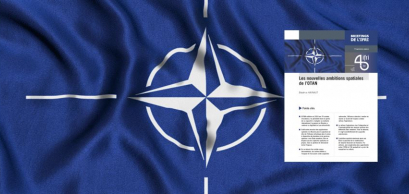
JUST PUBLISHED A little more than 60 years after its creation, questions about the future of the Alliance emerge at the intersection of three observations. First, the complexity of the world,which makes the Alliance ‘inevitable,' since it is a rare source of stability and solidarity in a world marked by uncertainty. Second, American doubt. If the United States was the global policeman for some simple minds [...] at the start of the 1990s, others see the US as having used up its power in the adventurism of the Bush Administration. The future will wipe out these two caricatures. For members of the Alliance, the US will long continue to be a necessary friend, whose power and possible abandonment are feared. [...] The third observation is, obviously, Europe's incurable ethnocentricity: If Europeans knew how to look at the world and their place in it, they would rapidly give up their mediocre powerlessness. [...] History is moving on elsewhere, and raises questions on its chaotic path to which others are ISBN 978-2-86592-632-9 ![]() This issue was supported by NATO'S Public Diplomacy Division. Table of contents [afficher]
Introduction (read the attached pdf) THE BACKGROUND TO THE DEBATE A Vibrant and Flexible Alliance - George ROBERTSON [afficher] Abstract The Alliance was created for defense against the Soviet Union and reinvented at the end of the Cold War. Today, it takes action wherever the allies’ interests are threatened and no credible alternative option exists for its members’ security. But the Alliance must know how to change, adapt itself to new political and economic challenges, and adjust its methods of operation as its members increase. Lord ROBERTSON OF PORT ELLEN has been the United Kingdom’s Secretary of State for Defence (1997-1999) and Secretary General of NATO (1999-2003). He is President of the Atlantic Council of the UK. Order full text in English on the CAIRN website [masquer] NATO from Washington (1949) to Strasbourg/Kehl (2009) - Karl-Heinz KAMP [afficher] Abstract The history of the Alliance may be divided into three phases. The first spans the four decades of the Cold War. Next, the Alliance took on a role as a midwife to political change in Europe. Following 9/11, the role of the Alliance has been part of a wider debate about the challenges to international security. This debate is still open, and includes, among other things, the redefinition of NATO’s missions and their corresponding means. Karl-Heinz KAMP is Research Division Director at the NATO Defense College, Rome. Previously he worked for a long time as security policy coordinator at the Konrad Adenauer Foundation in Berlin. He has also been seconded to the German Ministry of Foreign Affairs, and has taught political science at the University of Cologne. Order full text in English on the CAIRN website [masquer] FROM AN ENLARGED NATO TO A GLOBAL NATO? Towards a Security Web - Zbigniew BRZEZINSKI [afficher] Abstract The historical success of the Alliance lies in having unified the West in the face of the Soviet threat, and in having successfully enlarged the West since the end of the Cold War. Today, however, the Alliance needs to adapt itself to a new world characterized by the growing threat of violent political chaos stemming from humanity’s recent political awakening. Its cred ibility depends o n negotiating a political exit from Afghanistan. In the longer term, NATO must view itself as being at the center of a network of organizations of world security. Zbigniew BRZEZINSKI was National Security Advisor of the United States from 1977 to 1981. He is the author of several books, the most recent being: Second Chance: Three Presidents and the Crisis of American Superpower (New York: Basic Books, 2007). Order full text in English on the CAIRN website [masquer] The Global NATO Debate - Michael CLARKE (read the attached pdf) [afficher] Abstract The debate on 'globalization' is at the heart of discussions on the new Strategic Concept. It is taking place within the dynamic enlargement process that began in 1994, bringing in new members and giving rise to new missions. The debate also touches on the different possible readings of today's geopolitical reality: global threats, or residual threats in Europe? Lastly, it raises a moral question: Why and under what circumstances should the Alliance legitimately use its military force? Michael CLARKE is Director of the Royal United Services Institute for Defence and Security Studies (RUSI), London. Until 2007, he was Head of Research Development at King's College London, where he was Professor of Defence Studies. At K ing's he founded and headed the International Policy Institute (2001-2005). Order full text in English on the CAIRN website [masquer] Considerations on NATO's Future Directions - Christopher S. CHIVVIS (read the attached pdf) [afficher] Abstract The future direction of the Alliance depends on the answers to two questions. First, what are today’s security challenges for member states? Second, which challenges can the Alliance tackle? This article examines four hypotheses which may structure the debate on the future Strategic Concept: i) the focus on the Greater Middle East; ii) the fundamental attention given to weak states; iii) the focus on non-governmental threats; and iv) a re-focusing on Europe.
Christopher S. CHIVVIS is a political scientist with the RAND Corporation in Washington DC, and adjunct professor of European Studies at the John Hopkins S chool of Advanced International Studies. [masquer] L'OTAN, L'EUROPE ET LA RUSSIE NATO: A View from Central Europe - Bogdan KLICH [afficher] Abstract
Poland has a full place in an Alliance seeking to meet new challenges. Warsaw naturally supports everything that strengthens the links between the United States and Europe, but also favors the development of the capacities of the European Union (EU), which complement those of the Alliance. Furthermore, while Poland favors the enlargement of the Alliance to include Ukraine and Georgia, it also seeks a deepening of cooperation with Moscow.
Bogdan Klich is Defense Minister of the Polish Republic.
[masquer] NATO and ESDP: Institutional Complexities and Political Realities - Jolyon HOWORTH (read the attached pdf) [afficher] Abstract Relations between NATO and the ESDP work well on the ground. However, political and functional confusion dominates the relationship between the Alliance and the European Union. This goes back to the origins, different logic and policies of both institutions. In the immediate future it will surely be preferable to establish ad hoc arrangements, sector by sector, rather than a general agreement, which is likely to be hard to achieve, given the rapidly changing nature of the Alliance and the EU. Jolyon HOWORTH is a Professor at the University of Yale (USA) and a Jean Monnet Professor of European Politics at the University of Bath (UK). He is a research associate of the Institut français des relations internationales (Ifri, Paris). [masquer] NATO and Russia : A View from Moscow - Sergei ROGOV (read the attached pdf) [afficher] Abstract NATO’s eastward enlargement stirs Russia’s deep, historical fears about ‘Western’ attempts to destroy or marginalize it. However, the dialogue opened up by the new US administration, along with the declarations and propositions by President Medvedev, suggests that a new era of cooperation, relating to Afghanistan, antimissile defense systems, disarmament and even NATO’s next strategic concept, may now emerge. Sergey ROGOV is Director of the Institute of USA and Canada of the Russian Academy of Sciences, and Chairman of the International Security Commission of the Scientific Advisory Board to the Security Council of the Russian Federation. Order full text in English on the CAIRN website [masquer] NATO-Russia: Is the ‘Russian Question' European? - Thomas GOMART (read the attached pdf) [afficher] Abstract The Russia-NATO relationship has inherited a complicated set of mutual perceptions from the successive enlargements of the alliance and the campaign in Kosovo. But it can no longer be thought of simply in terms of European security: Russia’s renewed potential and ambitions have raised the issue to a higher level. The US-Europe-Russia triangle will play a role in global security from now on, and it is in this framework that the future of NATO-Russia relations should be understood. Thomas GOMART is Head of the Russia/NIS Center of the Institut français des relations internationales (Ifri, Paris), and is editor of Ifri’s trilingual digital series "Russie.Nei.Visions". Translated from French by: Nicholas Sowels Order full text in English on the CAIRN website [masquer] LA FRANCE ET L'OTAN France and NATO: An History - Maurice VAISSE [afficher] Abstract France was a co-founder of the Alliance, but in 1966 adopted a position that reflected its failure to reform NATO from within and guaranteed its independence. The recent decisions to reintegrate NATO’s co mmand structure followed from three factors: the geopolitical upheavals that have redefined the role of the Alliance; increased rapprochement in managing crises since the 1990s; and the wish to construct a common European defense policy, which can only be complementary to NATO. Maurice VAISSE is a full Professor of History and International Relations at the Paris Institute of Political Studies, and was in charge of publishing the latest Documents diplomatiques français series. His publications include, among others, La Grandeur : Politique étrangère du général de Gaulle 1958-1969 (Paris: Fayard, 1998) and La Puissance ou l’influence ? La France dans le monde depuis 1958 (Paris: Fayard, 2009). Translated from French by: Clémence Sebag Order full text in English on the CAIRN website [masquer] France's ‘Return' to NATO: An Inopportune Decision - Jean-Pierre CHEVENEMENT [afficher] Abstract The French decision to re-enter NATO’s integrated military structure is merely the confirmation of a series of shifts that started a long time ago. But it is no less questionable a decision. It is a symbolic decision that affects France’s image internationally. It by no means guarantees that the Alliance will evolve in a way that corresponds to France’s national interests; nor does it shed light on France’s ambiguous future. It does, however, in a very real way, risk diminishing France’s will to defend itself. Jean-Pierre CHEVENEMENT was the French Minister of State for Research, Minister for National Education, Minister for Defense, as well as Minister of the Interior; he is now a senator for the Territory of Belfort and President of the research foundation Res Publica. Translated from French by: Clémence Sebag Order full text in English on the CAIRN website [masquer] REFORMER L'OTAN ? L'OTAN et les armes nucléaires - Ian ANTHONY [afficher] Abstract The Alliance’s deterrence systems left over from the Cold War cannot but evolve in the current environment. Aspects of NATO’s nuclear strategy need therefore to be reviewed. What role should NATO weapons play from now on? How should decisions be taken in moments of crisis, and how will NATO weapons be used? Are the sharing agreements still appropriate? And how is an agreement to be reached with Moscow about the scrapping of short-range nuclear weapons?
Dr. Ian ANTHONY is Research Coordinator at the Stockholm International Peace Research Institute (SIPRI). He is Leader of the Arms Control and Non-Proliferation Programme. His recent publications include: Reforming Nuclear Export Controls: The Future of the Nuclear Suppliers Group (Stockholm, SIPRI, Research Report, No. 22, 2007). Order full text in English on the CAIRN website [masquer] Reforming NATO's Institutions: Pressing Need, Enduring Obstacles, New Opportunities - Diego A. RUIZ PALMER (read the attached pdf) [afficher] Abstract NATO’s history, during and after the Cold War, has been marked by nearly uninterrupted organizational reform, grafted on to a lightly defined institutional blue-print. Such reform is being pursued today in the context of the formulation of a new Strategic Concept that would set out the core purposes and tasks of the Alliance and provide essential guidance for NATO’s further transformation. In the end, the aim is to make NATO more agile and relevant. Diego A. RUIZ PALMER is Head of the Planning Section of the Operations Division at NATO Headquarters. Order full text in English on the CAIRN website [masquer] CONTRE-POINT 1964 The Reform of NATO and the Free World's Security Pact - Eugen GERSTENMAIER (read the attached pdf) [afficher] Abstract The text below is the translation of the 24 October 1964 conference at the Centre d’études de politique étrangère (Center for Foreign Policy Studies) in Paris. It was published for the first time in French in Politique étrangère vol. 29. No. 4, 1964. Eugen GERSTENMAIER (1906-1986) distinguished himself by taking part in German resistance to Nazism through the Kreisau Circle, which was responsible for the attempted assassination of Hitler on 20th July 1944. He was a member of the German Christian Democratic Union (CDU) and President of the Bundestag between 1954 and 1969. Translated by: Clémence Sebag Order full text in English on the CAIRN website [masquer]
|
|---|

Ifri - 27 rue de la Procession 75740 Paris Cedex 15 - France
accueil@ifri.org | Tél. : +33 (0)1 40 61 60 00 | Télécopie : +33 (0)1 40 61 60 60


Page top