


Practical information
Themes and regions
Related centers and programs
|
9h30-9h45 |
Presentation of the results of the Building Bridges project Vivien Pertusot, Institut français des relations internationales (Ifri), France |
|
9h45-11h15 |
Do Europeans still like (each) others? With Julie Hamann, German Council on Foreign Relations (DGAP), Germany, Antoinette Primatarova, Centre for Liberal Strategies (CLS), Bulgaria and Marton Ugrosdy, Institute for Foreign Affairs and Trade (IFAT), Hungary. |
|
11h15-11h30 |
Coffee break |
|
11h30-13h00 |
Is growth still associated with the EU? With Yiannos Ioannou, Cyprus Centre for European and International Affairs, University of Nicosia, Cyprus, Lola Raich, Austrian Institute for International Politics (OIIP), Austria and Senada Selo Sabic, Institute for Development and International Relations (IRMO), Croatia. |
|
13h00-14h00 |
Lunch |
|
14h00-15h30 |
How to strengthen the EU in member states? With Ana Benje, Institute of European Studies and International Relations, Comenius Unversity, Slovakia, Maja Kluger Rasmussen, Think Europa, Denmark, Guido Lessing, Centre for European Studies and Research (CERE), Luxembourg and Mihai Sebe, European Institute of Romania (IER), Romania. |
|
15h30 -15h45 |
Coffee break |
|
15h45-17h15 |
Does the EU need to be more active in the world? With Dominique David, Institut français des relations internationales (Ifri), France, Sandra Fernandes, University of Minho, Portugal and Roderick Pace, Institute for European Studies, University of Malta. |
Please see the full programme below (PDF file).
Follow @Bridg_EU on Twitter and join the debate #BB4EU.
The project Building Bridges between National Perspectives on the EU is co-funded by the “Europe for citizens” programme of the European Union.
Related Subjects
Other events
China’s Nuclear Buildup: Developments, Drivers, and Implications for Major-Power Relations and Arms Control
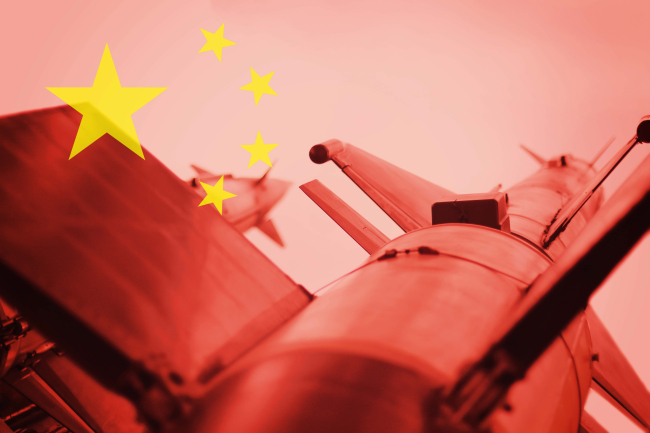
China has been steadily expanding its nuclear arsenal for several years amid levels of geopolitical tension unseen since the end of the Cold War, marked by a resurgence in nuclear proliferation and a broader, global arms race.
Reinventing Coordination in an Age of Fragmentation 3rd Paris Geoeconomic Dialogue
The world economy is being reordered. The certainties of the post-Cold War era, open trade, dollar centrality, predictable multilateral coordination, are giving way to a landscape shaped by rivalry between the United States and China, the weaponization of interdependence, and a scramble to secure supply chains, technologies and critical resources. What once looked like a stable architecture now appears fragile, contested, and in places actively being dismantled.