



Has the European Union risen up to the challenges of geopolitics? Europe after the Czech Presidency of the Council

Informations pratiques
Thématiques et régions
Centres et programmes liés
The invasion of Ukraine by the Russian Federation last year has completely overhauled the geopolitical situation on the European continent in 2022. It has exposed critical vulnerabilities in the European Union but also demonstrated that Europeans are able to act quickly, effectively, and in a united way.
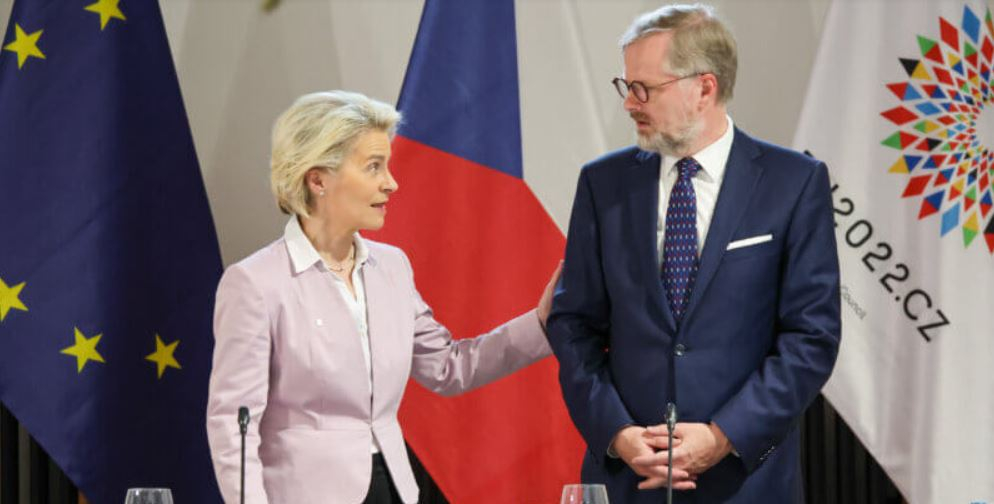
The EU’s response has been far-reaching, with measures focusing both on the short-term, e.g. on refugees, sanctions, energy, defense, etc., and the long-run, e.g. on Ukraine’s post-war recovery, European political community, etc.. After Paris in the first semester 2022, the Czech Presidency of the Council has played a key-role in advancing this strategic agenda.
The EU’s response has been far-reaching, with measures focusing both on the short-term, e.g. on refugees, sanctions, energy, defense, etc., and the long-run, e.g. on Ukraine’s post-war recovery, European political community, etc.. After Paris in the first semester 2022, the Czech Presidency of the Council has played a key-role in advancing this strategic agenda. What assessment can be done of this Presidency of the Council and Prague’s diplomatic efforts in turbulent times? What course has the EU set for itself in the new geopolitical context? What common horizon do France and the Czech Republic draw, together with Austria and Slovakia, for EU’s global role in the age of uncertainty?
14h00 Introduction
Dietmar Schweisgut, Secretary General of the Austro-French Centre for Rapprochement in Europe, Vienna
14h05 Panel discussion
Martin Vokálek, Executive Director of the EUROPEUM Institute for European Policy, Prague
Georgina Wright, Senior Fellow and Director of Institut Montaigne´s Europe Programme, Paris
Vladislava Gubalova, Senior Research Fellow at the Globsec Policy Institute, Bratislava
Paul Schmidt, Secretary General, Austrian Society for European Politics, Vienna
Lívia Benko, Research Fellow, Austrian Institute for European and Security Policy, Vienna
Moderation
Dietmar Schweisgut, Secretary General of the Austro-French Centre for Rapprochement in Europe, Vienna
15h15 End of the discussion
Cette visioconférence se tiendra en anglais, sans traduction.
Inscriptions : https://form.jotform.com/230093311603341
Les personnes inscrites recevront le lien Zoom avant l'évènement

Sujets liés
Autres événements

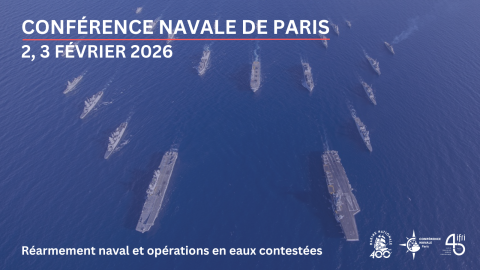
Conférence navale de Paris 2026 : Réarmement naval et opérations en eaux contestées
Cette quatrième édition de la Conférence navale de Paris (CNP), en réunissant des intervenants militaires, industriels et académiques de haut niveau, abordera les défis liés au réarmement naval général et aux opérations navales dans des environnements de plus en plus contestés.
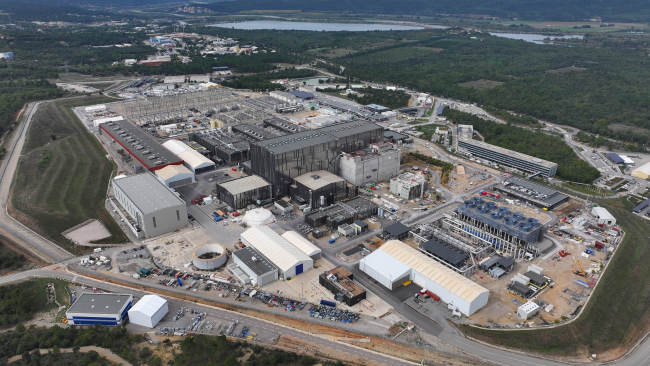
La fusion nucléaire sera-t-elle plus rapide et moins onéreuse que prévu ?
ITER a longtemps incarné la fusion en tant qu'objectif de coopération internationale à long terme en matière de R&D cherchant un nouveau moyen de produire une électricité sûre, abondante et bas carbone. Cependant, au cours des dernières années, des start-ups spécialisées dans la fusion, plusieurs gouvernements et investisseurs ont décidé de promouvoir la R&D dans le domaine de la fusion afin de compléter ITER. Des efforts importants sont actuellement déployés, notamment aux États-Unis, en Chine, en Allemagne et en Italie.

Quel avenir pour le partenariat Inde-UE après le sommet ?
Dans un contexte international bouleversé, le sommet UE–Inde du 27 janvier à New Delhi pourrait constituer une étape de rapprochement déterminante, avec l’annonce de nouveaux accords et d’un agenda stratégique commun ambitieux.