


Collective Collapse or Resilience? European Defense Priorities in the Pandemic Era

Practical information
To what extent has the COVID-19 pandemic affected defense priorities across Europe?
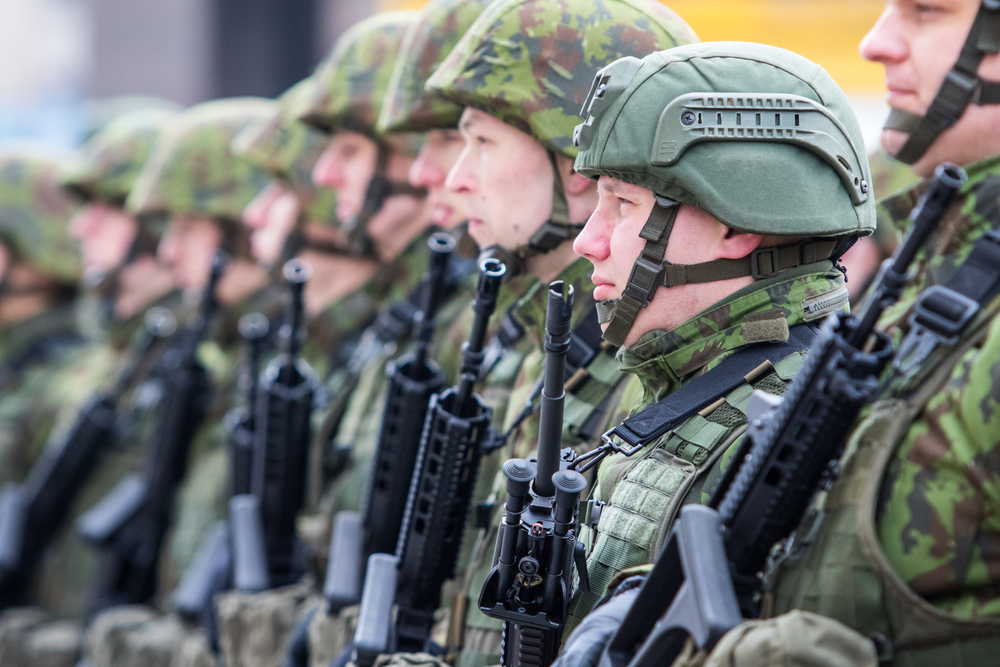
One year after the pandemic hit Europe, this webinar will discuss the findings of a new Ifri report providing a comparative assessment of the impact of the pandemic on the foreign and defense policies and spending levels of ten different European countries. Although the COVID-19 pandemic is far from over, it has already brought short-term and long-term challenges for European countries and their security policies. Although uncertainty remains about the long-term effects of the current crisis, the ten different case studies highlight that, contrary to initial pessimistic assessments, the pandemic has so far had a modest impact on defense and security policies.
This webinar will be held in English.
Programme:
Chair: Corentin BRUSTLEIN, Director of the Security Studies Center, French institute of international relations (Ifri)
Speakers:
- Charly SALONIUS-PASTERNAK, Senior Research Fellow, Finnish Institute of International Affairs (FIIA)
- Claudia MAJOR, Head of the International Security Research Division, German Institute for International and Security Affairs (SWP)
- Yvonni EFSTATHIOU, Political Officer, EU Delegation to the United Arab Emirates
- Alessandro MARRONE, Head of Defense Program, Istituto Affari Internazionali (IAI)
- Marcin TERLIKOWSKI, Head of International Security Program, Polish Institute of International Affairs (PISM)
- Peter WATKINS, Visiting Professor, King's College London and Associate Fellow, Chatham House
Discussant: Claude-France ARNOULD, Advisor on European Affairs, Ifri, and former French Ambassador to Belgium
Related Subjects
Other events
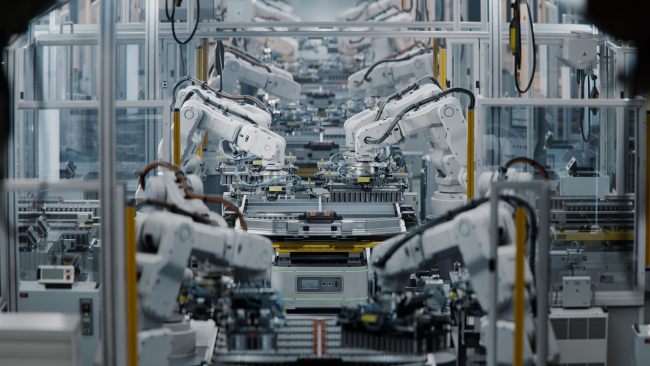
EV Supply Chains for Japan and Europe: Strengthening Economic Security
Economic security aims to ensure the resilience of supply chains for key industries: the case of electric vehicle production in Japan and Europe will be discussed.
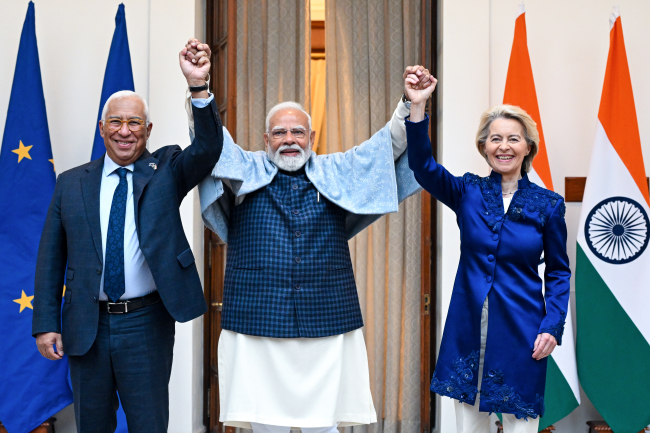
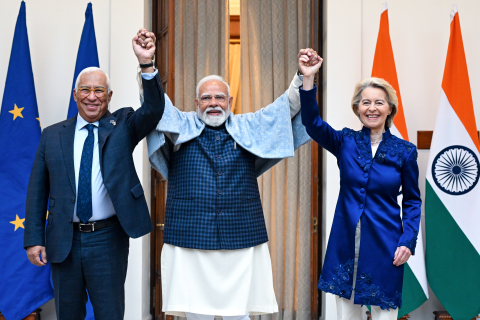
From Ambition to Action: Exploring Technological Partnerships with India
The 16th EU-India Summit, held on January 27th in New Delhi with European leaders António Costa, Ursula von der Leyen, and Prime Minister Narendra Modi, marks a significant milestone in deepening EU-India relations. At the same time, official bilateral visits from EU member states are on the rise, including that of the French President, who visited India in February to participate in the Artificial Intelligence Summit. As India asserts its technological ambitions and seeks to reduce its dependence on China, Europe is stepping up its efforts to diversify its strategic partnerships.