

Thirty Years after its Reunification, Germany's “European Moment”?
On October 3, 1990, after forty years of division, Germany once again became one state. Less than a year after the fall of the Berlin Wall, on November 9, 1989, the territories of the German Democratic Republic (GDR) became part of the Federal Republic of Germany (FRG) under Article 23 of its Basic Law.
The rapid process of German reunification continues to test the sense of national cohesion - territorially, socially and politically - of the reunified Germany to this day. Some dissenting voices in 1989-1990 had reckoned that the completion of reunification would take “at least a generation”. Where does Germany stand today, thirty years later?
At a time when the COVID-19 pandemic crisis is hitting Europe and the world hard, the cards seem to have been reshuffled at both the national and European levels. In what way do the celebrations of the thirtieth anniversary of German unity reveal Germany's position vis-à-vis the European Union?
The assessment of German reunification cannot be limited to a single German national phenomenon. Since 1990, German reunification and European construction have had a common destiny, with an interweaving of their successes, failures and limitations. In November 2019, German Foreign Minister Heiko Maas stated that “German unity is also a gift of Europe to Germany”. To what extent is the integration that the European Union has experienced over the past 30 years not also a “gift” from Germany to Europe?
Paul Maurice is a Research Fellow at the Study Committee on Franco-German Relations (Cerfa) at the French Institute of International Relations (Ifri).
This publication is available in French: "Trente ans après sa réunification, le « moment européen » de l’Allemagne ?".

Author(s)
Paul MAURICE
Secretary General of the Study Committee on Franco-German Relations (Cerfa), Ifri
Related centers and programs
Discover our other research centers and programs
The Study Committee on Franco-German Relations (Cerfa)
The Study Committee on Franco-German Relations (Cerfa) was created in 1954 by an inter-governmental agreement between the Federal Republic of Germany and France, in order to raise awareness of Germany in France and analyze Franco-German relations, including in their European and international dimensions. In its conferences and seminars, which bring together experts, political leaders, senior decision-makers and representatives of civil society from both countries, Cerfa develops the Franco-German debate and stimulates political proposals. It regularly publishes studies through two collections: Cerfa notes and studies as well as Franco-German visions.
Cerfa maintains close relations with the network of German foundations and think tanks. In addition to its research and debate activities, Cerfa promotes the emergence of a new Franco-German generation through original cooperation programs. This is how in 2021-2022, Cerfa led a program on multilateralism with the Konrad Adenauer Foundation in Paris. This program is aimed at young professionals from both countries interested in the issues of multilateralism in the context of their activities. It covered a wide range of themes relating to multilateralism, such as international trade, health, human rights and migration, non-proliferation and disarmament. Previously, Cerfa had participated in the Franco-German future dialogue, co-led with the DGAP from 2007 to 2020, and supported by the Robert Bosch Foundation and the Daniel Vernet group (formerly the Franco-German Reflection Group) which was founded in 2014 upon the initiative of the Genshagen Foundation.
Find out more
Discover all our analyses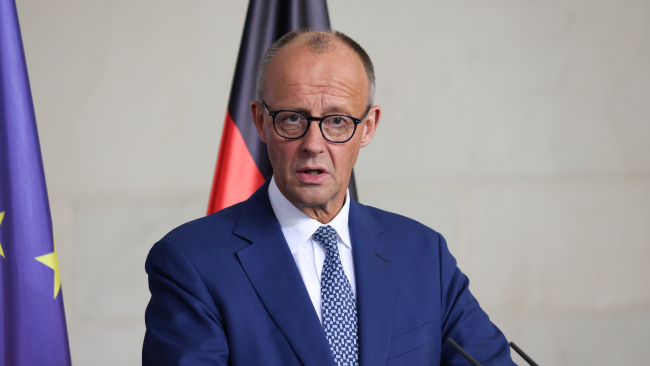
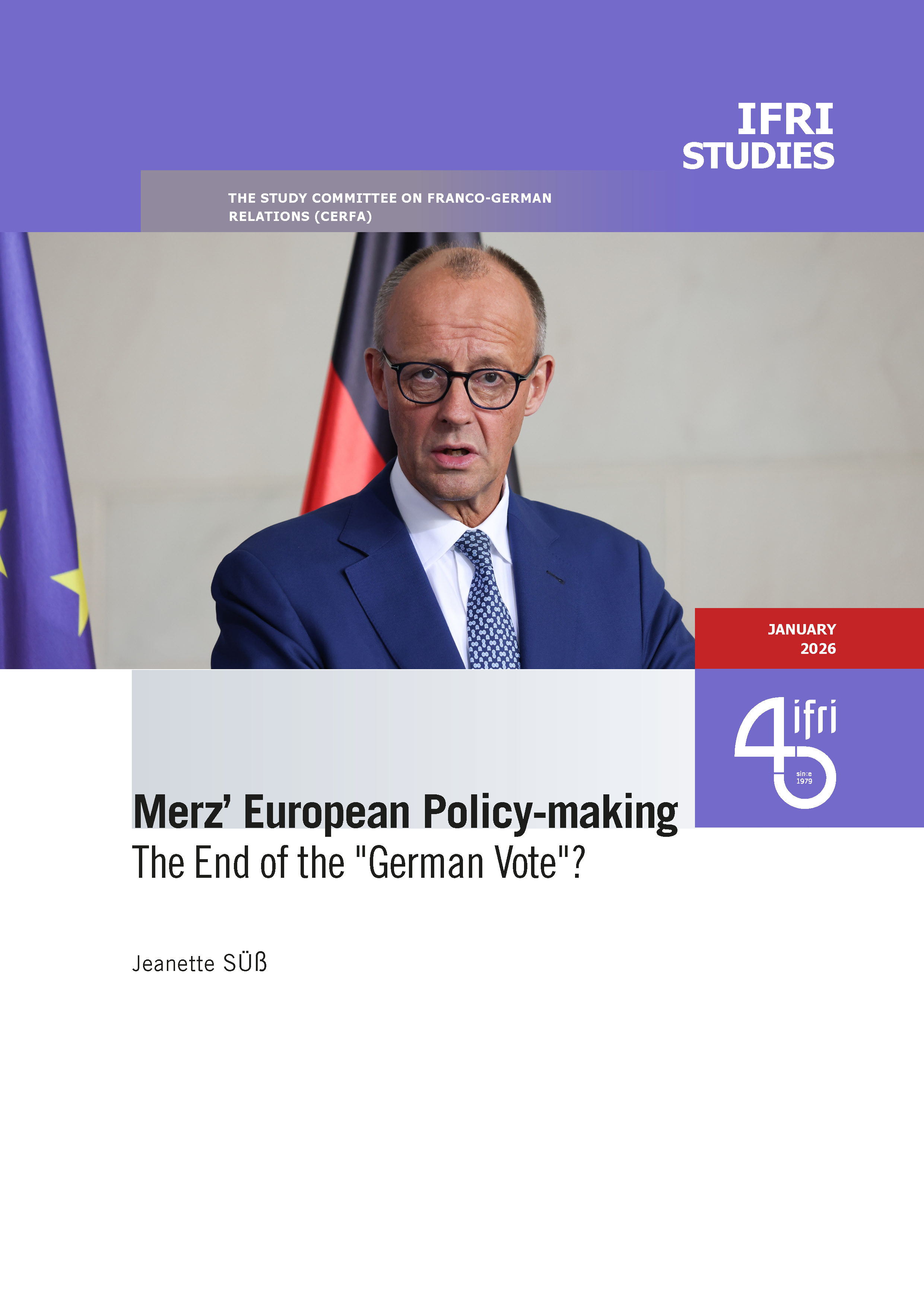
Merz’ European Policy-making: The End of the ‘German Vote’?
Friedrich Merz’s European ambition is to turn Germany, long seen as hesitant into a leading actor within the European Union (EU). To that end, he has pledged to end the “German vote,” a phenomenon that epitomizes the paradox of a country both indispensable and frequently absent from European decision-making.

Securing critical raw material (CRM) value chains – a prerequisite for Europe’s technological resilience
At the heart of economic security, technological resilience is a backbone of the European Union’s (EU) competitiveness. The EU’s energy and digital transitions depend on critical raw materials (CRM).

Reconciling competitiveness and demographic change: a Franco-German imperative
France and Germany are facing parallel demographic shifts that could reshape the future of their economies and their social models. These shifts reflect broader European patterns but are magnified by the central role both nations play in EU governance and competitiveness.
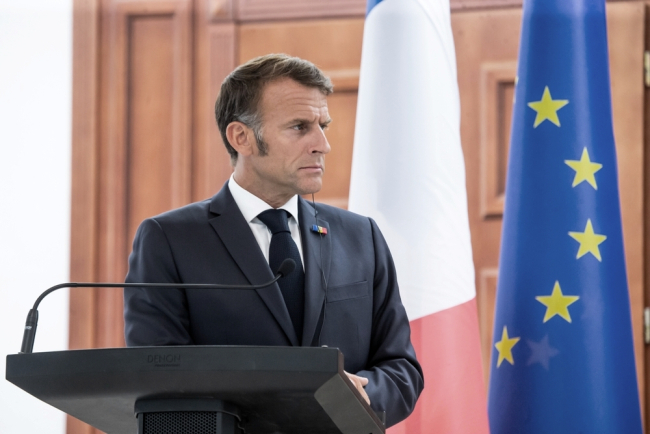
Taking the Pulse: Does France's Political Crisis Weaken Europe's Geopolitical Hand?
While the EU tries to navigate a myriad international challenges, France is experiencing historic political disarray. What impact will instability in Paris have on Europe's geostrategic capacity?