

The Evolving Role of Nuclear Rhetoric in Iran’s Strategic Calculus
How has the Iranian strategic discourse about nuclear weapons and deterrence evolved?

In April 2025, Ali Larijani, a trusted advisor to Iran’s Supreme Leader Ali Khamenei and former Secretary of the Supreme National Security Council, declared on Iranian State TV that Iran “was not moving towards nuclear weapons”, but warned that if Western powers acted irresponsibly on the issue, Iran “would be forced” to reconsider.1 This statement came in response to U.S. President Donald Trump’s threat to bomb Iran if negotiations over its nuclear program failed.
This direct reference to nuclear weapons by a senior Iranian official, marks a notable evolution in Iran’s official rhetoric regarding its nuclear program.2 While the leadership continues to describe its nuclear program as peaceful, an increasing number of public statements from politicians, think tankers, and military officers now hint at a shift toward deterrence-driven signaling.
This rhetorical evolution did not emerge in a vacuum. Although there were occasional statements between 2018 – the year the United States withdrew from the JCPOA – and 2023 (as explored in this memo), a significant uptick has occurred since early 2024. This coincides with the deterioration of the regional security environment because of the Gaza War, which included two direct Israeli attacks on Iranian territory, in April and October 2024.The “twelve-day war” in June 2025, marked by Israeli and American strikes on Iranian nuclear and military facilities, further reinforced this trend and underscored the failure of “conventional deterrence”.3
In parallel, rhetoric from the European signatories of the JCPOA – France, Germany and the UK – as well as from the United States (especially after Donald Trump’s return to power) has grown increasingly confrontational. Western diplomatic postures, in alignment with U.S. policy, have also hardened and may have contributed to Iran’s shifting threat perception, thereby increasing the risk of miscalculation.
This memo argues that Iran’s evolving nuclear rhetoric should not be dismissed as mere posturing. It reflects a deeper strategic recalibration in response to the erosion of its conventional deterrence, heightened regional insecurity, and the perceived failure of the international non-proliferation regime. The rhetorical shift is both a signal to adversaries and a form of performative deterrence that mirrors escalation observed elsewhere, notably in nuclear-armed states.
Read the whole memo on PRISME website.

Available in:
Themes and regions
Share
Author(s)

Héloïse FAYET
Research Fellow and Head of the Deterrence and Proliferation program, Security Studies Center, Ifri

Related centers and programs
Discover our other research centers and programs
Deterrence and Proliferation
The conflicts in Europe, Asia and the Middle East demonstrate a return of nuclear power to the balance of power. Arsenals are being modernized and expanded, while arms control is collapsing. This research program aims to analyze these phenomena.
Security Studies Center
Heir to a tradition dating back to the founding of Ifri, the Security Studies Center provides public and private decision-makers as well as the general public with the keys to understanding power relations and contemporary modes of conflict as well as those to come. Through its positioning at the juncture of politics and operations, the credibility of its civil-military team and the wide distribution of its publications in French and English, the Center for Security Studies constitutes in the French landscape of think tanks a unique center of research and influence on the national and international defense debate.
Turkey/Middle East Program
Ifri's Turkey/Middle East Program aims to provide expertise on the trends and developments in politics, societies and economies across the region.
The programme has the following objectives:
- Proposing a new approach towards the MENA region through an analysis of local, regional, and international dynamics with the potential to guide and influence new policies.
- Highlighting the role of foreign powers which have traditionally been present in the region and analyzing the new role taken on by emerging countries ;
- Anticipating new directions and outlooks in each country.
- Interpreting risks and potentials and putting forward new templates for analysis.
The programme has built a dense network of researchers and experts who provide expertise on the MENA region and working together on a range of crosscutting themes.
Find out more
Discover all our analyses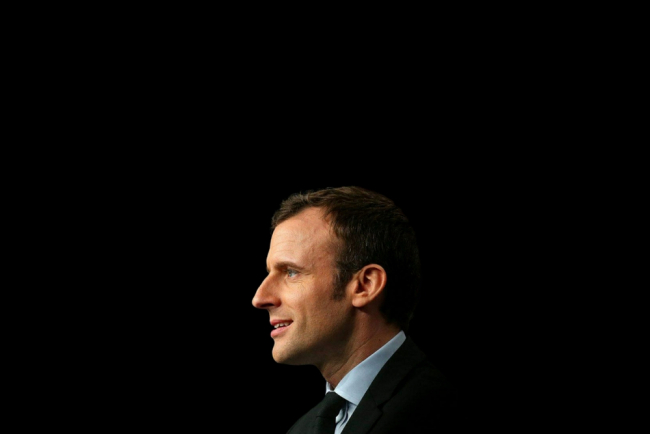
Taking the Pulse: Is France’s New Nuclear Doctrine Ambitious Enough?
French President Emmanuel Macron has unveiled his country’s new nuclear doctrine. Are the changes he has made enough to reassure France’s European partners in the current geopolitical context?
Macron Offers a Promising Vision for Nuclear Deterrence in Europe
Macron’s concept of ‘forward deterrence’ offers a distinctly European approach to nuclear deterrence.
France has a new nuclear doctrine of ‘forward deterrence’ for Europe. What does it mean?
On Monday, French President Emmanuel Macron delivered a speech on France’s nuclear deterrence at the Île Longue naval base near Brest in Brittany, which hosts the country’s nuclear-armed ballistic missile submarines. Such addresses are a well-established presidential ritual, typically delivered once per presidential term and receiving moderate attention. This one, however, was highly anticipated in France and abroad, given the profound geopolitical shifts since Macron’s first nuclear speech in February 2020.

Mind the Deterrence Gap: Assessing Europe’s Nuclear Options
Europe must urgently confront a new nuclear reality. In recent years, Russia’s nuclear-backed revisionism has reintroduced nuclear coercion and the threat of nuclear escalation to the continent, underscoring the importance of credible nuclear deterrence. At the same time, Europe’s traditional reliance on US extended nuclear deterrence appears politically more fragile than at any point since the Cold War. Together, these developments require Europeans to think about their nuclear options.