

The Future of Space Cooperation: Challenges and Opportunities in the Trump II Era
Practical information
Accessibility
Themes and regions
Related centers and programs
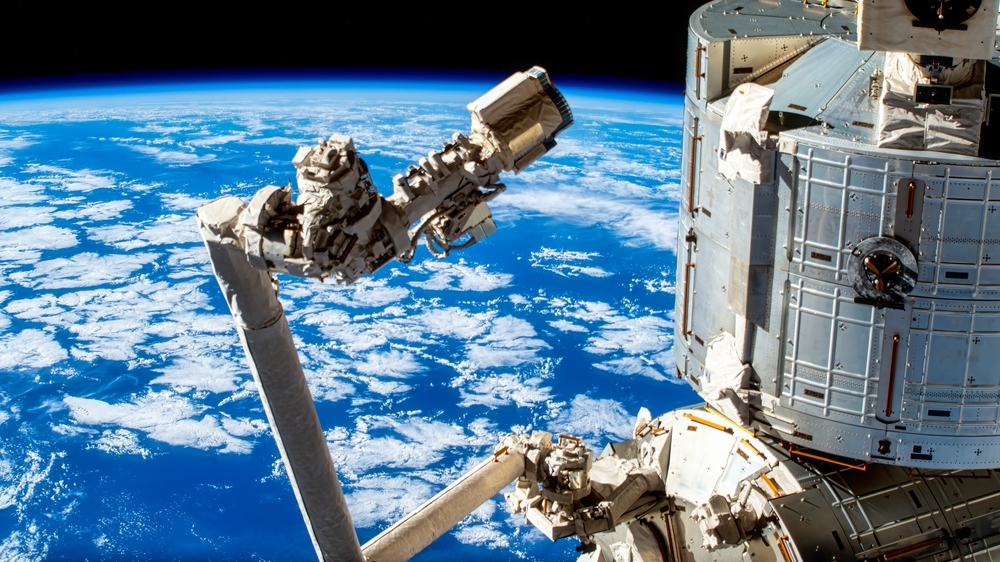
The policy orientations of the Trump II administration profoundly challenge the foundations of international cooperation in space science and exploration. This shift reflects a broader trend of strategic disengagement and weakening of multilateral mechanisms in the space domain.
Europe — whose space development has historically been rooted in a cooperative approach — is particularly vulnerable to these dynamics. This evolution is already producing tangible consequences at the industrial, scientific, and strategic sovereignty levels.
In this context, the question of redefining space cooperation becomes increasingly pressing: under which modalities, with what objectives, and involving which partners?
Program
2:30 pm-3:00 pm | Keynote
Xavier Pasco, Director of the Foundation for Strategic Research (FRS)
3:00 pm-4:00 pm | Roundtable: Agency Perspectives on Trump’s Space Policy
Christophe Venet, Director for European and International Affairs, Centre National d'Études Spatiales (CNES)
Alexander Soucek, Head of External Relations Department at European Space Agency (ESA)
Koichi Morimoto, Director, Japan Aerospace Exploration Agency (JAXA) Paris Office - TBC
Moderator: Claude-France Arnould, Senior Fellow at the Brussels Institute for Geopolitics
4:00 pm-5:00 pm | Workshop: Towards the End of Scientific Cooperation with the United States?
During this session, each participant will be invited to briefly present the main issues and challenges related to the future of international space cooperation from their institutional or sectoral perspective, with the objective of collectively formulating key recommendations.
Moderator: Paul Wohrer, Head of the Space Program, Ifri
The seminar will be held in English without translation
Contact
Paul WOHRER
Research Fellow, Space Program, Center for Geopolitics of Technology, Ifri