



Practical information
The European Union (EU) has witnessed an influx of immigrants for more than two years. It has had an important impact on a great number of member states, and on the EU itself, who turned out to be, to a large extent, incapable of adopting a shared approach.
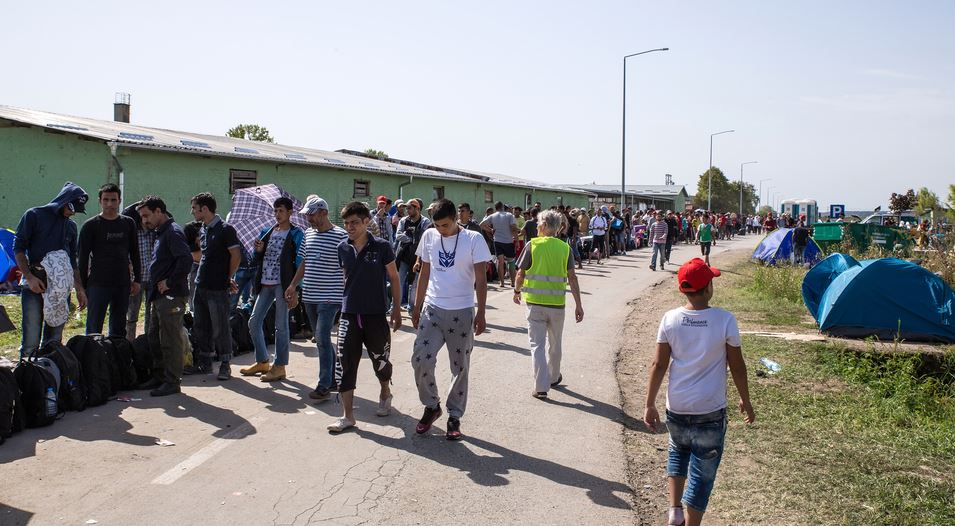
From a longer-term perspective, the arrival of these immigrants raises numerous issues and poses great challenges to a Europe that is secularized, obsessed with security risks and tempted by cultural isolationism. France, an “old” immigration country, and Austria, a central transit country during the past few years, have interpreted these events in different lights, and have managed the consequences based on their different historic, cultural and legal legacies.
The conference, organized by the Franco-Austrian Centre for European Rapprochement (CFA), the IFRI and the International Centre for Migration Policy Development (Vienna), aims to exchange views on these different experiences and approaches.
Speakers:
Sieglinde ROSENBERGER, professor at the University of Vienna, Vice-President of the Religion and Transformation in Contemporary Society
Didier LESCHI, Director-General of the French Office for Immigration and Integration (OFII), Paris
Bernard PERCHINIG, Chief Researcher, International Centre for Migration Policy Development (Vienna)
Moussa AL-HASSAN DIAW, Co-founder of the Network for Social Cohesion, Prevention, Deradicalization and Democracy, expert on Islamism (Vienna)
Christophe BERTOSSI, Director of the Centre for Migration and Citizenship, IFRI, Paris
Conference in French and German with simultaneous interpretation.
A detailed program is available in French below.
Other events
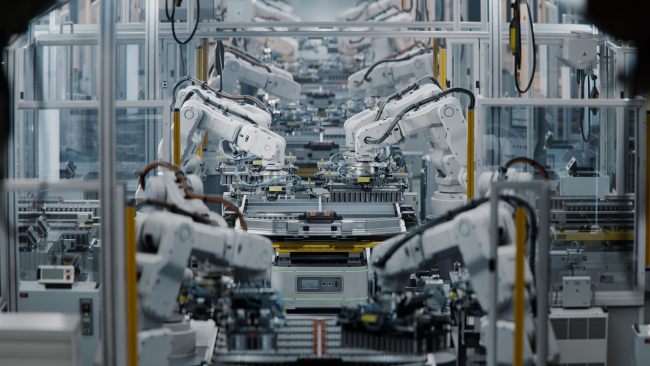
EV Supply Chains for Japan and Europe: Strengthening Economic Security
Economic security aims to ensure the resilience of supply chains for key industries: the case of electric vehicle production in Japan and Europe will be discussed.
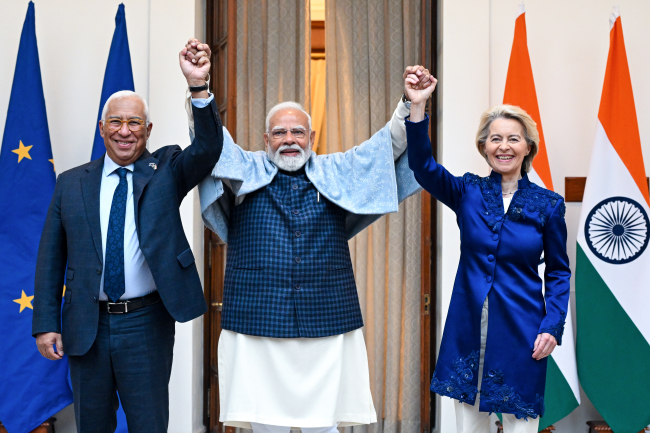
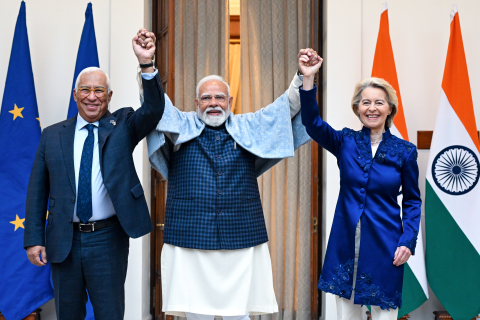
What Kind of Technological Partnership with India?
As India asserts its technological ambitions and seeks to reduce its dependence on China, Europe is stepping up its efforts to diversify its strategic partnerships. What opportunities arise from the convergence of these two dynamics? Can cooperation in cutting-edge sectors—from electric vehicles to artificial intelligence and semiconductors—transform the Indo-European relationship into a lever for strategic autonomy?