


Practical information
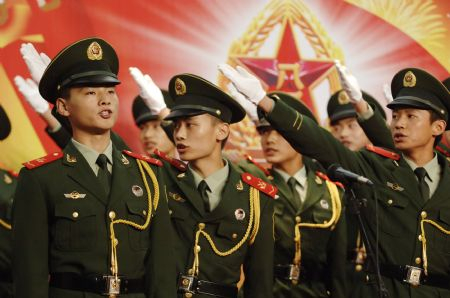
La proximité historique du Parti Communiste Chinois et de l’Armée Populaire de Libération qui l’a amené au pouvoir en 1949 a résisté aux crises et changements les plus dramatiques qu’a connu le régime, depuis la contestation de Tiananmen en 1989 jusqu’à la libéralisation progressive de la société et de l’économie chinoises à la fin du XXème siècle. La pérennité de cette connexion unique tient à la volonté du parti de maintenir l’armée au cœur de l’idéologie du régime et de l’intégrer aux structures locales du gouvernement. La politisation des troupes, à la fois dans leur endoctrinement et dans leurs fonctions intérieures, est la pierre de touche qui permet de comprendre comment s’élabore la notion de sécurité nationale en Chine.
Juliette Genevaz est chercheur post-doc (TAPIR) au sein du Centre Asie de l'Ifri et docteur en sciences politiques de l’Université d’Oxford (2013).
Participation sur invitation uniquement.
Speakers

Our team

Juliette GENEVAZ
Transatlantic Postdoctoral Fellow for International Relations and Security (TAPIR) jusqu'en juin 2015 au Centre Asie de l'Ifri.

Find out more
Nationalismes en Chine et au Japon et implications pour les relations bilatérales
Le facteur nationaliste apparaît comme une composante importante des frictions grandissantes opposant la Chine et le Japon.
Abe’s Japan and Xi’s China: from Cold Peace to Hot War?
Sino-Japanese relations have deteriorated since Shinzo Abe and Xi Jinping came to power.
Asia-Pacific: China’s Foreign Policy Priority
China is increasingly active in the Asia-Pacific region, an area that makes up the main focus of its foreign policy.
Other events
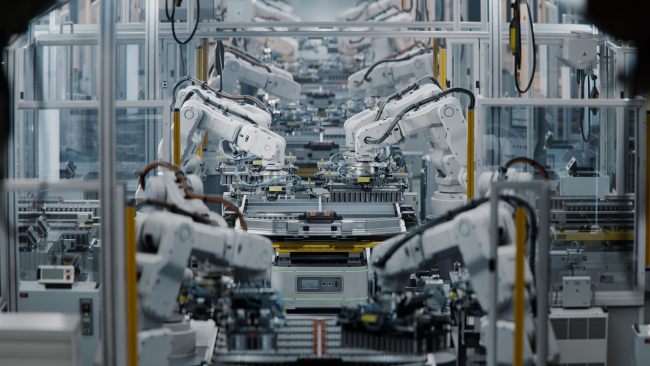
EV Supply Chains for Japan and Europe: Strengthening Economic Security
Economic security aims to ensure the resilience of supply chains for key industries: the case of electric vehicle production in Japan and Europe will be discussed.
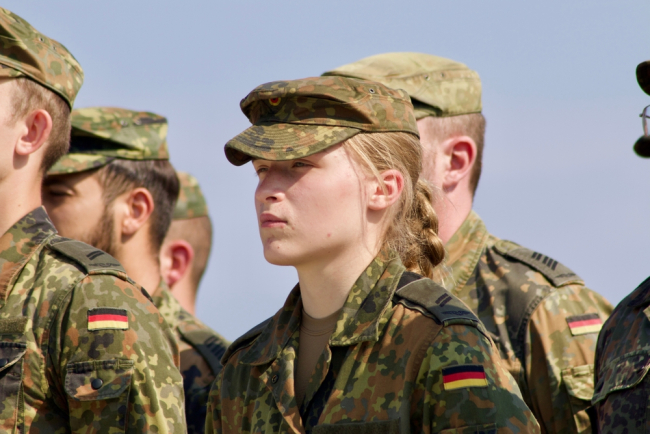
Which Defense Policy for Germany?
Faced with the war in Ukraine and geopolitical instability in Europe amid a turbulent transatlantic environment, Germany has embarked on a major shift in its defense policy, with a significant increase in military spending, the modernization of the Bundeswehr, and debate over a possible return to compulsory military service.
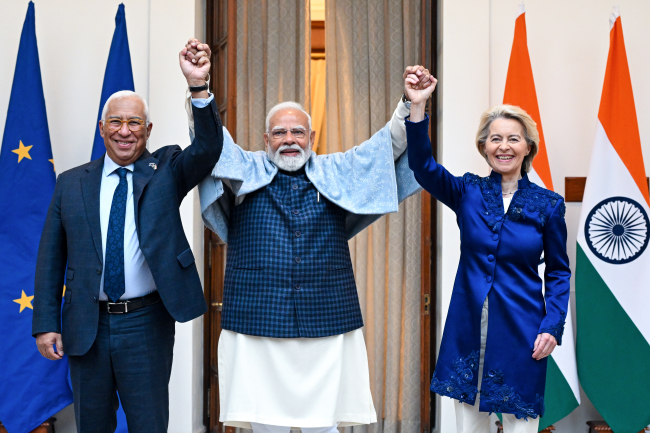
From Ambition to Action: Exploring Technological Partnerships with India
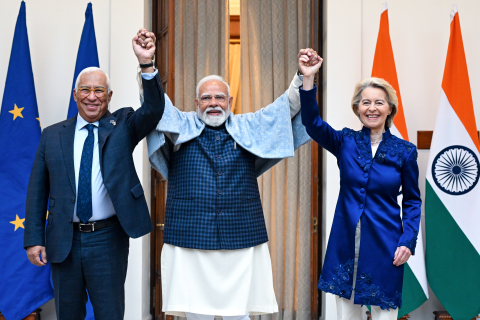
The 16th EU-India Summit, held on January 27th in New Delhi with European leaders António Costa, Ursula von der Leyen, and Prime Minister Narendra Modi, marks a significant milestone in deepening EU-India relations. At the same time, official bilateral visits from EU member states are on the rise, including that of the French President, who visited India in February to participate in the Artificial Intelligence Summit. As India asserts its technological ambitions and seeks to reduce its dependence on China, Europe is stepping up its efforts to diversify its strategic partnerships.