


Indonesia’s 2024 Presidential Elections: Campaigning for Continuity
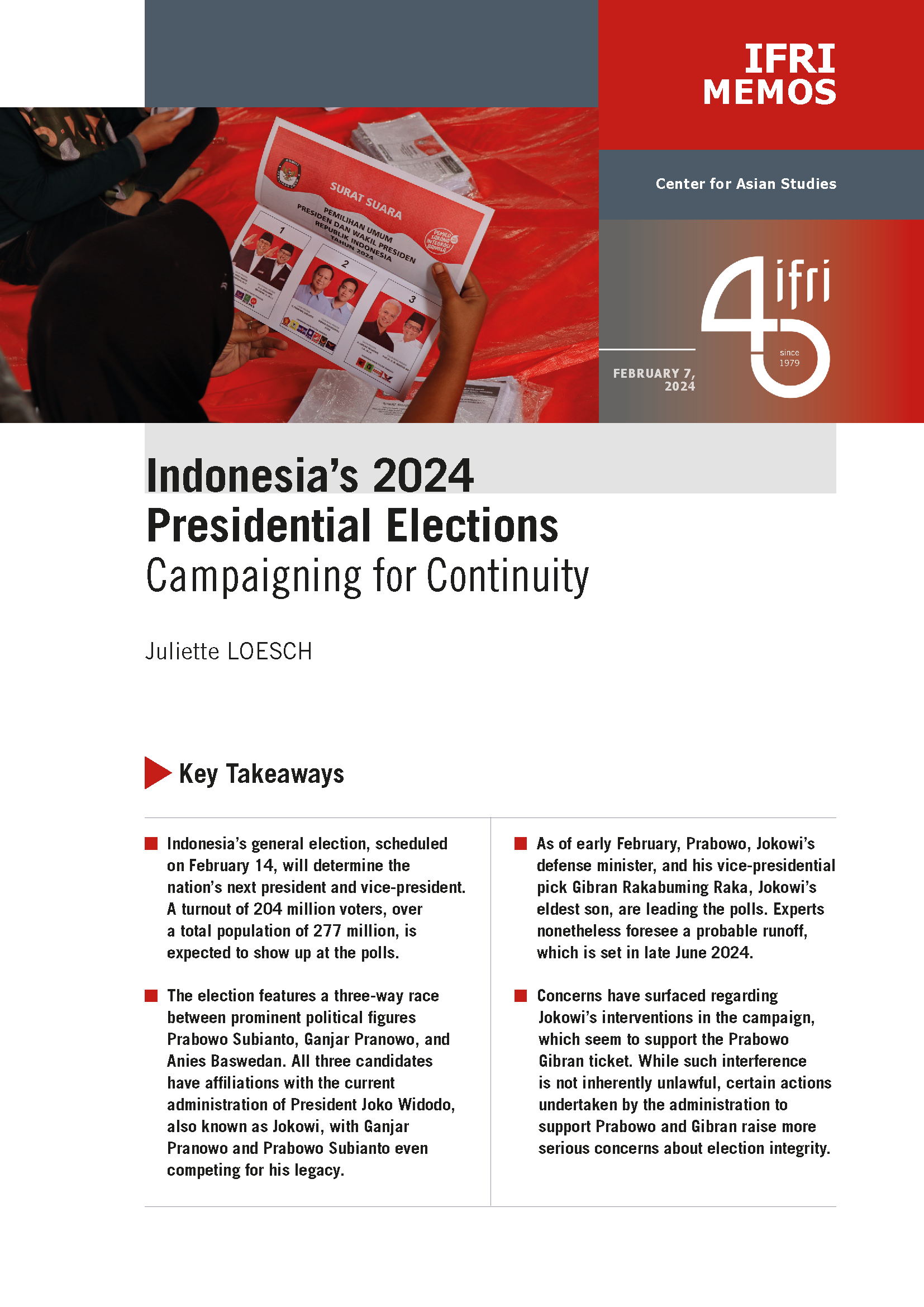
Indonesia is gearing up for its next general election on February 14, with a potential runoff scheduled in late June. This major electoral process will determine the nation’s next president and vice-president since incumbent President Joko Widodo, also known as Jokowi, will step down after ten years in office in compliance with the constitutional limit of two terms.
Voters will also decide on nearly 20,000 representatives at the national, provincial, and district levels. Another provincial election is set for November this year, although discussions are currently unfolding in the Parliament to advance it to September. This proposed timeline has triggered concerns about possible interference from the current administration, given that the new one will only be appointed in October.
Indonesia’s general election will determine the nation’s next president and vice-president. A turnout of 204 million voters, over a total population of 277 million, is expected to show up at the polls.
The election features a three-way race between prominent political figures Prabowo Subianto, Ganjar Pranowo, and Anies Baswedan. All three candidates have affiliations with the current administration of President Joko Widodo, also known as Jokowi, with Ganjar Pranowo and Prabowo Subianto even competing for his legacy.
As of early February, Prabowo, Jokowi’s defense minister, and his vice-presidential pick Gibran Rakabuming Raka, Jokowi’s eldest son, are leading the polls. Experts nonetheless foresee a probable runoff, which is set in late June 2024.
Concerns have surfaced regarding Jokowi’s interventions in the campaign, which seem to support the Prabowo Gibran ticket. While such interference is not inherently unlawful, certain actions undertaken by the administration to support Prabowo and Gibran raise more serious concerns about election integrity.

Available in:
Regions and themes
ISBN / ISSN
Share
Download the full analysis
This page contains only a summary of our work. If you would like to have access to all the information from our research on the subject, you can download the full version in PDF format.
Indonesia’s 2024 Presidential Elections: Campaigning for Continuity

Author(s)
Related centers and programs
Discover our other research centers and programs
Center for Asian Studies
Asia is a nerve center for multiple global economic, political and security challenges. The Center for Asian Studies provides documented expertise and a platform for discussion on Asian issues to accompany decision makers and explain and contextualize developments in the region for the sake of a larger public dialogue.
The Center's research is organized along two major axes: relations between Asia's major powers and the rest of the world; and internal economic and social dynamics of Asian countries. The Center's research focuses primarily on China, Japan, India, Taiwan and the Indo-Pacific, but also covers Southeast Asia, the Korean peninsula and the Pacific Islands.
The Centre for Asian Studies maintains close institutional links with counterpart research institutes in Europe and Asia, and its researchers regularly carry out fieldwork in the region.
The Center organizes closed-door roundtables, expert-level seminars and a number of public events, including an Annual Conference, that welcome experts from Asia, Europe and the United States. The work of Center’s researchers, as well as that of their partners, is regularly published in the Center’s electronic journal Asie.Visions.
Find out more
Discover all our analyses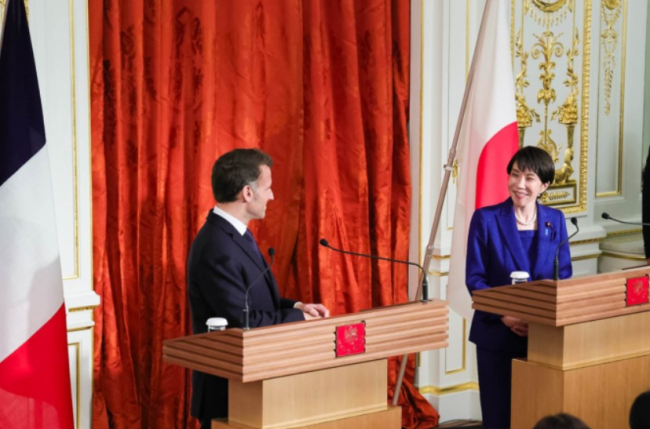
Emmanuel Macron in Japan and South Korea: A Historic Opportunity for Euro-Asian Rapprochement
President Emmanuel Macron is touring Japan and South Korea at a time when the interests of these three countries have never been more aligned, and more broadly between Europe and East Asian democracies.

Afghanistan-Pakistan: The Overlooked War at the Margins of the Middle East Conflict
Pakistan has historically maintained the closest ties to the Taliban movement and initially viewed its return to power in Afghanistan in the summer of 2021 with considerable optimism. The bilateral relationship has since deteriorated, and the two neighbors have been caught in a cycle of escalation since last fall. In October 2025, Pakistan launched its first airstrikes on Kabul. For three weeks in February–March 2026, Afghanistan intensified ground assaults on the Pakistani side of the border as well as drone attacks on Islamabad and Rawalpindi. Pakistan, for its part, has intensified airstrikes on Afghan border areas, as well as on Kabul and Kandahar. Given the dynamics at play at the bilateral and regional levels, the prospects for a sustained return to stability appear limited.
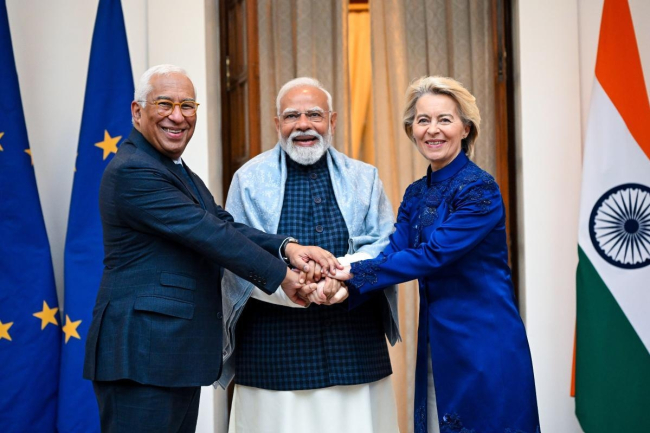
European Union-India: Lasting Rapprochement or Partnership of Convenience?
The partnership between the European Union (EU) and India has long been limited to economic exchanges. Its political dimension has gradually developed, culminating in its elevation to the status of a “strategic partnership” in 2004. However, the failure of negotiations for a free-trade agreement in 2013 slowed this momentum. Since the early 2020s, in an uncertain geopolitical context, bilateral rapprochement has gained new momentum.
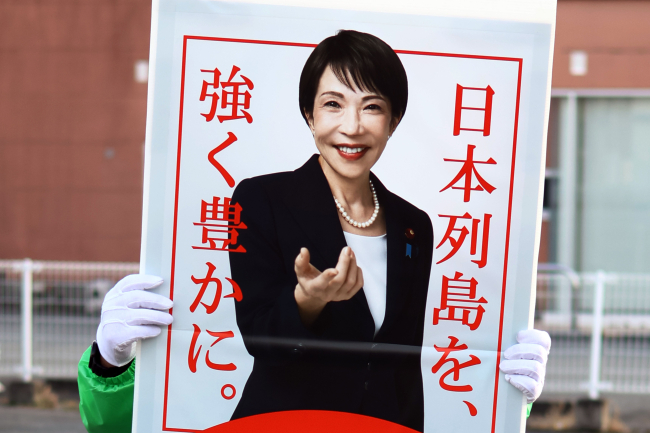
Japan’s Takaichi Landslide: A New Face of Power
Prime Minister Sanae Takaichi has turned her exceptional popularity into a historic political victory. The snap elections of February 8 delivered an overwhelming majority for the Liberal Democratic Party (LDP), driven by strong support from young voters, drawn to her iconoclastic and dynamic image, and from conservative voters reassured by her vision of national assertiveness. This popularity lays the foundation for an ambitious strategy on both the domestic and international fronts.