





Hong Kong : The 2019 Protest Movement and the Future of Autonomy
The current protest movement in Hong Kong, which began with the proposed extradition law in June 2019 that would have considerably weakened the judicial border between Hong Kong and Mainland China, has set itself apart from the city’s numerous movements in recent years by its massive following. The protestors, who employ original strategies (online organization, absence of clear leadership, use of digital tools), achieved an initial success with the suspension of the proposed law in September. But even after the law’s withdrawal, massive protests and increasing acts of violence continued to grip the territory. Demands now center around an independent investigation into acts of police violence and on the revival of democratic reforms.
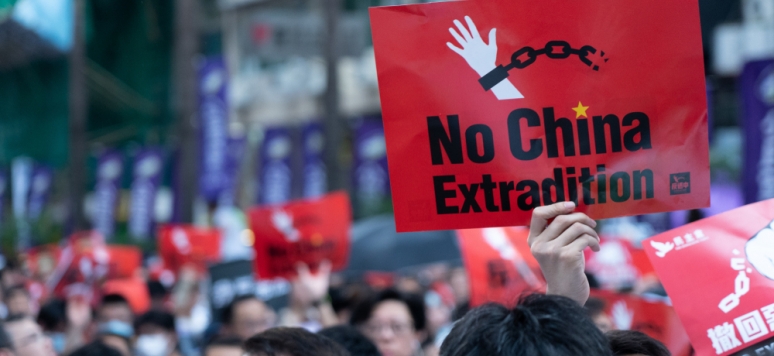
The resiliency of this movement, and its support from within public opinion, can first be explained by the accumulation of resentment within a large part of the population. Such resentment has been provoked by the increasing alterations to the principles of autonomy that are inscribed in the official texts governing Hong Kong’s retrocession to China. The second reason of the movement’s longevity is the internal dynamics resulting from the almost exclusively-repressive approach that local and national authorities have adopted, with the tangible empowerment of the police relative to the local political authorities. The implication of the US Congress, in the context of the US-China trade war, has introduced an added degree of complexity to the equation.
The strong sense of civic identity that has developed in Hong Kong since its retrocession (even if this has not translated into demands for political independence so far) collide with the refusal of the authorities to pursue a democratic evolution, as set out in the Basic Law. An unstable balance has therefore set in between non-democratic institutions and an ever-growing mobilization of Hong Kong society that serves as a counterweight in protecting the “high degree of autonomy” that the territory constitutionally benefits from. For the time being it is difficult to see how this balance can survive the shock that the 2019 protest movement has dealt and the reprisals the central government is likely to enact.
This publication is only available in French: Hong Kong : le mouvement de protestation de 2019 et l'avenir du statut d'autonomie.


Center for Asian Studies
Asia is a nerve center for multiple global economic, political and security challenges. The Center for Asian Studies provides documented expertise and a platform for discussion on Asian issues to accompany decision makers and explain and contextualize developments in the region for the sake of a larger public dialogue.
The Center's research is organized along two major axes: relations between Asia's major powers and the rest of the world; and internal economic and social dynamics of Asian countries. The Center's research focuses primarily on China, Japan, India, Taiwan and the Indo-Pacific, but also covers Southeast Asia, the Korean peninsula and the Pacific Islands.
The Centre for Asian Studies maintains close institutional links with counterpart research institutes in Europe and Asia, and its researchers regularly carry out fieldwork in the region.
The Center organizes closed-door roundtables, expert-level seminars and a number of public events, including an Annual Conference, that welcome experts from Asia, Europe and the United States. The work of Center’s researchers, as well as that of their partners, is regularly published in the Center’s electronic journal Asie.Visions.

Japan’s Energy Policy after Hormuz. Security, Competitiveness, and Decarbonization
The 2026 Hormuz crisis has strengthened rather than weakened the rationale for Japan’s decarbonization strategy, contrary to what might have been expected. Rather than energy policy supplanting climate policy, the two should actually be viewed as inseparable.

Japan and Nuclear Weapons: Between Extended Deterrence and Normative Dilemmas
Since the late 1950s, Japan’s nuclear weapons policy has been based on the coexistence of two competing normative rationales: the rejection of nuclear weapons, rooted in the legacy of Hiroshima and Nagasaki, and the recognition of the central role of US extended nuclear deterrence for Japan’s security.
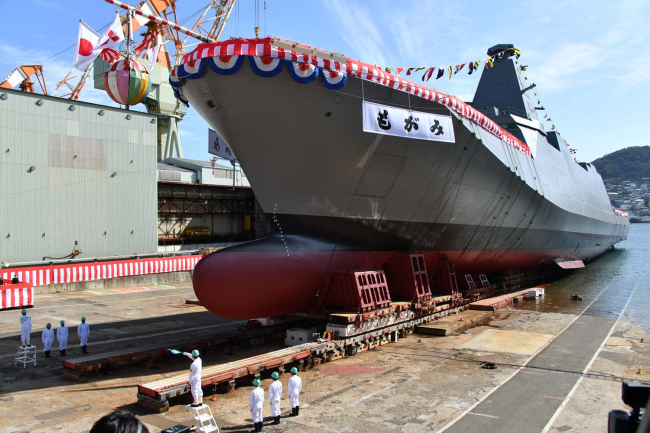
Japan’s Defense Industry Goes Global: Ambitions and Challenges

Fragmented Europe: Dealing with China as a technology and innovation power
How is Europe navigating China’s ascension as a technological power? The latest report by the European Think-tank Network on China (ETNC) provides a nuanced account of a converging, yet still fragmented approach across 22 countries.