

Russia’s Immigration Policy: New Challenges and Tools
A new stage in the development of Russia's migration policy is upon us. Since 2010, legal amendments and the Concept of Migration Policy of the Russian Federation to 2025, adopted in June 2012, marked a clear change in how migration flows are regulated, the aim being now to maximise the economic benefit of labour migration.
The introduction of a system of licenses and new rules which make it easier for highly qualified foreign specialists to find a job are undoubtedly positive developments for Russian immigration policy. Nevertheless, Russia remains unattractive to skilled workers and students.
The current state of the Russian economy calls for temporary migration of labour into advanced innovative fields as well as into such areas as construction, services and manufacturing industry. The Commonwealth of Independent States (CIS) serves as the main source of foreign manpower and a visa-free regime exists between CIS countries and Russia. Inevitably, the progress of Eurasian integration and the expansion of the Eurasian Economic Union will impact upon Russia’s migration system significantly. Eventually, Russia's migration policy will depend on the state of Russian economy in the decade to come.
Lyubov Bisson is a research fellow at the Department of European Integration Studies, Institute of Europe, at the Russian Academy of Sciences (IE RAS) in Moscow. A graduate from the Moscow Institute of International Relations (MGIMO, Russian MFA), she completed her Bachelor’s degree in political science in 2007 and in 2009, she was awarded a Master degree in “European Studies”. In 2015, she defended her PhD thesis. Her research interests include: European integration, the immigration policies of the EU and its member states, Russian immigration policy, the integration of immigrants, and national identity.

Available in:
Regions and themes
ISBN / ISSN
Share
Download the full analysis
This page contains only a summary of our work. If you would like to have access to all the information from our research on the subject, you can download the full version in PDF format.
Russia’s Immigration Policy: New Challenges and Tools

Author(s)
Related centers and programs
Discover our other research centers and programs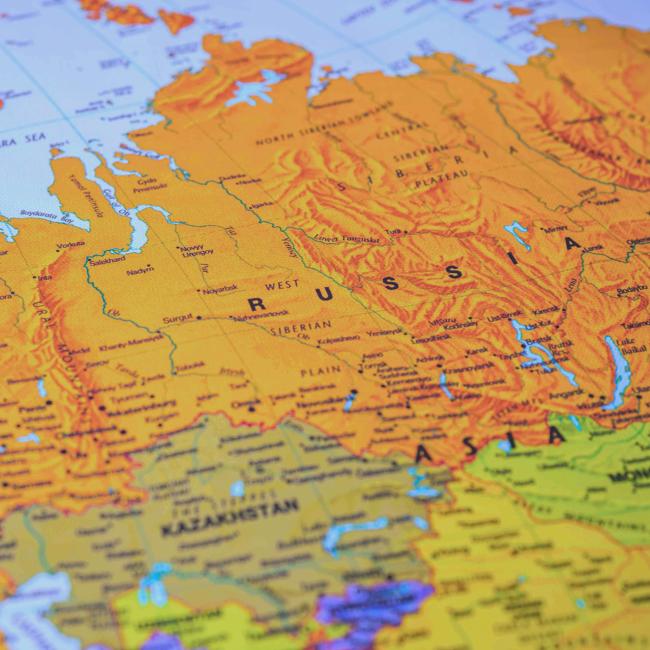
Russia/Eurasia Center
Founded in 2005 within Ifri, the Russia/Eurasia Center conducts research and organizes debates on Russia, Eastern Europe, Central Asia, and the South Caucasus. Its goal is to understand and anticipate the evolution of this complex and rapidly changing geographical area in order to enrich public discourse in France and Europe and to assist in strategic, political, and economic decision-making.
Find out more
Discover all our analyses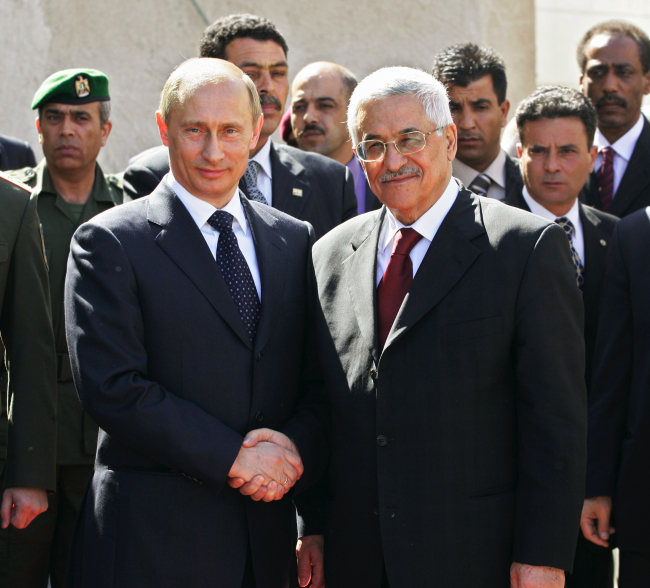
Russia, the Palestinians and Gaza: Adjustments after October 7th
The Soviet Union (USSR), and subsequently the Russian Federation as its internationally recognized legal successor, has consistently sought to play a visible role in efforts to resolve the Israeli-Palestinian conflict.
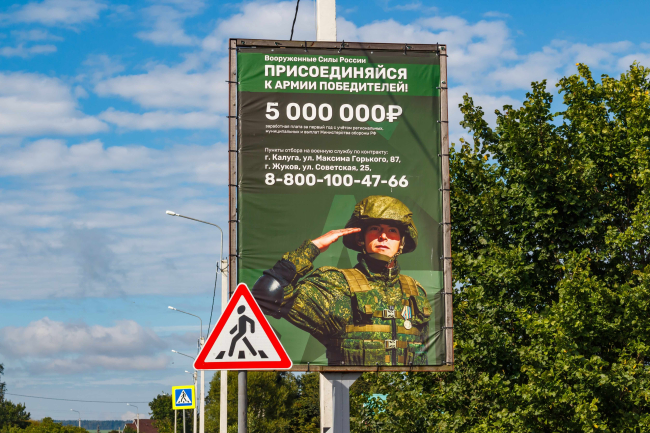
Deathonomics: The Social, Political, and Economic Costs of War in Russia
The report attempts to outline and examine a truly new phenomenon in Russian society, dubbed “deathonomics”—the making of a mercenary army against the backdrop of the Kremlin’s war in Ukraine, eventually replacing both the Soviet (conscript) and early new Russian (contract) armies. It notes that, by the end of 2023, this trend had turned the military service into one of the highest-paying professions in the country, something not seen in Russia on such a scale since the late 17th century.

Russia's Asia Strategy: Bolstering the Eagle's Eastern Wing
Among Russia’s strategic priorities, Asia traditionally played a secondary role compared to the West. In the mid-1990s, then Foreign Minister Yevgeny Primakov initiated a rapprochement with China and India. Then, in 2014, deteriorating relations between Russia and the West prompted Moscow to begin its “great pivot to the East”.
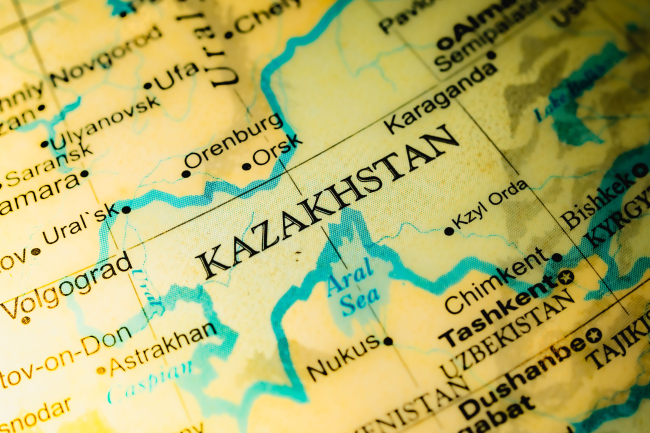
Kazakhstan After the Double Shock of 2022: Political, Economic and Military Consequences
The year 2022 represented a dual shock for Kazakhstan. In January, the country faced its most severe political crisis since independence, followed in February by Russia’s full-scale invasion of Ukraine, which cast uncertainty over the borders of post-Soviet states. These consecutive crises profoundly shaped Kazakhstan’s domestic and foreign policy.