




Practical information
Debates on Africa’s urbanization have long focused on the continent’s capital- and megacities, such as Dakar, Lagos or Nairobi. Africa’s capital cities concentrate political offices, cultural goods, foreign direct investment as well as local economic production and businesses.

Demographic trends suggest however, that secondary and intermediate urban agglomerations ranging from several tens to some hundreds of thousands of inhabitants, are the continent’s fastest growing cities. With annual growth rates reaching up to 9%, intermediate cities reflect rapidly transforming territories, often situated between and linking capital cities and the rural periphery.
Given these demographic trends, secondary and intermediate cities have recently received more attention, both in urban studies and international policy debates. For example, experts and scholars have developed definitions and have analyzed socio-economic contributions of these cities to the broader urban network.
The aim of this event is twofold: firstly, the contributions will reflect how intermediate cities are defined, problematized, and addressed by different institutions and in different countries "policies". For instance, to what extent are these secondary categories of cities addressed in national and local urban policies? Secondly, the presentations will investigate the politics of governing intermediate cities, by focusing on the various stakeholders and the competition involved in urban governance.
This conference will take place in English with simultaneous translation and in hybrid format (in-person at Ifri, and online).
All times are listed in Paris time (CEST).
PROGRAM
9.30-11.00 CEST
Panel 1: Policy initiatives to assess and address Africa’s intermediate cities
- Julien Boglietto, Project Manager, French Development Agency
- Monsuru Muritala, Senior researcher, University of Ibadan (Nigeria)
- Margherita Fadda, Junior Policy Analyst, OECD
- François Yatta, Director of operations and technical assitance, United Cities and Local Governments of Africa, Coordinator of Africities
Chair: Jean-Fabien Steck, Head of mission, Center of analysis, prevision and strategy of the Ministry for Europe and foreign affairs
11.00-11.15 CEST
Coffee break
11.15-12.45 CEST
Panel 2: The politics of governing Africa’s intermediate cities
- Lena Gutheil, Researcher, German Institute of Development and Sustainability
- Patience Mususa, Senior researcher, Nordic Africa Institute (Sweden)
- Karen Büscher, Lecturer, Ghent University (Belgium)
- Rufino d’Almeida, Mayor of Bohicon (Benin)
Chair: Sina Schlimmer, Researcher & program coordinator, French Institute of International Relations
Find out more
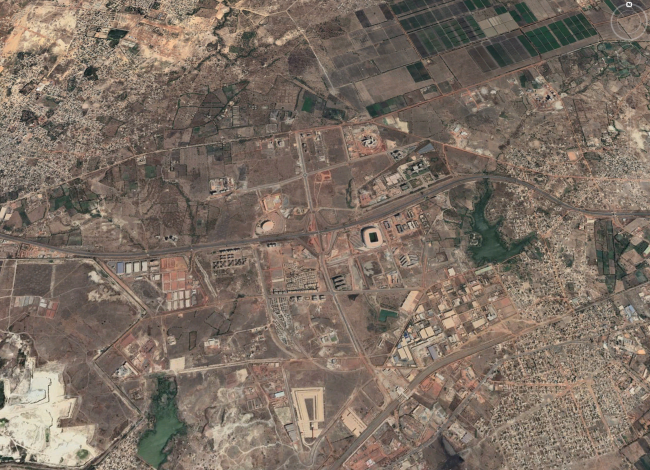
The Politics of New Cities: Diversification of Actors and Recentralization of State Power in the Case of Diamniadio
The construction of new cities on the African continent is in vogue. From multifunctional urban hubs to eco-districts, the images that accompany the announcement of these projects promote an African urban future based on modernity and technology.

Governing Cities in Africa. A Panorama of Challenges and Perspectives
By 2050, about 60% of the population of Sub-Saharan Africa will live in urban areas. The governance of the rapid growth of capital and intermediary cities in Africa is one of the priorities of the international development agenda.
Related Subjects
Other events
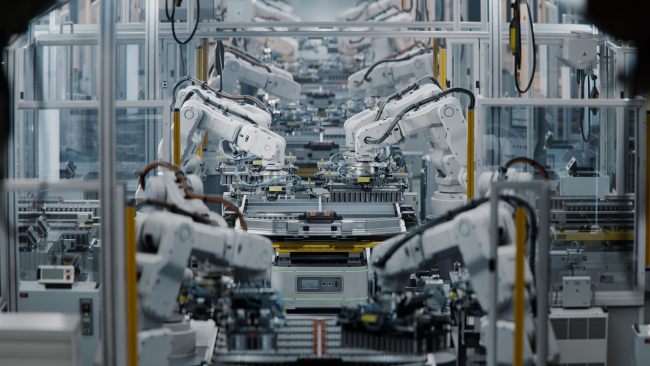
EV Supply Chains for Japan and Europe: Strengthening Economic Security
Economic security aims to ensure the resilience of supply chains for key industries: the case of electric vehicle production in Japan and Europe will be discussed.
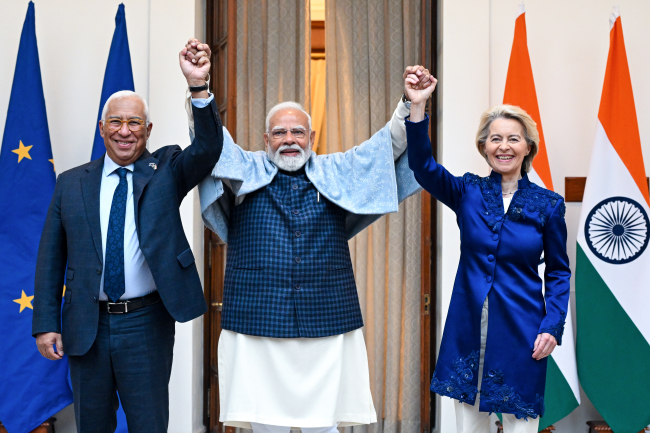
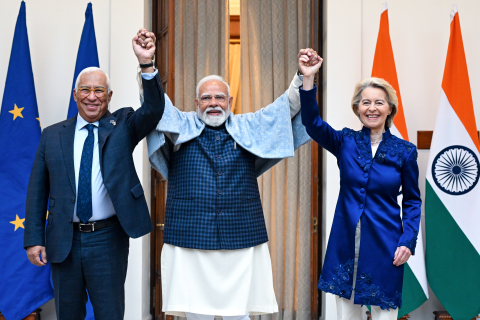
From Ambition to Action: Exploring Technological Partnerships with India
The 16th EU-India Summit, held on January 27th in New Delhi with European leaders António Costa, Ursula von der Leyen, and Prime Minister Narendra Modi, marks a significant milestone in deepening EU-India relations. At the same time, official bilateral visits from EU member states are on the rise, including that of the French President, who visited India in February to participate in the Artificial Intelligence Summit. As India asserts its technological ambitions and seeks to reduce its dependence on China, Europe is stepping up its efforts to diversify its strategic partnerships.