


Practical information
Tensions in the Korean Peninsula have been growing in recent months. North Korea has named South Korea its "principle enemy" and declared that his country has abandoned the goal of reunification.

Pyongyang has also increased the number and variety of its missile and other tests. Meanwhile, South Korea has intensified and expanded the range of its military activities together with the US, as well as trilaterally with Japan, while Seoul's policy-makers openly discuss the possibility of developing nuclear weapons.
In the meantime, North Korea is openly supporting Russia's invasion of Ukraine, including via arms transfers, while South Korea remains one of the few staunch supporters or Kyiv outside of NATO. In other words, the two Koreas are pitched against each other in Europe's battleground.
In this talk, Prof. Victor Cha and Prof. Ramon Pacheco Pardo will discuss the reasons behind increasing tensions in the Korean Peninsula, the position of the two Koreas in global security matters, and what this means for Europe, the U.S., China and Japan.
Access to this in-person event is by invitation only.
PROGRAMME
Speakers:
- Victor CHA, Senior Vice President for Asia and Korea Chair, CSIS; Distinguished University Professor and Professor of Government, Georgetown University
- Ramon PACHECO PARDO, Head of Department & Professor of International Relations, Department of European & International Studies, King's College London; KF-VUB Korea Chair, Brussels School of Governance, Vrije Universiteit Brussel
Chair: Françoise NICOLAS, Senior Advisor, Center for Asian Studies, Ifri
Related Subjects
Other events
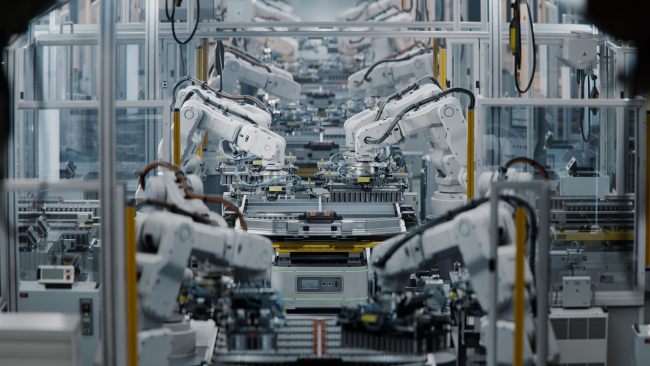
EV Supply Chains for Japan and Europe: Strengthening Economic Security
Economic security aims to ensure the resilience of supply chains for key industries: the case of electric vehicle production in Japan and Europe will be discussed.
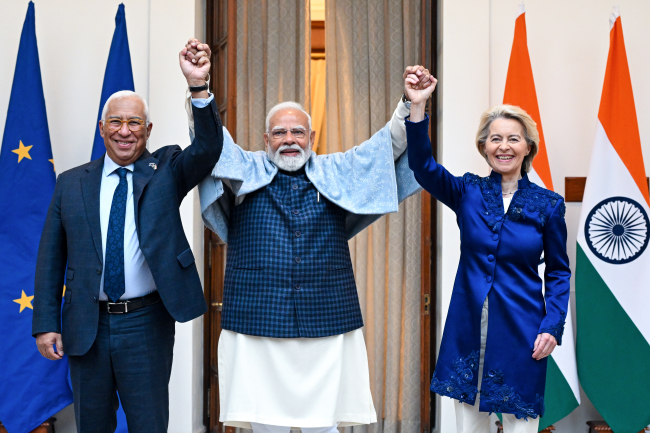
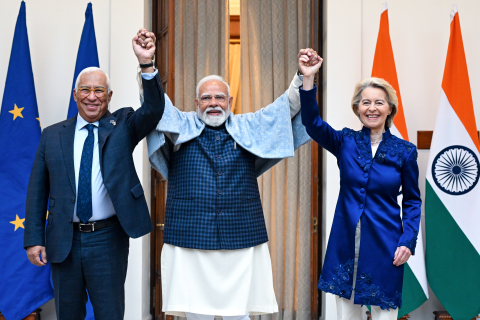
From Ambition to Action: Exploring Technological Partnerships with India
The 16th EU-India Summit, held on January 27th in New Delhi with European leaders António Costa, Ursula von der Leyen, and Prime Minister Narendra Modi, marks a significant milestone in deepening EU-India relations. At the same time, official bilateral visits from EU member states are on the rise, including that of the French President, who visited India in February to participate in the Artificial Intelligence Summit. As India asserts its technological ambitions and seeks to reduce its dependence on China, Europe is stepping up its efforts to diversify its strategic partnerships.