

Silovik Stockholm Syndrome: Russia's security agencies as drivers, beneficiaries, and victims of Putinism
Practical information
This event is dedicated to the Russia/NIS Centre Corporate supports. By personal invitation only.
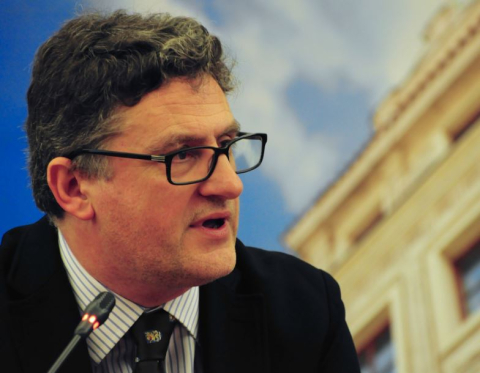
A round table with Mark Galeotti, Senior Researcher at the Institute of International Relations Prague, Director of Mayak Intelligence consultancy.
Vladimir Putin has largely consolidated his regime relying on the “power structures”’ representatives (siloviki). During the last fifteen years V. Putin enabled them to conquer the most strategic political and economic positions. Their influence seemingly increased within the Russian decision-making system in the context of the Ukrainian crisis and the military intervention in Syria. However, the system is far from being stable: siloviki clans are undertaking merciless internal struggles, constant reforms are regularly disrupting subtile power balances, and “old guard” representatives are replaced by a younger generation. How is the constellation of siloviki likely to evolve by the 2018 presidential elections, and what might be its “footprint” on what could possibly be the last mandate of V. Putin?
Chair : Tatiana KASTOUÉVA-JEAN, Head of Ifri’s Russia/NIS Center
This seminar will be held in English under the Rule of Chatham House.
This event will be held within the framework of the “Observatoire Russie, Europe orientale et Caucase” with the support of DGRIS (Directorate General for International Relations and Strategy), French Ministry of Defence.
Speakers

Our team
External contributor(s)

Mark GALEOTTI