

Francs-tireurs et Centurions : Les ambiguïtés de l'héritage contre-insurrectionnel français

The war in Afghanistan and David Galula’s reputation in the United States have revived France’s counterinsurgency legacy. This legacy must be divided into two separate periods: the colonial era and later on the wars of decolonization fought by France in Indochina and Algeria.
Although figures such as Bugeaud, Lyautey and Gallieni retained at the time the status of mavericks in the traditional military establishment, they greatly contributed to the development of a French ‘national style" in irregular warfare, both original and successful. On the contrary, theorists from the 1950s and 1960s (Lacheroy, Hogard, Trinquier) were to a large extent inspired by revolutionary warfare. Accordingly, they viewed counterinsurgency as a form of total war based on ‘psychological operations" and very coercive methods. Political drift in Algeria abruptly silenced these debates and turned counterinsurgency into a taboo for forty years. Judgment must be exercised before reactivating the debates and know-how of the past. Part of this legacy may constitute a legitimate and fruitful source of inspiration for current interventions. However, it is essential to take into account the political and strategic dimension of this type of warfare and not to lose sight of the limits of historical comparisons.
This paper is published in French only - Francs-tireurs et Centurions : Les ambiguïtés de l'héritage contre-insurrectionnel français

Author(s)
Related centers and programs
Discover our other research centers and programs
Security Studies Center
Heir to a tradition dating back to the founding of Ifri, the Security Studies Center provides public and private decision-makers as well as the general public with the keys to understanding power relations and contemporary modes of conflict as well as those to come. Through its positioning at the juncture of politics and operations, the credibility of its civil-military team and the wide distribution of its publications in French and English, the Center for Security Studies constitutes in the French landscape of think tanks a unique center of research and influence on the national and international defense debate.
Find out more
Discover all our analyses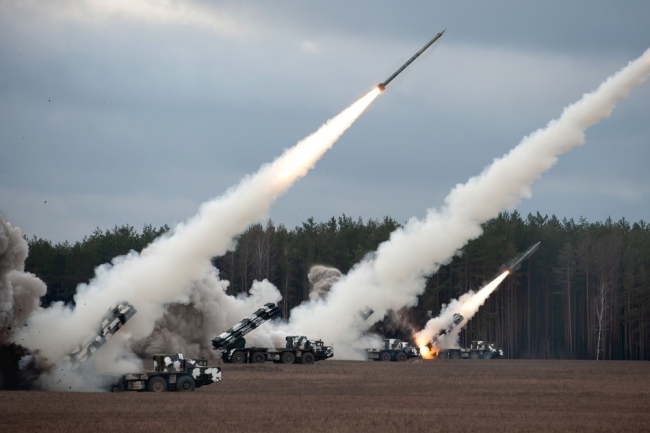
Multiple Launch Rocket Systems Europe’s Long-standing and Enduring Dependence?
The war in Ukraine has underlined the importance of multiple launch rocket systems (MLRS) in modern conflict, especially a war without clear air superiority and hence a reduced potential for air-launched deep strike. In 2022, the European MLRS fleet was split between a variety of Western platforms developed at the end of the Cold War and specialized in precision strikes.
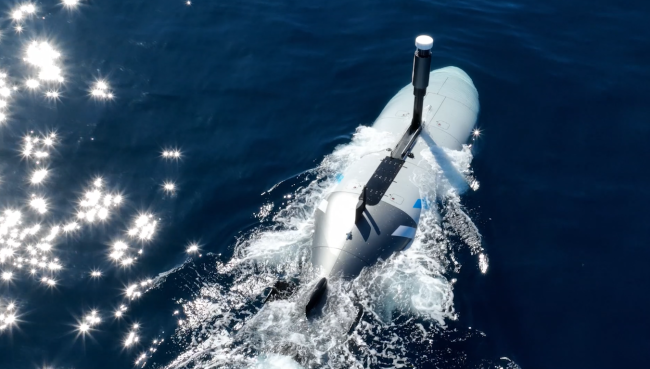
Autonomous Systems in the Underwater Domain: A Limitless Revolution?
One of the decisive strategic factors in the ongoing Russo-Ukrainian war is the mass use of aerial, maritime, and terrestrial autonomous capabilities, which are transforming the face of the battlefield. Nevertheless, many of these drones are still remotely piloted, operated, or supervised, testifying to the fact that the autonomization of military capabilities is still at an embryonic stage.
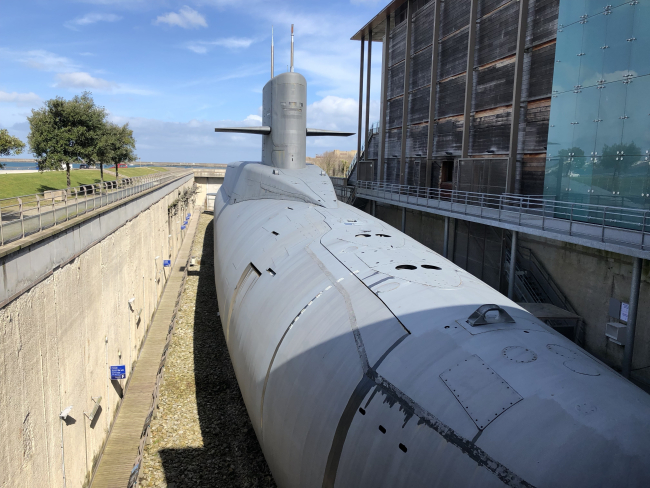
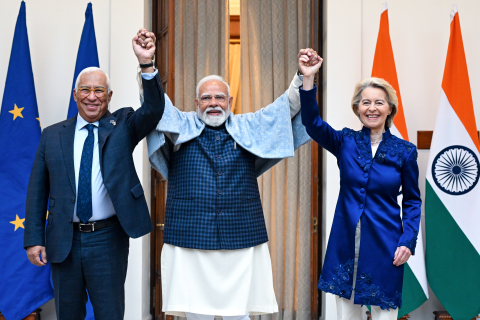
France has a new nuclear doctrine of ‘forward deterrence’ for Europe. What does it mean?
On Monday, French President Emmanuel Macron delivered a speech on France’s nuclear deterrence at the Île Longue naval base near Brest in Brittany, which hosts the country’s nuclear-armed ballistic missile submarines. Such addresses are a well-established presidential ritual, typically delivered once per presidential term and receiving moderate attention. This one, however, was highly anticipated in France and abroad, given the profound geopolitical shifts since Macron’s first nuclear speech in February 2020.
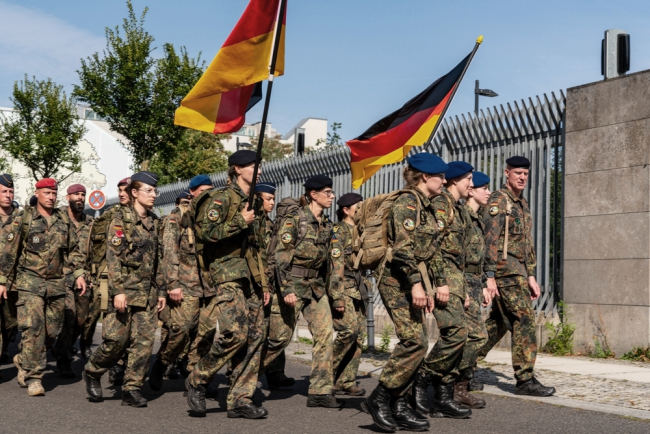
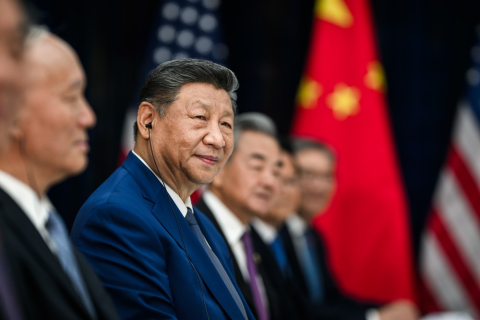
Bundeswehr: From Zeitenwende (historic turning point) to Epochenbruch (epochal shift)
The Zeitenwende (historic turning point) announced by Olaf Scholz on February 27, 2022, is shifting into high gear. Financially supported by the March 2025 reform of Germany’s “debt break” and backed by a broad political and societal consensus to strengthen and modernize the Bundeswehr, Germany's military capabilities are set to rapidly increase over the coming years. Expected to assume a central role in the defense of the European continent in the context of changing transatlantic relations, Berlin’s military-political position on the continent is being radically transformed.