


The Future of British Defense Policy
As the prospect of the United Kingdom leaving the European Union raises increasing challenges to its international position, as well as major divisions at home, the future of British defense policy seems more uncertain than ever.

As an established great power, the United Kingdom bears the legacy of a solid and reliable defense and security apparatus. However, political and budgetary hesitations have casted doubts on its strategic outlook. To comprehend the renewed context, one has to take a closer look at the state of Britain’s armed forces, their capability and organizational agenda as well as the defense transformation process they are engaged in. Given the precarious posture of the current government, a renewed political horizon remains to be found so that strategic goals can finally be met with consistent military means.

Available in:
Regions and themes
ISBN / ISSN
Share
Download the full analysis
This page contains only a summary of our work. If you would like to have access to all the information from our research on the subject, you can download the full version in PDF format.
The Future of British Defense Policy

Related centers and programs
Discover our other research centers and programs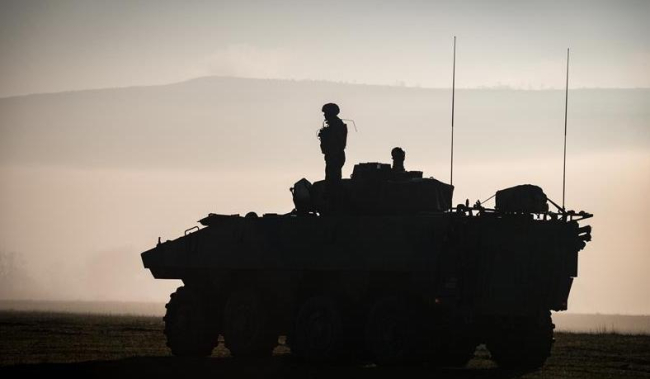
Security Studies Center
Heir to a tradition dating back to the founding of Ifri, the Security Studies Center provides public and private decision-makers as well as the general public with the keys to understanding power relations and contemporary modes of conflict as well as those to come. Through its positioning at the juncture of politics and operations, the credibility of its civil-military team and the wide distribution of its publications in French and English, the Center for Security Studies constitutes in the French landscape of think tanks a unique center of research and influence on the national and international defense debate.
Find out more
Discover all our analyses
Main Battle Tank: Obsolescence or Renaissance?
Since February 2022, Russian and Ukrainian forces combined have lost more than 5,000 battle tanks, a much higher volume than all the European armor combined. Spearhead of the Soviet doctrine from which the two belligerents came, tanks were deployed in large numbers from the first day and proved to be a prime target for UAVs that became more numerous and efficient over the months. The large number of UAV strike videos against tanks has also led a certain number of observers to conclude, once again, that armor is obsolete on a modern battlefield. This approach must, however, be nuanced by a deeper study of the losses and their origin, UAVs rarely being the sole origin of the loss itself, often caused by a combination of factors such as mines, artillery or other anti-tank weapons.
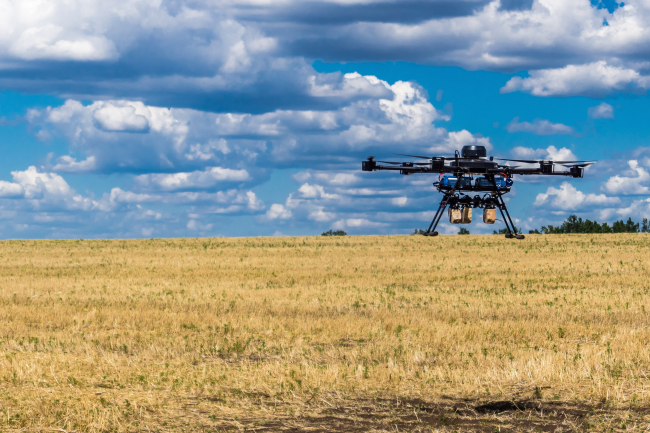
Mapping the MilTech War: Eight Lessons from Ukraine’s Battlefield
This report maps out the evolution of key technologies that have emerged or developed in the last 4 years of the war in Ukraine. Its goal is to derive the lessons the North Atlantic Treaty Organization (NATO) could learn to strengthen its defensive capabilities and prepare for modern war, which is large-scale and conventional in nature.
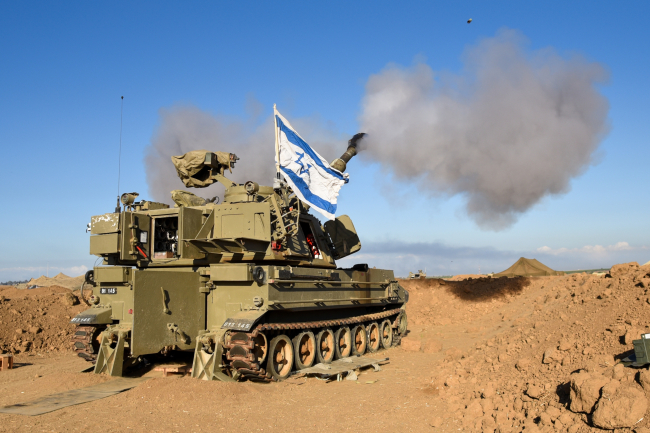
"Iron Swords" A Military Analysis of Israel's War in Gaza
On October 7, 2023, Hamas' attack, dubbed “Al-Aqsa Flood,” caused a major shock and led Israel to launch the longest war in its history. Operation “Iron Swords” was notable for its unprecedented intensity, both in terms of the massive ground forces deployed and the firepower used.
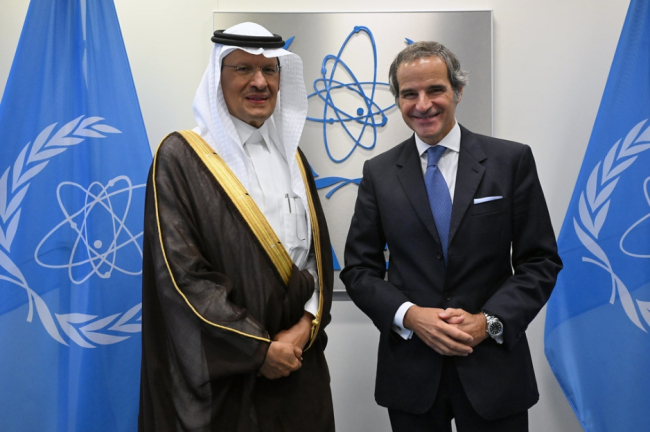
Saudi Arabia’s Nuclear Temptations. Lessons Learned from Regional Instability
Saudi Arabia’s integration in the international arena and regional stability, notably through reducing its dependence on fossil energies, are crucial elements for the success of the Kingdom’s Vision 2030, the Crown Prince’s top priority. However, Mohammed bin Salman’s declarations in 2018 and 2021, indicating that “if Iran develops a nuclear bomb, we will follow suit as soon as possible”, combined with the recent strikes on key Iranian nuclear facilities, do not bode well for the future of the Kingdom, the region and the non-proliferation regime at large.