

Toujours plus chers ? Complexité des armements et inflation des coûts militaires
While French military expenditures have remained relatively constant over the last ten years, equipment production tended to decrease, resulting in capability gaps. This situation highlights the increasing costs of both acquiring and maintaining highly complex modern military equipment.
By decomposing the cost factors, this paper contends that technical complexity is one of the most prominent causes of “military inflation” - albeit by no means the only one - in the production as well as in the support phase. While efforts to reduce costs have focused on organizational issues, uncertainty over the conditions of future warfare compels actors to produce high-tech and multi-purpose material, at the risk of exceeding operational requirements. For this reason, it is necessary to define more clearly the military’s expectations so that technical complexity matches operational sufficiency.
This study is in French only: Toujours plus chers ? Complexité des armements et inflation des coûts militaires

Author(s)
Related centers and programs
Discover our other research centers and programs
Security Studies Center
Heir to a tradition dating back to the founding of Ifri, the Security Studies Center provides public and private decision-makers as well as the general public with the keys to understanding power relations and contemporary modes of conflict as well as those to come. Through its positioning at the juncture of politics and operations, the credibility of its civil-military team and the wide distribution of its publications in French and English, the Center for Security Studies constitutes in the French landscape of think tanks a unique center of research and influence on the national and international defense debate.
Find out more
Discover all our analyses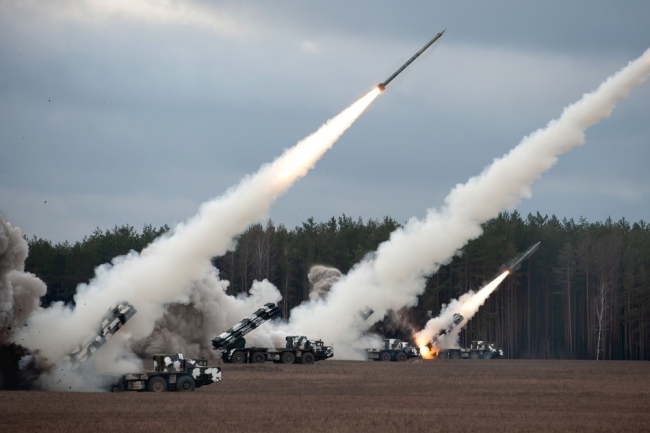
Multiple Launch Rocket Systems Europe’s Long-standing and Enduring Dependence?
The war in Ukraine has underlined the importance of multiple launch rocket systems (MLRS) in modern conflict, especially a war without clear air superiority and hence a reduced potential for air-launched deep strike. In 2022, the European MLRS fleet was split between a variety of Western platforms developed at the end of the Cold War and specialized in precision strikes.
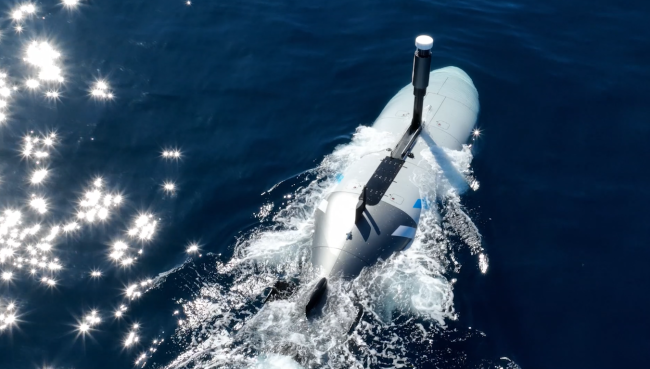
Autonomous Systems in the Underwater Domain: A Limitless Revolution?
One of the decisive strategic factors in the ongoing Russo-Ukrainian war is the mass use of aerial, maritime, and terrestrial autonomous capabilities, which are transforming the face of the battlefield. Nevertheless, many of these drones are still remotely piloted, operated, or supervised, testifying to the fact that the autonomization of military capabilities is still at an embryonic stage.
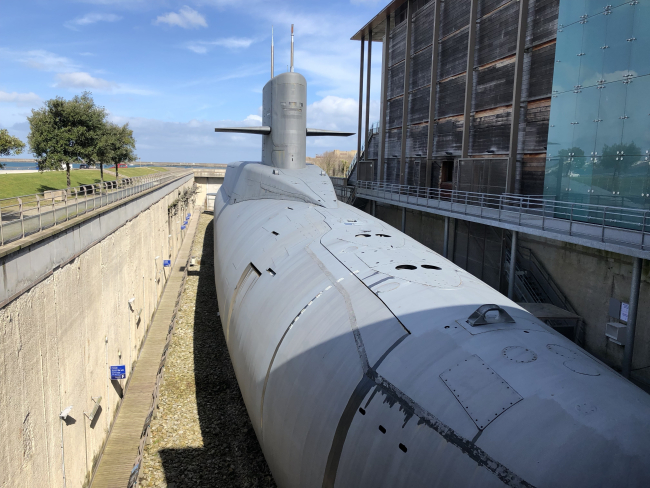
France has a new nuclear doctrine of ‘forward deterrence’ for Europe. What does it mean?
On Monday, French President Emmanuel Macron delivered a speech on France’s nuclear deterrence at the Île Longue naval base near Brest in Brittany, which hosts the country’s nuclear-armed ballistic missile submarines. Such addresses are a well-established presidential ritual, typically delivered once per presidential term and receiving moderate attention. This one, however, was highly anticipated in France and abroad, given the profound geopolitical shifts since Macron’s first nuclear speech in February 2020.
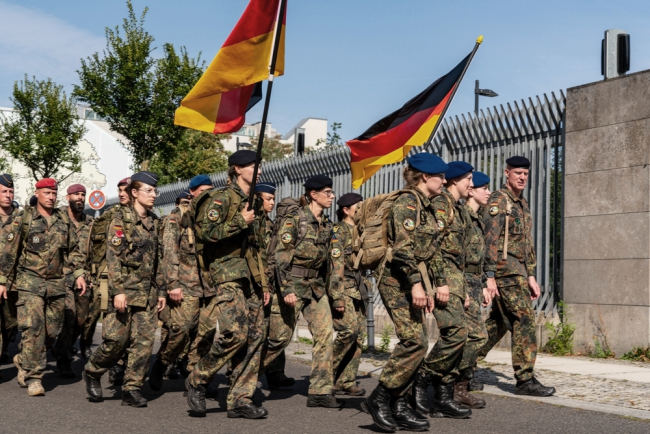
Bundeswehr: From Zeitenwende (historic turning point) to Epochenbruch (epochal shift)
The Zeitenwende (historic turning point) announced by Olaf Scholz on February 27, 2022, is shifting into high gear. Financially supported by the March 2025 reform of Germany’s “debt break” and backed by a broad political and societal consensus to strengthen and modernize the Bundeswehr, Germany's military capabilities are set to rapidly increase over the coming years. Expected to assume a central role in the defense of the European continent in the context of changing transatlantic relations, Berlin’s military-political position on the continent is being radically transformed.