



What kind of future for the European neighbourhood policy (ENP)? The view from the EU and the neighbouring countries
Practical information
The ENP review launched in July 2010 is almost complete. This work was accomplished in a very difficult time, with the launch of the EEAS and the crises in the neighbourhood (the revolution in Tunisia, Egypt and the civil war in Libya, the clampdowns in Belarus) to which the EU is not always prepared to respond in an appropriate way.
Undoubtedly, the above processes and events trigger extensive reflections over the ENP: What has been achieved under this policy so far? What are the chances for the implementation of its main goals in the future? What should the EU"s relations with its neighbours be like over the next 10-15 years?
What role could the EEAS play in the neighbourhood policy? With this conference, we will try to answer these questions both from the perspective of the EU and of the partner states.
Sessions :
- I. Stabilisation or Democratisation - What are the EU's interests in the Neighbourhood?
- II. Migration: challenge and opportunities - How to build a smart migration framework?
- III. Reaching beyond cooperation: Is there a chance for economic integration?
- IV. What kind of future for the ENP?
In partnership with :
Other events
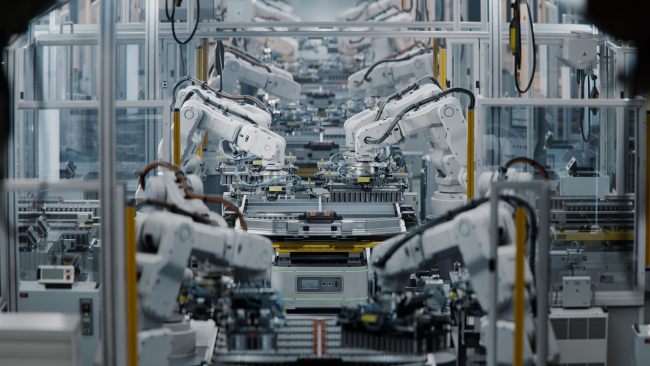
EV Supply Chains for Japan and Europe: Strengthening Economic Security
Economic security aims to ensure the resilience of supply chains for key industries: the case of electric vehicle production in Japan and Europe will be discussed.
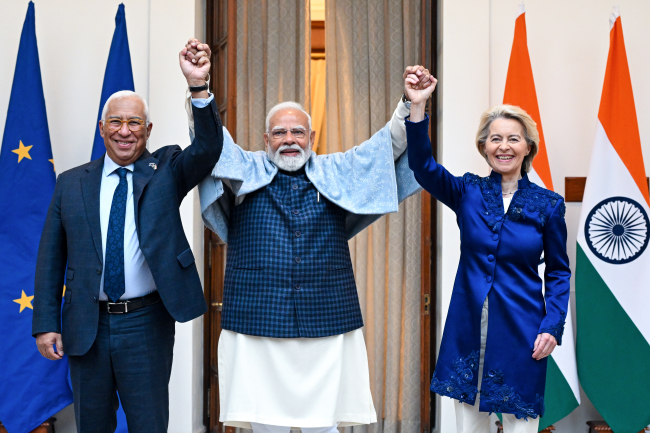
What Kind of Technological Partnership with India?
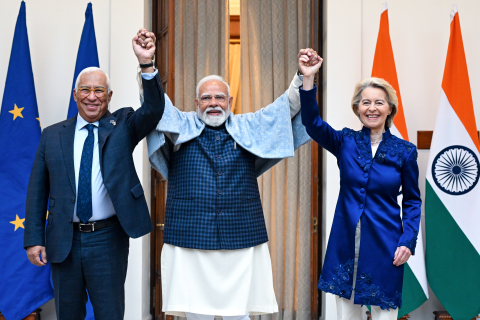
The 16th EU-India Summit, held on January 27th in New Delhi with European leaders António Costa, Ursula von der Leyen, and Prime Minister Narendra Modi, marks a significant milestone in deepening EU-India relations. At the same time, official bilateral visits from EU member states are on the rise, including that of the French President, who visited India in February to participate in the Artificial Intelligence Summit.