



Central Banks: Challenges and Tools in Geopolitical Rivalries
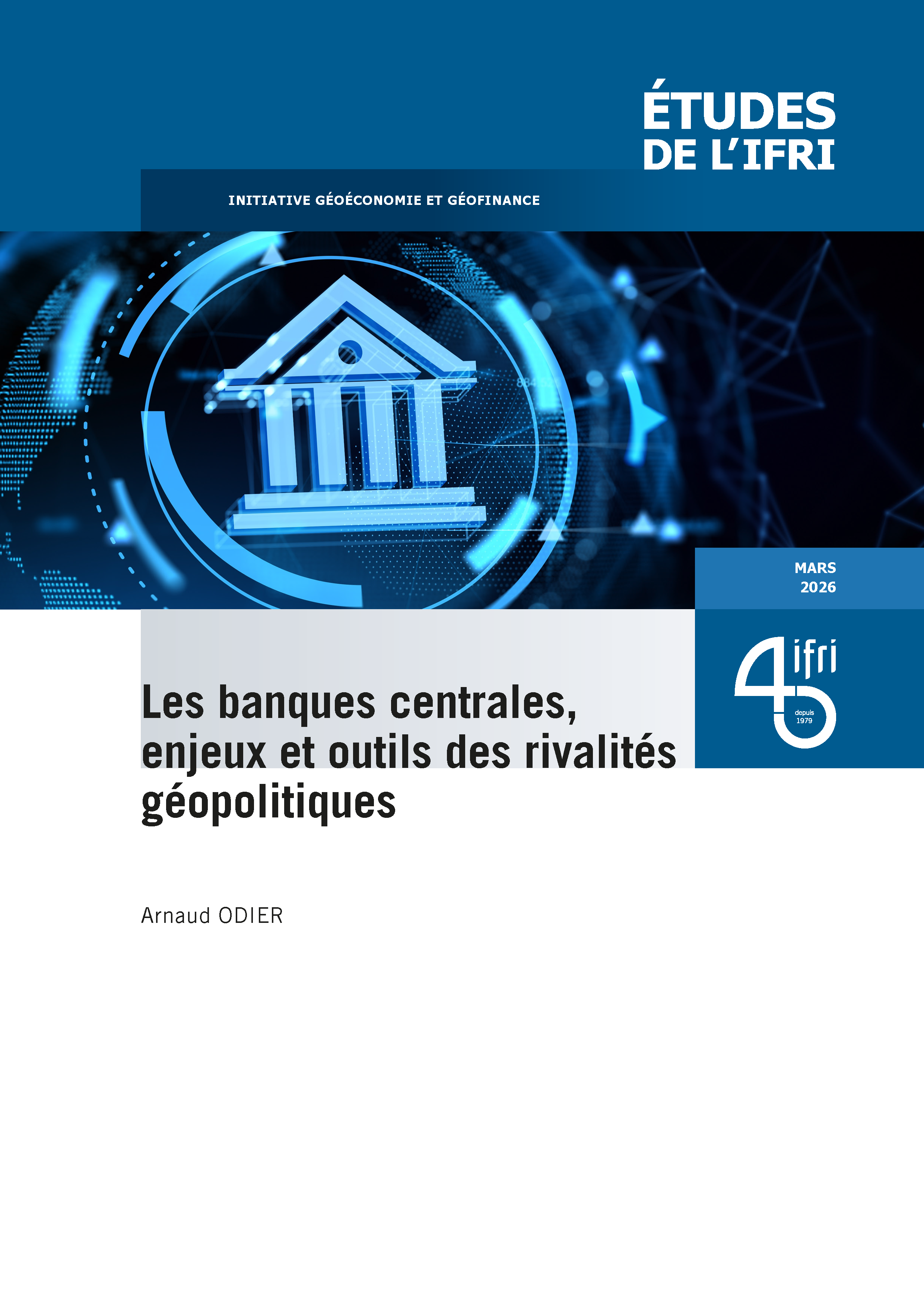
Central banks have become major strategic players in international economic balances. Faced with systemic crises (2008, Covid-19), the major central banks have developed unprecedented coordination of their interventions, fostering the emergence of the “Jackson Hole consensus.”

Aiming to preserve the stability of the international financial system, their influence is based on a unique institutional capacity to create monetary liquidity, enabling the acquisition of assets or the refinancing of banking institutions.
In response to this Western financial architecture, China and Russia are accelerating the development of alternative infrastructures: cross-border payment systems, multilateral digital currency projects, diversification of foreign exchange reserves into gold, and a gradual reduction in dollar holdings. China’s strategy aims to internationalize the yuan as a reserve currency, while maintaining strict control over capital movements.
The Trump administration’s political interventions in US monetary policy, combined with the freezing of Russian sovereign assets, are undermining the transatlantic consensus. The emergence of dollar-backed stablecoins could exacerbate this fragmentation of the system, raising doubts about the benevolent hegemony of the United States and encouraging each currency area to develop its own financial infrastructure in anticipation of future conflicts that will test the geopolitical influence of central banks.
Arnaud Odier works for the investment banking subsidiary of a major French banking group.
This study is only available in French: "Les banques centrales, enjeux et outils des rivalités géopolitiques".

Available in:
Themes and regions
ISBN / ISSN
Share
Author(s)
Related centers and programs
Discover our other research centers and programs
Geoeconomics and Geofinance Initiative
To analyze the impact of power rivalries and tensions on globalization, this initiative combines economic and political expertise. In the face of growing geopolitical risk, the goal is to decipher the dynamics of reconfiguration: protectionist pressures, sanctions, restrictions, industrial policies, and economic security concerns are redefining the rules of international trade. These tensions are also transforming international financial relations by undermining the foundations of trust and reshaping the global monetary system. They raise questions about the role of several key players: sovereign wealth funds, central banks, digital platforms, multilateral institutions, and financial infrastructure operators. In a context of profound disruption, simply refining existing approaches is no longer sufficient. The initiative is designed as a flexible model, drawing on diverse expertise to offer both broad overviews and targeted analyses. It also provides a platform for stakeholders and experts from various backgrounds to debate these issues freely.
Find out more
Discover all our analyses
New Cold War? What New Cold War? Confronting the Geoeconomic Fragmentation Narrative with the Data
It has become widely accepted that the world economy should be seen as increasingly shaped by forces of fragmentation, resulting from geopolitical tensions. This article takes another look at this narrative, using international trade data. While an aggregate analysis is consistent with a new Cold War narrative, whereby international trade is increasingly seen as split into two blocs, this is only a mix of very different outcomes. Far from being a widespread trend, geoeconomic fragmentation of trade flows is only significant in “hotspots”: Russia's foreign trade and China-US bilateral exchanges, and the impact is massive in these cases. Outside these “hotspots”, there is no tangible sign that geopolitical tensions have been shaping international trade patterns in terms of blocs, nor is there any hint of a trend toward nearshoring – to the contrary, in fact.

Central Securities Depositories and Geopolitical Risks: Challenges for European Policy
Central Securities Depositories (CSDs) form the backbone of financial market infrastructure by registering securities, settling trades, distributing cash flows, and managing collateral. While often regarded as mere financial “plumbing,” they in fact underpin strategic objectives such as advancing the Savings and Investment Union, curbing tax evasion, and reinforcing Europe’s geopolitical stance.

Manufacturing Risk: Geopolitical Doxa and the Corporate World
The evolving power dynamics between the United States, China, and Russia are creating new geopolitical realities that businesses can no longer evade. Geopolitical risk has become unavoidable, yet many companies remain unprepared to navigate its complexities. Corporate leaders can no longer afford to overlook its implications.

Trump's Trade War: What Answers for the European Union?
The announcement, on April 2, 2025, of “reciprocal tariffs” by the United States has opened a sequence of profound break with decades of established trade policy practices, where the administration behaviour has been marked by dogmatic blindness, amateurism, and self-serving interests.