





Practical information
Recent developments in artificial intelligence (AI), particularly in generative AI, have renewed the interest of the general public and decision-makers in a field that has long been considered strategic.

In recent years, rapid advances in machine learning algorithms and computing power have unleashed a wave of transformative capabilities, raising crucial questions about global competition, cooperation and regulation. This is particularly evident in the growing rivalry between the United States and China, who are deploying their policies of incentives and restrictions, with the ambition of asserting themselves as leaders in AI research and applications. Beyond this duopoly, this conference also aims to explore the emergence of Europe and digital middle powers as influential players in the development and regulation of AI.
This conference will take place in English, with French interpreters, in a hybrid format (in-person at Ifri, and online).
PROGRAM
Panel 1: Geopolitical rivalry and the global competition in AI (14:30-16:00 CEST)
United States-China rivalry is driving international competition in AI: What are the progresses and weaknesses on both sides? How do support plans and restrictions affect technological progress, in the U.S., in China and beyond? What are the strategic implications for France and Europe?
Chair: Mathilde VELLIET, Research fellow in the Geopolitics of Technology Program, Ifri
- Gregory ALLEN, Director of the Wadhwani Center for AI and Advanced Technologies and Senior Fellow, CSIS
- Rebecca ARCESATI, Lead Analyst, MERICS
- Séverine ARSENE, Advisor on Asia, CAPS, French Ministry of European and Foreign Affairs
Coffee break
Panel 2: How can Europe and its partners shape the development of AI? (16:15-17:45 CEST)
How are AI regulation models adapting to technological developments and geopolitics? How is international cooperation on norms progressing? What human-centric and/or open source and open science models of AI can be promoted?
Chair: Alice PANNIER, Head of the Geopolitics of Technology Program, Ifri
- Mark SCOTT, Chief Technology Correspondent, Politico
- Benoit BERGERET, Executive Director, ESSEC Metalab for data, technology and society
- Alex ENGLER, Fellow in Governance Studies, Brookings
- Trisha RAY, Deputy Director, Centre for Security, Strategy and Technology, Observer Research Foundation
Related Subjects
Other events
COP31 in Antalaya: State of the Global Climate Governance, Issues, Perspectives
COPs have become a year-end marathon to revigorate a world now entering the era of climate overshoot. While Türkiye exhibits the largest coal-fired power generation in OECD Europe, it has embraced the electrification agenda and aims at joining forces with Australia on fostering action and implementation. This is an unusual de facto co-presidency arrangement, but one that could yield promising results. This webinar will take stock of what climate governance has achieved and of the issues still to be negotiated, and explore what impetus this Turkish–Australian partnership could provide.
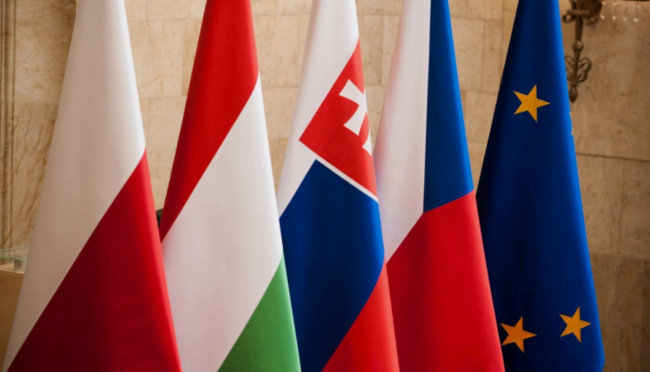
A New Moment for Central Europe? Regional Cooperation in a Time of European Strategic Choices
Recent political developments in Central Europe have revived the debate about the future of regional cooperation and the Visegrád Group. Changes in Hungary, Poland, the Czech Republic and Slovakia, together with Austria’s growing interest in closer cooperation with its neighbours, could create new opportunities for dialogue and coordination around shared priorities.