






Multiculturalism, Identities, Immigration in Western Europe and the United State : What Can We Compare ?
Practical information
Project by Christophe Bertossi and Nancy Foner, in collaboration with the Collegium-Institute for Advanced Studies in Lyon, the French Network of Institutes of Advanced Studies (RFIEA), the French National Agency for Research (ANR), the Social Science Research Council (SSRC).
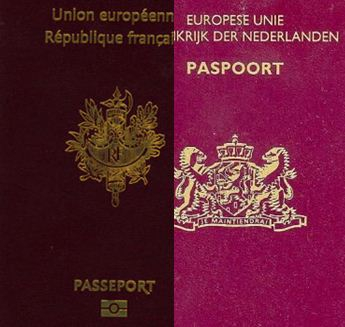
Multiculturalism, Identities, Immigration in Western Europe and the United States: What Can We Compare? In both Western Europe and the United States, contemporary immigration has dramatically affected the social construction of ethnic and racial diversity, reshaping political, public, and academic discourses about diversity, citizenship, and common belonging. Surprisingly, the field of Europe/US comparative research on these issues remains loosely organized. Little attention has been paid to systematically comparing these processes of change in both contexts. Moreover, conceptual and methodological issues at stake in such a transatlantic comparison have not been addressed in depth. If transatlantic comparisons will help to overcome the relative insularity of the academic discussions in the US and Europe, a number of methodological and conceptual challenges are also important to analyze and study. Cross-national comparisons involving the United States and Western European countries are complicated by the fact that race and ethnicity are embedded in different historical, ideological, political, and social contexts. Among the questions that arise: Which groups should be compared in Europe and the United States? What are the implications of comparing, for example, Muslims in Europe and African Americans in the United States? Should transatlantic comparisons focus on immigrant groups instead? Other aspects of methods used in comparisons need to be clarified and analyzed ranging from multi-sited ethnographic studies to the use of census material on other national datasets.
Richard Alba, distinguished professor, CUNY
Christophe Bertossi, senior research fellow, Ifri
Erik Bleich, associate professor, Middlebury College
Eric Fassin, professor, Ecole Normale Supérieure
Nancy Foner, distinguished professor, CUNY
Gary Freeman, professor, University of Texas-Austin
Léo Lucassen, professor, University of Leiden
Patrick Simon, director of research at INED
Other events

One Month Ahead of the Midterms: Where Is Trump’s America Headed?
The 24th edition of the Ifri Americas Programme Annual Conference will examine the dynamics at play in the United States and their implications for Europe and the transatlantic relationship. will examine the dynamics at play in the United States and their implications for Europe and the transatlantic relationship.
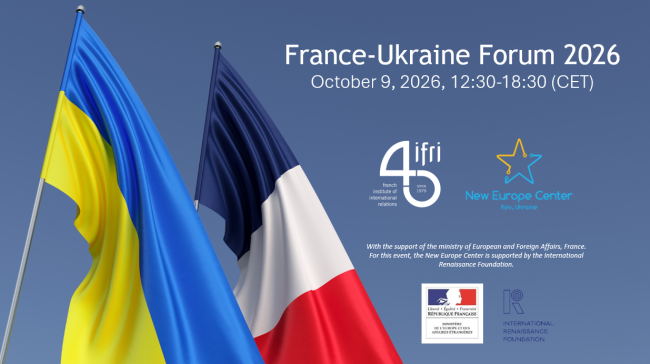
France-Ukraine Forum 2026
More than four and a half years after the start of the full-scale war launched by Russia against Ukraine, the 2026 France-Ukraine Forum will bring together policymakers, experts, academics, and civil society representatives from both countries to discuss three main topics: the formats and conditions for a lasting diplomatic settlement; Ukraine’s Euro-Atlantic integration, encompassing both the EU accession process and closer ties with NATO; and the societal transformations of postwar Ukraine, as well as its prospects for reconstruction.

The EU in a World of Economic Warfare: Trade, Geopolitics, and the Battle for Economic Sovereignty
The international trading system has become a primary theatre of geopolitical competition. Tariffs, sanctions, and technology controls have replaced dialogue as the default instruments of economic relations.