



Practical information
Citizens’ participation seems to be challenged by a decade of severe economic and financial crisis while nationalistic and xenophobic divisions are tearing Europeans apart. On the other hand, innovations and new forms of civic participation seem also to emerge and the “refugee crisis” has mobilized thousands of citizens all around Europe. Does this mean that new forms of citizenship are arising from this complex context? How can European cities support civil societies for better inclusion and participation?

In order to address these questions, the Calouste Gulbenkian Foundation and the French Institute of International Relations organize a conference in Lisbon which brings together key representatives from 6 multicultural cities in Europe – Amsterdam, Athens, Birmingham, Budapest, Lisbon and Paris – for a discussion about the various ways civil society and city representatives have addressed the challenges of citizenship in Europe today.
With:
Joao Afonso, Deputy Mayor for Social Rights, City of Lisbon - Paulette Hamilton, Councillor and Cabinet Member for Health and Social Care, City of Birmingham - Gergely Karacsony, Mayor of Züglo-Budapest - Simone Kukenheim, Deputy Mayor for Education, Youth and Diversity, City of Amsterdam - Maria Stratigaki, Deputy Mayor for Social Solidarity, Welfare and Equality, City of Athens - Pauline Veron, Deputy Mayor for Local Democracy, Citizen Participation, Civil Society Organisations, Youth and Employment, City of Paris - Isabel Mota, Administrator, Calouste Gulbenkian - Christophe Bertossi, Director of the Centre for Migration and Citizenship, Ifri - Luca Laszlo, Expert on informal movements, Foundation for the Development of Democratic Rights, Budapest - Jan Willem Duyvendak, Distinguished Research Professor in Sociology at the University of Amsterdam.
This conference is organised as part of the “Making of Citizenship” project by the French institute of international relations (Ifri) and the Calouste Gulbenkian Foundation, in partnership with the French network of institutes of advanced study, the University of Warwick and the University of Amsterdam, and with the support of the “Europe for Citizens” programme of the European Union.
Conference in English and Portuguese with simultaneous translation.
The conference is taking place in Lisbon. For the full agenda and registration, please visit the Gulbenkian Foundation Website. The conference will be livestreamed in English on this Website.
Related Subjects
Other events
COP31 in Antalaya: State of the Global Climate Governance, Issues, Perspectives
COPs have become a year-end marathon to revigorate a world now entering the era of climate overshoot. While Türkiye exhibits the largest coal-fired power generation in OECD Europe, it has embraced the electrification agenda and aims at joining forces with Australia on fostering action and implementation. This is an unusual de facto co-presidency arrangement, but one that could yield promising results. This webinar will take stock of what climate governance has achieved and of the issues still to be negotiated, and explore what impetus this Turkish–Australian partnership could provide.
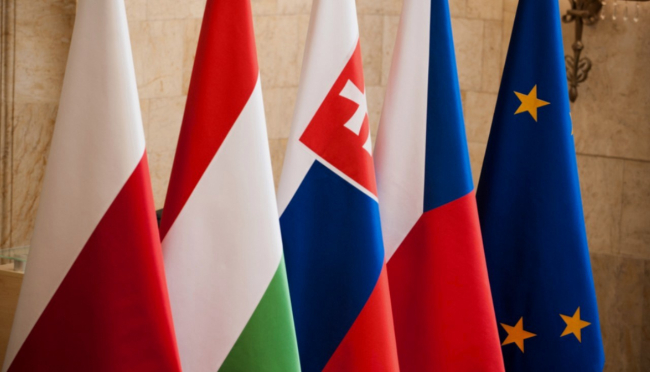
A New Moment for Central Europe? Regional Cooperation in a Time of European Strategic Choices
Recent political developments in Central Europe have revived the debate about the future of regional cooperation and the Visegrád Group. Changes in Hungary, Poland, the Czech Republic and Slovakia, together with Austria’s growing interest in closer cooperation with its neighbours, could create new opportunities for dialogue and coordination around shared priorities.
China’s Nuclear Buildup: Developments, Drivers, and Implications for Major-Power Relations and Arms Control
China has been steadily expanding its nuclear arsenal for several years amid levels of geopolitical tension unseen since the end of the Cold War, marked by a resurgence in nuclear proliferation and a broader, global arms race.