





Practical information
Humanitarian disaster, xenophobic feelings and security threats: refugees are at the core of European debates in 2015. The refugee situation is underlining deep discrepancies among and weaknesses of Europeans towards conflicts around the world and a shared project for the EU. How far will refugee protection bear the consequences of manipulation and fear?
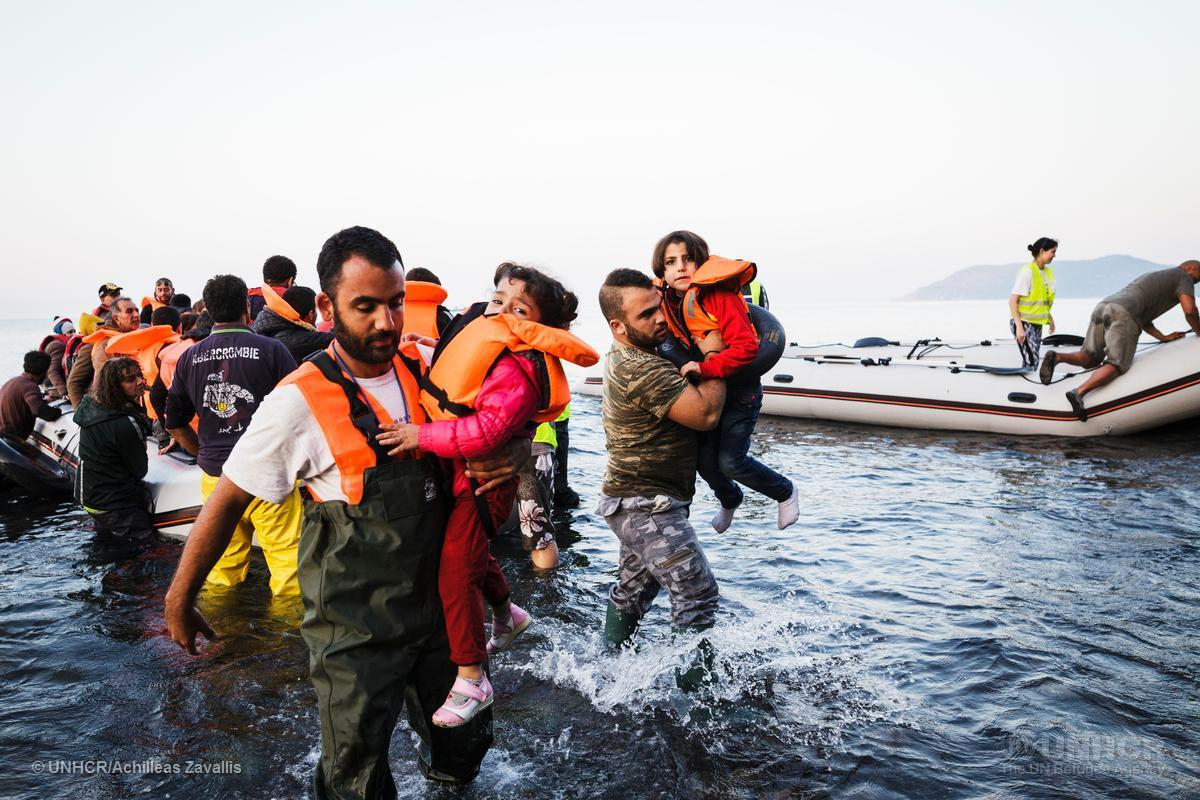
The Centre for Migration and Citizenship aims to support the debate and address preconceived ideas by questioning memories of the European history of asylum. The right of asylum and Europe share a history which can be a tool to better understand the current crisis. The IFRI brings together fellows, experts and field stakeholders working with refugees.
4 major questions will be addressed during the conference:
- Welcoming refugees : a high challenge for the future of Europe and Europeans
- The right of asylum at the heart of European integration
- National identities and the “refugee crisis” : France, Germany, Greece, Hungary
- Civil society and memories: refugee assisting organizations in six European cities (Amsterdam, Athens, Budapest, Birmingham, Lisbon and Paris).
Speakers:
With Patrick Klugman (deputy mayor in charge of international relations and of the Francophonie), Catherine Lalumière (President of the Fédération française des maisons de l’Europe) – Philip Rudge (Former Secretary General of the European Council on Refugees and, ECRE) – Catherine Wihtol de Wenden (CERI/CNRS) – Catherine Perron (CERI/Sciences Po) – Evelyne Ribert (EHESS/CNRS) – Georges Dertilis (EHESS) – Endre Sik (University of Elte, Budapest) – Timea Lovig (Menedek, Budapest) – Ismini Karydopoulou (Greek Forum of Refugees, Athens) – Hans van Stee (Dutch Council for Refugees, Amsterdam) – Barbara Forbes (City of Sanctuary, Birmingham) – Christophe Harrison (France terre d’asile, Paris) – Christophe Bertossi (Director of the Center for Migration and Citizenship, IFRI) – Olivier Bouin (Director of the French Network of Institutes for Advanced Study (RFIEA), Paris) – Khursheed Wadia (University of Warwick) – Danièle Joly (FMSH)
The discussions are held in French and English with simultaneous translation.
The conference is organized in partnership with Calouste Gulbenkian Foundation, the French Network of Institutes for Advanced Study, the University of Warwick, the University of Amsterdam and the CERFA with the support of the program “Europe for citizens” of the European Union.
128 participants attended the conference from 13 EU Member States
Articles on the conference on Le Parisien, Les Echos, Libération, Nice Matin, TV5 Monde, France24
-
Find out more
RAMSES 2016 : L'asile en Europe : une crise prévisible. Interview de Matthieu Tardis
Matthieu Tardis, chercheur au Centre Migrations et Citoyennetés de l'Ifri, tente de caractériser l'actuelle crise des dispositifs d'asile dans les pays européens.
Right of asylum: history of a European failure
Since the April 2015 shipwrecks in the Mediterranean, the right of asylum has become a priority in European talks. However, states have remained reluctant and sometimes hostile to measures of solidarity recommended by the European Commission. Such tensions raise the question of the European Union’s capacity to enforce a European asylum policy.
Related Subjects
Other events
COP31 in Antalaya: State of the Global Climate Governance, Issues, Perspectives
COPs have become a year-end marathon to revigorate a world now entering the era of climate overshoot. While Türkiye exhibits the largest coal-fired power generation in OECD Europe, it has embraced the electrification agenda and aims at joining forces with Australia on fostering action and implementation. This is an unusual de facto co-presidency arrangement, but one that could yield promising results. This webinar will take stock of what climate governance has achieved and of the issues still to be negotiated, and explore what impetus this Turkish–Australian partnership could provide.