





Practical information
The European Union (EU) has witnessed an influx of immigrants for more than two years. It has had an important impact on a great number of member states, and on the EU itself, who turned out to be, to a large extent, incapable of adopting a shared approach.
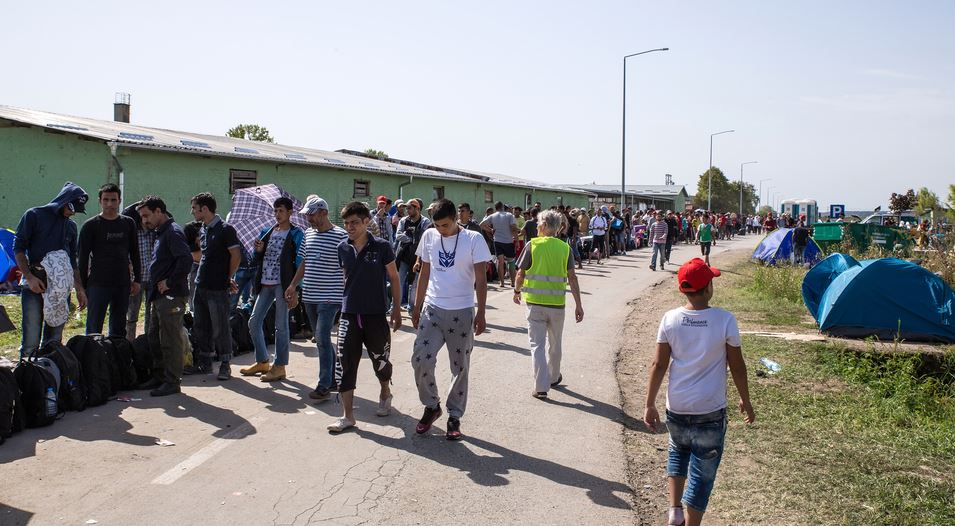
From a longer-term perspective, the arrival of these immigrants raises numerous issues and poses great challenges to a Europe that is secularized, obsessed with security risks and tempted by cultural isolationism. France, an “old” immigration country, and Austria, a central transit country during the past few years, have interpreted these events in different lights, and have managed the consequences based on their different historic, cultural and legal legacies.
The conference, organized by the Franco-Austrian Centre for European Rapprochement (CFA), the IFRI and the International Centre for Migration Policy Development (Vienna), aims to exchange views on these different experiences and approaches.
Speakers:
Sieglinde ROSENBERGER, professor at the University of Vienna, Vice-President of the Religion and Transformation in Contemporary Society
Didier LESCHI, Director-General of the French Office for Immigration and Integration (OFII), Paris
Bernard PERCHINIG, Chief Researcher, International Centre for Migration Policy Development (Vienna)
Moussa AL-HASSAN DIAW, Co-founder of the Network for Social Cohesion, Prevention, Deradicalization and Democracy, expert on Islamism (Vienna)
Christophe BERTOSSI, Director of the Centre for Migration and Citizenship, IFRI, Paris
Conference in French and German with simultaneous interpretation.
A detailed program is available in French below.
Other events
COP31 in Antalaya: State of the Global Climate Governance, Issues, Perspectives
COPs have become a year-end marathon to revigorate a world now entering the era of climate overshoot. While Türkiye exhibits the largest coal-fired power generation in OECD Europe, it has embraced the electrification agenda and aims at joining forces with Australia on fostering action and implementation. This is an unusual de facto co-presidency arrangement, but one that could yield promising results. This webinar will take stock of what climate governance has achieved and of the issues still to be negotiated, and explore what impetus this Turkish–Australian partnership could provide.