




Practical information
Themes and regions
Related centers and programs
Migrations, prompted by rising insecurity, socio-economic disparities and environmental poverty, are back on the top of the EU’s political agenda. To consolidate the EU’s approach in this policy-area, the European Parliament and Council adopted in December 2023 a New Pact on Migration and Asylum.

This New Pact, which seeks to strike a balance between solidarity, responsibility and respect for human rights, comes after years of gridlock. But much remains to be done as migrations remain a highly politicised topic in most member states, and a sensitive one domestically. Ideas once rather promoted by far-right political forces have now become mainstream. In the run-up to the European Parliament elections of June 2023, the topic is, once again, expected to take an important role in election campaigns and political discussions.
What are the new dynamics in migration flows to Europe? Will the EU’s New Pact on Migration become the coherent strategy on migration the EU needs? How misaligned do national interests and priorities remain in this area? How are migrations used in political discourses and campaigns today in Europe? What political impact do they have in countries like France and Austria and on the EU level?
Working language: English
18h00 Opening
Sebastian Schäffer, Director of the Institute for the Danube Region and Central Europe (IDM)
18h10 Keynote
Rainer Münz, Visiting Professor at the Central European University (CEU) and former Adviser on Migration and Demography at the European Political Strategy Centre
18h25 Panel Discussion
Catherine Wihtol de Wenden, Director of research at the Center for International Studies Science Po, Paris
Alida Vračić, Co-founder and executive directress of Populari, Member of Balkans in Europe Policy Advisory Group (BiEPAG), Sarajevo
Maurizio Ambrosini, Senior Advisor at the Italian Institute for International Political studies (ISPI) and professor of Sociology and Migration at the University of Milan
Vít Hloušek, Vice-dean for research and doctoral studies at the Faculty of Social Studies at Masaryk University, Brno
Modération:
Malwina Talik, Research Associate at the Institute for the Danube Region and Central Europe (IDM), Vienna
19h55 Conclusion
Dietmar Schweisgut, Secretary General, Austro-French Centre for Rapprochement in Europe
REGISTRATION LINK:
https://www.idm.at/en/events/migration-challenges-in-national-and-european-politics/

Related Subjects
Other events
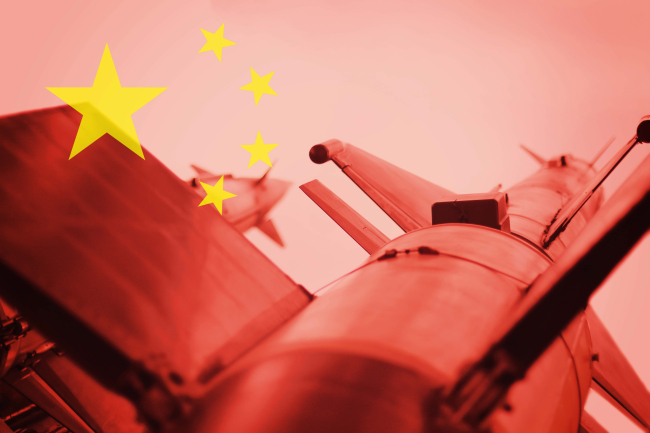
China’s Nuclear Buildup: Developments, Drivers, and Implications for Major-Power Relations and Arms Control
China has been steadily expanding its nuclear arsenal for several years amid levels of geopolitical tension unseen since the end of the Cold War, marked by a resurgence in nuclear proliferation and a broader, global arms race.
Reinventing Coordination in an Age of Fragmentation 3rd Paris Geoeconomic Dialogue
The world economy is being reordered. The certainties of the post-Cold War era, open trade, dollar centrality, predictable multilateral coordination, are giving way to a landscape shaped by rivalry between the United States and China, the weaponization of interdependence, and a scramble to secure supply chains, technologies and critical resources. What once looked like a stable architecture now appears fragile, contested, and in places actively being dismantled.