




Global Governance of Migration: A Challenge Beyond the North-South Paradigm

Practical information
The global dialogue on migration is frequently stalled due to contradictory interests and positions between the countries of the North (Europe and North America) and the South.

However, these positions do not take into account changes in migration profiles of countries, which can be departure, transit and receiving countries. Can multilateralism break with the North-South paradigm? Moreover, what is the added value of non-state actors (diaspora, NGOs, companies) or infra-state actors (local authorities) in the global governance of migration?
Chair
Bouchra Rahmouni, Senior Fellow, OCP Policy Center
Speakers
Matthieu Tardis, Research Fellow for the Center for Migration and Citizenship, Ifri
Khalid Zerouali, Head of the Migration and Border Surveillance Directorate, Moroccan Interior Ministry
Thierno Camara, Chairman, Forum des Organisations de Solidarité Internationale issues des Migrations (FORIM)
Mohammed Loulichki, Senior Fellow, OCP Policy Center; Permanent Representative to the United Nations in Geneva and New York
Related Subjects
Other events
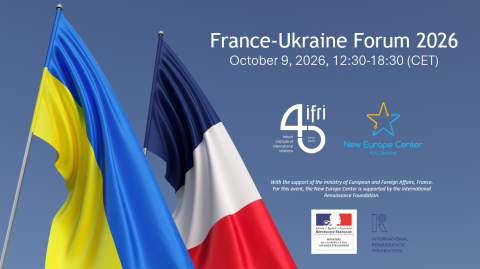
France-Ukraine Forum 2026
More than four and a half years after the start of the full-scale war launched by Russia against Ukraine, the 2026 France-Ukraine Forum will bring together policymakers, experts, academics, and civil society representatives from both countries to discuss three main topics: the formats and conditions for a lasting diplomatic settlement; Ukraine’s Euro-Atlantic integration, encompassing both the EU accession process and closer ties with NATO; and the societal transformations of postwar Ukraine, as well as its prospects for reconstruction.
The EU in a World of Economic Warfare: Trade, Geopolitics, and the Battle for Economic Sovereignty
The international trading system has become a primary theatre of geopolitical competition. Tariffs, sanctions, and technology controls have replaced dialogue as the default instruments of economic relations.
The Road to 27 Electrification Action Plans: Planning and Investing in Europe’s Electric Future
The European Commission’s Electrification Action Plan places the continent on an electric path to structurally reduce dependence on fossil fuel imports and boost the energy transition in industry, transport and buildings.