



Russia and Latin America in the 21st Century: A Difficult Rapprochement

This article analyses Russia’s relations with Latin America in the first two decades of the 21st century in the light of global political and economic processes.
Many different types of cooperation and interaction between Russia and the region are examined. The article places particular emphasis on military-technical cooperation as the “axis” of Russia’s bilateral relations with many countries, but other sectors, such as energy, infrastructure and transport, are also explored in detail. It finishes with a case study of Venezuela, which occupies a unique place in Russia’s relations with the region.
Relations between Russia and Latin America are developing against this backdrop of growing confrontation between the USA and China. Moscow’s policy is designed to infringe on both parties’ interests as little as possible. Russia is forced to be extremely careful in this regard. Such caution cannot but leave its mark on Russian policy in the region, which is very limited.
Andrey Pyatakov is the lead researcher at the Institute of Latin American Studies at the Russian Academy of Sciences in Moscow (ILA RAN).
This page contains only a summary of our work. If you would like to have access to all the information from our research on the subject, you can download the full version in PDF format.
Russia and Latin America in the 21st Century: A Difficult Rapprochement


Russia/Eurasia Center
Founded in 2005 within Ifri, the Russia/Eurasia Center conducts research and organizes debates on Russia, Eastern Europe, Central Asia, and the South Caucasus. Its goal is to understand and anticipate the evolution of this complex and rapidly changing geographical area in order to enrich public discourse in France and Europe and to assist in strategic, political, and economic decision-making.
The Plight of Russia’s Air Power in the Ukraine War: Drone-Driven Innovations and Transformation of Traditional Air Force
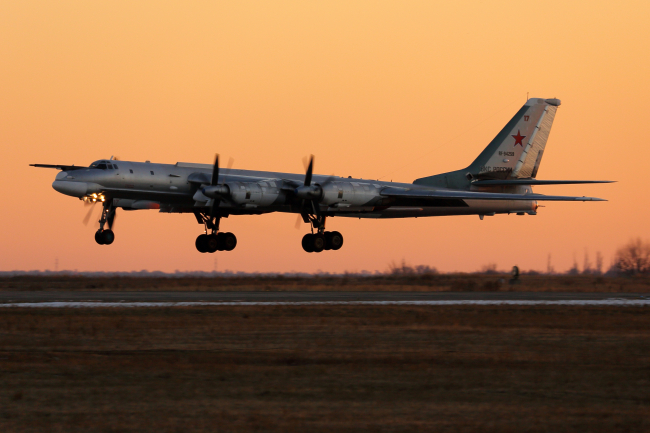
Since the start of the Ukraine War, Russian strategic guidelines on the application of air power—seen as the decisive instrument for achieving success in modern wars—have proven to be outdated, irrelevant and even self-defeating.
China in Kyrgyzstan and Tajikistan: From Economic Presence to a New Security Role
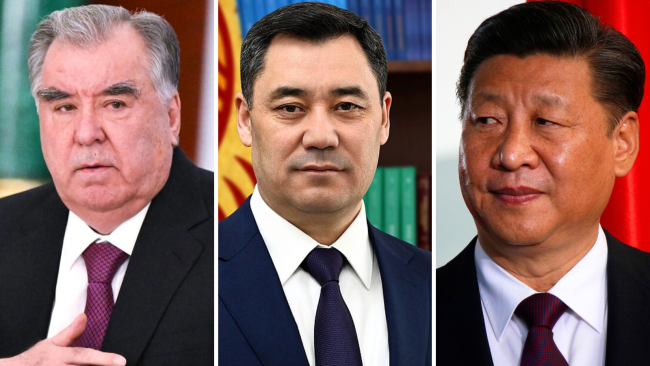
Over the past three decades, China’s influence in Central Asia has steadily expanded, but in the last three to five years this process has entered a markedly accelerated phase. Following 2022, Beijing effectively revised both its strategy and its operational approach toward the region.
Between Russia and Europe, between War and Peace: What is at Stake in Armenia’s Upcoming Elections?
Armenia’s June 7, 2026, parliamentary election is shaping up less as a routine vote than as a referendum on Nikol Pashinyan’s post-2020 course, which includes peace with neighbors, reduced dependence on Russia, and a more explicit European orientation. The ruling Civil Contract party is still the frontrunner, but its position is fragile, as the campaign is being fought in a highly polarized environment shaped by the trauma of defeat in the war against Azerbaijan, the displacement of Karabakh Armenians, and the massive election interference from Russia.
Russia, the Palestinians and Gaza: Adjustments after October 7th
The Soviet Union (USSR), and subsequently the Russian Federation as its internationally recognized legal successor, has consistently sought to play a visible role in efforts to resolve the Israeli-Palestinian conflict.