



Russia’s Niche Soft Power: Sources, Targets and Channels of Influence

This paper argues that Russia’s soft power should be understood as a niche soft power, microtargeting some specific audiences based on four particularisms:

- Russia’s history and culture;
- its Soviet legacy;
- its conservative and illiberal political identity today;
- its status as a joker on the international scene.
This strategy emerged as the product of Russia’s awareness of its limited outreach capacity compared to the US soft power, both financially and in terms of cultural and brand production to export worldwide. Russia’s case allows us to study the scope for a non-universalistic soft power on the international scene, and Moscow’s successes and failures at promoting conservative values as well as rebellion against the so-called liberal world order.
Marlène Laruelle is a Research Professor at George Washington University (Washington DC), Director of the Institute for European, Russian and Eurasian Studies (IERES), director of the Illiberalism Studies Program, and co-director of PONARS-Eurasia. Since January 2019, she has been an associate research fellow at Ifri’s Russia/NIS Center.
This page contains only a summary of our work. If you would like to have access to all the information from our research on the subject, you can download the full version in PDF format.
Russia’s Niche Soft Power: Sources, Targets and Channels of Influence



Marlène LARUELLE
Former Associate Research Fellow, Russia/Eurasia Center, Ifri

Russia/Eurasia Center
Founded in 2005 within Ifri, the Russia/Eurasia Center conducts research and organizes debates on Russia, Eastern Europe, Central Asia, and the South Caucasus. Its goal is to understand and anticipate the evolution of this complex and rapidly changing geographical area in order to enrich public discourse in France and Europe and to assist in strategic, political, and economic decision-making.
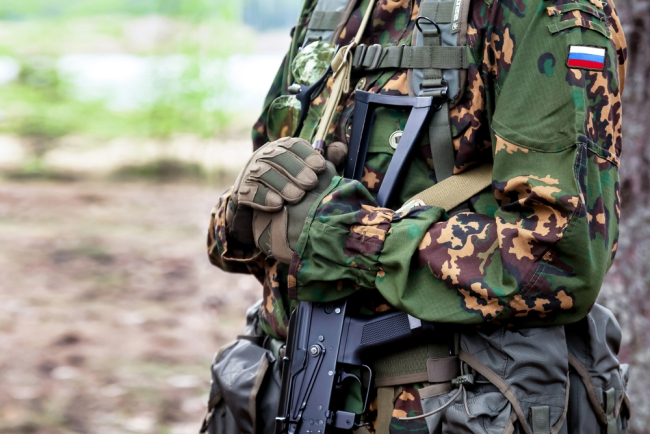
Russia’s Policy of Recruiting Fighters and Female Workers in Sub-Saharan Africa
The Russo-Ukrainian war, which began on February 24, 2022, quickly became internationalized. Russia and Ukraine were both quick to mobilize their allies in order to secure political and diplomatic support, as well as military and economic resources. But both belligerents also sought to recruit foreigners on a private basis to support their respective war efforts. This policy is global, extending from Latin America to the Far East. Sub-Saharan Africa, in this landscape, is of particular interest because it constitutes a vast and easily accessible recruitment pool, owing to high poverty rates in most countries of the region combined with a strong desire to emigrate.
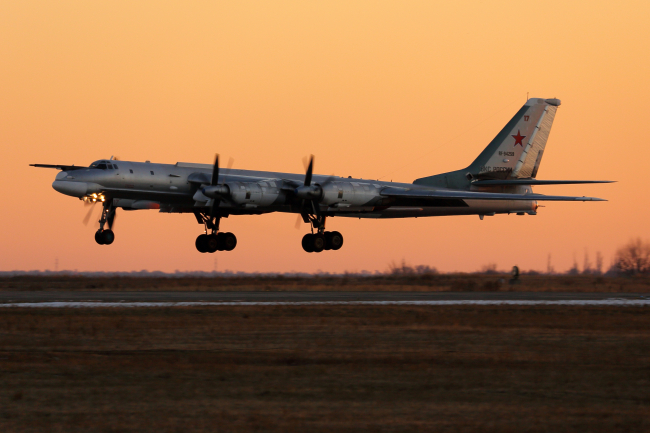
The Plight of Russia’s Air Power in the Ukraine War: Drone-Driven Innovations and Transformation of Traditional Air Force
Since the start of the Ukraine War, Russian strategic guidelines on the application of air power—seen as the decisive instrument for achieving success in modern wars—have proven to be outdated, irrelevant and even self-defeating.
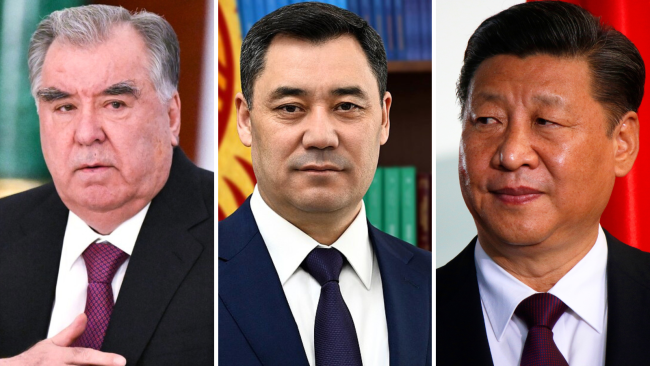
China in Kyrgyzstan and Tajikistan: From Economic Presence to a New Security Role
Over the past three decades, China’s influence in Central Asia has steadily expanded, but in the last three to five years this process has entered a markedly accelerated phase. Following 2022, Beijing effectively revised both its strategy and its operational approach toward the region.
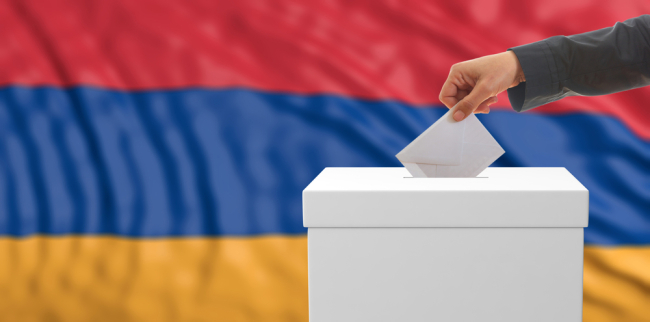
Between Russia and Europe, between War and Peace: What is at Stake in Armenia’s Upcoming Elections?
Armenia’s June 7, 2026, parliamentary election is shaping up less as a routine vote than as a referendum on Nikol Pashinyan’s post-2020 course, which includes peace with neighbors, reduced dependence on Russia, and a more explicit European orientation. The ruling Civil Contract party is still the frontrunner, but its position is fragile, as the campaign is being fought in a highly polarized environment shaped by the trauma of defeat in the war against Azerbaijan, the displacement of Karabakh Armenians, and the massive election interference from Russia.