





Practical information
Themes and regions
Related centers and programs
Since 2014, the number of maritime incidents between Turkey and its Greek and Cypriot neighbors has steadily increased. In 2020, at the height of the crisis, Greece obtained the unconditional support of French President Emmanuel Macron, who sought to portray himself as the defender of European sovereignty by adopting a confrontational stance towards Turkey.
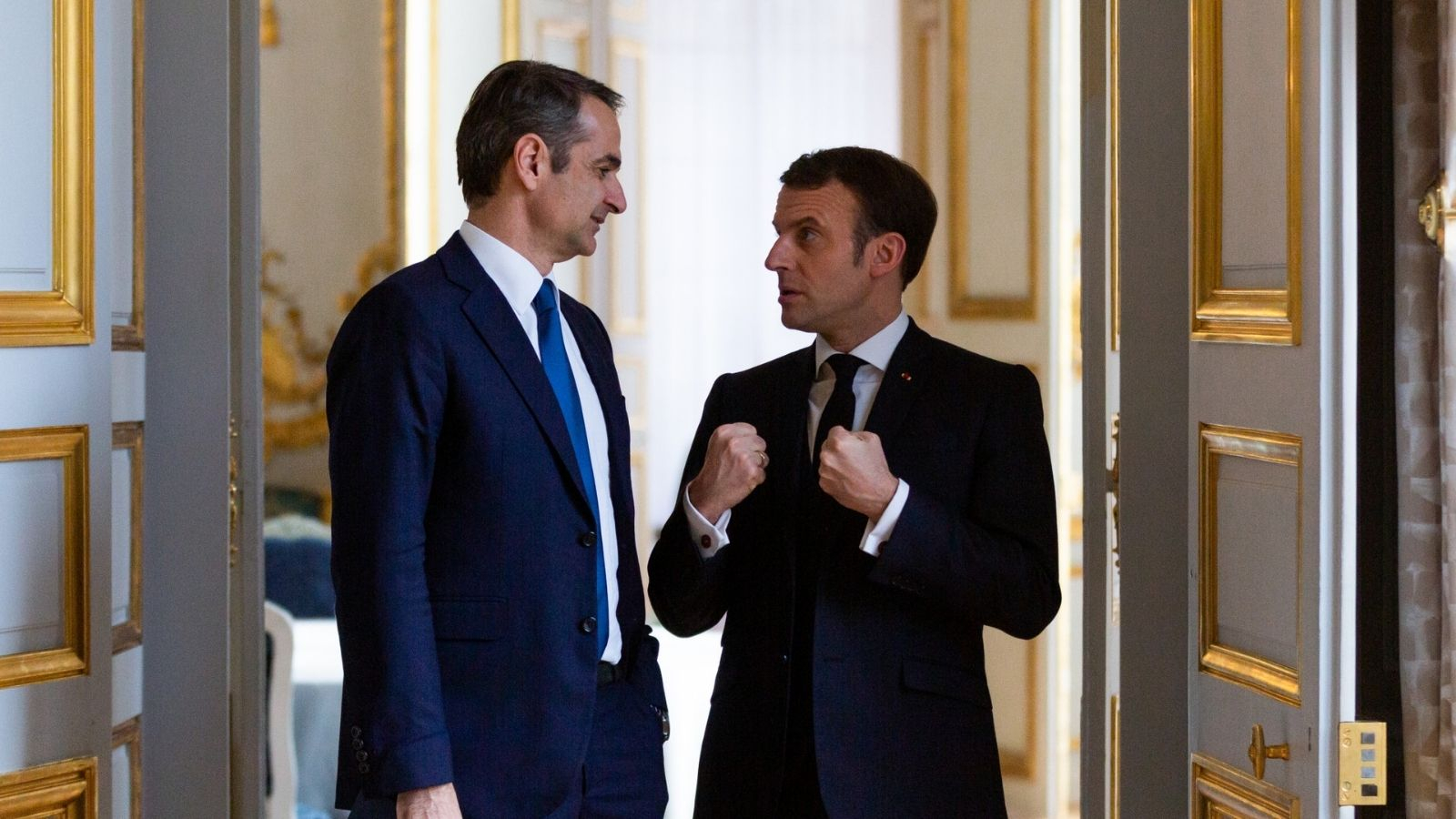
France-Greece relations have only grown stronger since then, with a defense partnership between the two countries being signed in September 2021. Beyond the secular friendship that unites France and Greece, what is the strategic ambition of this new partnership? Can it be considered a Hellenic alliance from which Cyprus stands to benefit? How does Turkey perceive these developments on the borders of its “Blue Homeland"?
This debate will question the Greek, Turkish, Cypriot and French perspectives of this rapprochement.
Speakers :
Thanos Dokos, National Security Advisor of Greece
Sinan Ülgen, Director, Centre for Economics and Foreign Policy Studies (EDAM), (Istanbul), Visiting Scholar, Carnegie Europe
Zenonas Tziarras, Researcher at Peace Research Institute Oslo (PRIO), Cyprus Center
Dorothée Schmid, Senior Research Fellow, Head of Turkey and Middle East Program, Ifri
Chair : Christian Makarian, Journalist
This debate is part of the project “The Search for Franco-German Consensus on the Eastern Mediterranean: The Paris/Ankara Row and its Consequences for the EU” which is a project of CATS Network.The Centre for Applied Turkey Studies (CATS) at Stiftung Wissenschaft und Politik (SWP) in Berlin is funded by Stiftung Mercator and the Federal Foreign Office. CATS is the curator of CATS Network, an international network of think tanks and research institutions working on Turkey.
Find out more
France vs. Turkey in the EastMed: A Geopolitical Rivalry between a “Keeper” of the Old Order and a Challenging Emergent Power
The Franco-Turkish standoff is first and foremost a geopolitical contest for influence in the EastMed area. It must be understood in light of Turkey’s rise as an emergent power in quest for geostrategic autonomy and France’s unease with Ankara’s growing assertiveness in a region that Paris traditionally views as part of its sphere of influence.
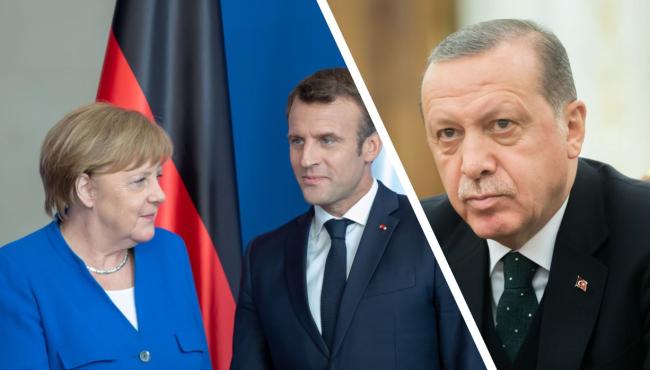
Conflicts in the EastMed: From Germany’s and France’s Conflicting Strategies to a Dual Approach
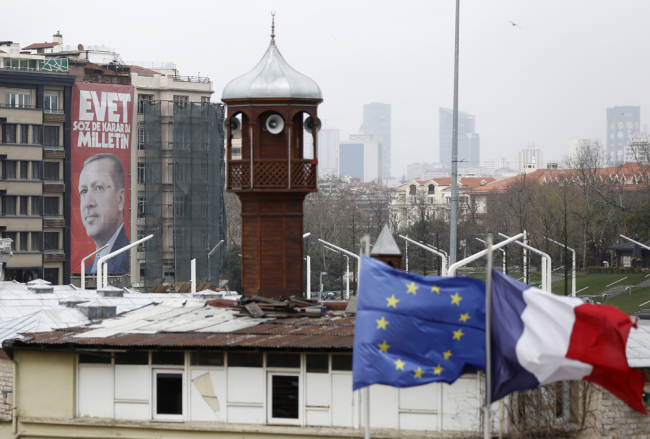
Building European Strategic Autonomy vs. Turkish Strategic Depth: Macron's Diplomatic Gamble
Since coming into office in 2017, Emmanuel Macron has been the loudest advocate for the development of European ‘strategic autonomy’, which aims at reinforcing the European Union’s geo-strategic independence. Asserting the EU’s role on the international stage, starting with its immediate neighborhood, directly clashes with Recep Tayyip Erdogan's long-term expansion strategy in several key areas.
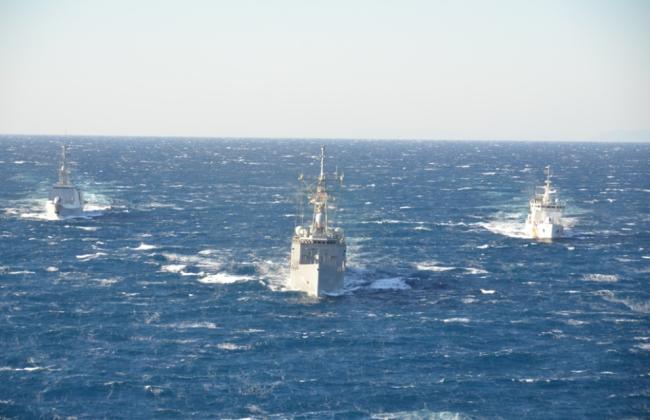
The French Military's Perception of the Turkish Military and Turkey's Expansion in the Eastern Mediterranean
In the summer of 2020, the Central and Eastern Mediterranean became the center of unusual tensions between France and Turkey. Given that these tensions were also military, which is uncommon for the two countries, the perception that the French military has of Turkey’s army and its doctrine is particularly relevant to address.
Related Subjects
Other events
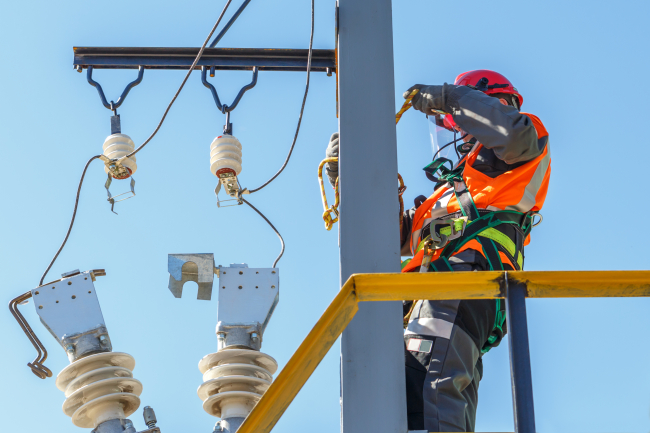
The Road to 27 Electrification Action Plans: Planning and Investing in Europe’s Electric Future
The European Commission’s Electrification Action Plan places the continent on an electric path to structurally reduce dependence on fossil fuel imports and boost the energy transition in industry, transport and buildings.
Navigating Uncertainty: Asian Powers amid US-China Competition
As relations between China and the United States oscillate between hardening competition and strategic stability, regional powers in Asia must adapt to greater uncertainty.