





Practical information
Hosting mega sports events like the Olympics raises a variety of challenges.

One of the most daunting, as these events are also showcasing tech innovation, is to ensure safety in cyber space. In recent years, the use of cyber-attacks to derail the organization of these events has been multiplying. Japan has taken a variety of measures to reinforce cybersecurity both for government agencies and companies, ahead of the Olympics that should take place in Summer 2021. This conference will therefore present and discuss the cyber threats on this event and the measures taken by Japan to ensure cybersecurity during the Olympics.
This conference will also touch upon the various diplomatic initiatives taken by the Japanese government to act as a leading nation in terms of cybersecurity and cyber governance on the international stage. Japan is a proactive actor in this area, both at multilateral and bilateral levels. Japan's cyber diplomacy in multilateral settings as well as vis à vis the EU, ASEAN, and the US will be presented and discussed.
This conference will be held in English.
Program (Paris time - CEST)
9:00-10:00 - Cyber-security challenges in hosting mega sports events
Chair: Françoise NICOLAS, Director, Center for Asian Studies, Ifri
- Jacopo BELLASIO, Senior Analyst – Defence, Security and Infrastructure, RAND Europe
- Mihoko MATSUBARA, Chief Cybersecurity Strategist, NTT Corporation in Tokyo
Discussant: Kavé SALAMATIAN, Professor of Computer Science, University of Savoie
10:15-11:15 - Japan’s proactive diplomacy in cybersecurity and data governance
Chair: Céline PAJON, Head of Japan Research, Center for Asian Studies, Ifri
- Dai MOCHINAGA, Senior Researcher, Keio Research Institute
- Wilhelm VOSSE, Professor, International Christian University, Tokyo - Visiting professor, Warwick University
Discussant: Julien NOCETTI, Associate Research Fellow, Ifri
This is an online event. The day prior to the debate, registered participants will receive the link to join the session.
Related Subjects
Other events
COP31 in Antalaya: State of the Global Climate Governance, Issues, Perspectives
COPs have become a year-end marathon to revigorate a world now entering the era of climate overshoot. While Türkiye exhibits the largest coal-fired power generation in OECD Europe, it has embraced the electrification agenda and aims at joining forces with Australia on fostering action and implementation. This is an unusual de facto co-presidency arrangement, but one that could yield promising results. This webinar will take stock of what climate governance has achieved and of the issues still to be negotiated, and explore what impetus this Turkish–Australian partnership could provide.
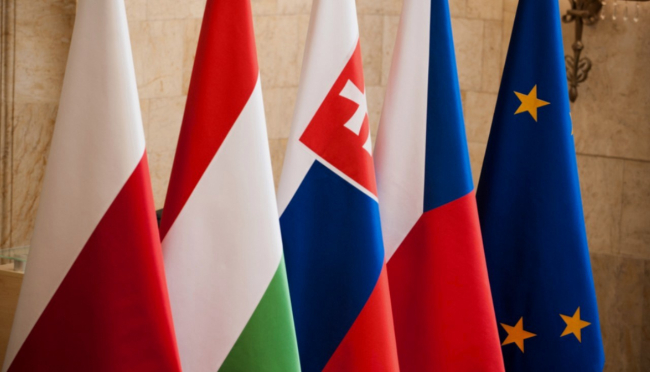
A New Moment for Central Europe? Regional Cooperation in a Time of European Strategic Choices
Recent political developments in Central Europe have revived the debate about the future of regional cooperation and the Visegrád Group. Changes in Hungary, Poland, the Czech Republic and Slovakia, together with Austria’s growing interest in closer cooperation with its neighbours, could create new opportunities for dialogue and coordination around shared priorities.
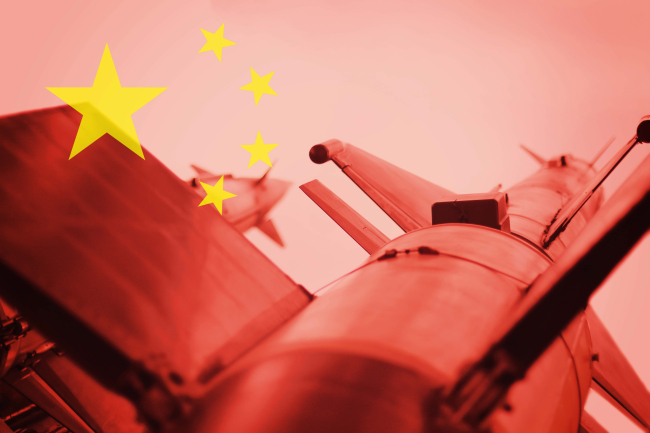
China’s Nuclear Buildup: Developments, Drivers, and Implications for Major-Power Relations and Arms Control
China has been steadily expanding its nuclear arsenal for several years amid levels of geopolitical tension unseen since the end of the Cold War, marked by a resurgence in nuclear proliferation and a broader, global arms race.