



Europe in the Indopacific – Key challenges for a mutually beneficial partnership in the region
Practical information
Themes and regions
Related centers and programs
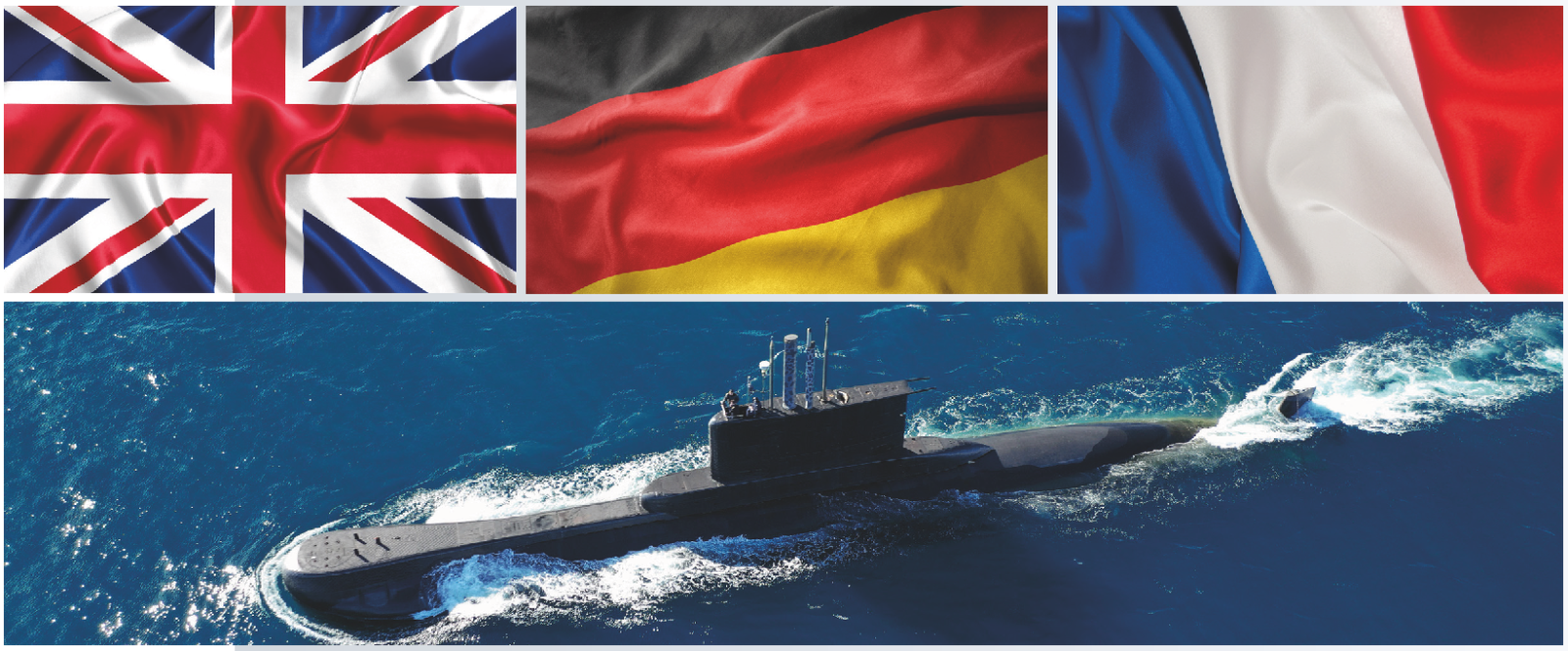
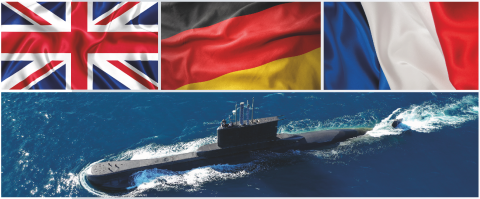
This conference is intended to discuss the paper “The Dilemma of Middle Powers – How AUKUS Has Reshaped the Potential for E3 Cooperation in the Indo-Pacific“ and to present its main findings.
This publication questions the potential added value of the EU in the region and identifies areas of cooperation that may be mutually beneficial. One main conclusion is the fact that the mere signaling approach, based on military and police operations to enforce international law, although of paramount importance, cannot be regarded as sufficient.
Against the backdrop of an increasing US-China rivalry and the multiple challenges in the region, how to improve the cooperation between European countries and countries in the Indopacific?
What are the conditions to develop a constructive and inclusive dialog in the region?
The discussion will tackle this topic under three angles:
Conditions for Joint Approaches in the Region: Toward a Collective Responsibility
Addressing the Challenges of Environmental Security and Development in the region
How to preserve Economic Cooperation in a context of regionalization of trade?
Introductory words
Philipp Siegert, Head Office, Hanns Seidel Foundation, Paris
Panelists
Presentation of the main findings of the paper
Marie Krpata, Research Fellow, Study Committee on Franco-German Relations (Cerfa), Ifri
Limits of signaling and new ways to address maritime security challenges
Christian Bueger, Professor of International Relations at the Department of Political Science, University of Copenhagen
How countries in the region would consider this approach
Rizal Sukma (tbc), Senior Fellow at the Centre for Strategic and International Studies, Jakarta (tbc)
Joint (Europe-Europe, Europe-Asian) approaches and collective responsibility in the region
Philip Shetler-Jones, Fellow at the UK Council on Geostrategy
New European Approaches in the region
Lewe Paul, Referent on South Asia (Afghanistan, India, Myanmar), Konrad Adenauer Foundation
Moderation: Eric-André Martin, Secretary General of the Study Committee on Franco-German Relations (Cerfa), l'Ifri
Webinar on the zoom platform co-organized by the Study Committee on Franco-German Relations (Cerfa), l'Ifri and the Hanns Seidel Foundation, Paris.
This conference will be held in English, French and German with simultaneous translation
You will receive the zoom connection link by e-mail the day before the event
Replay
Our partners
Speakers

Our team

Marie KRPATA
Research Fellow, Study Committee on Franco-German Relations (Cerfa), Ifri

Éric-André MARTIN
Former Secretary General of the Study Committee on Franco-German Relations (Cerfa), Ifri
External contributor(s)

Philipp SIEGERT


Find out more
The Dilemma of Middle Powers: How AUKUS Has Reshaped the Potential for E3 Cooperation in the Indo-Pacific
The Indo-Pacific region is increasingly becoming the center of gravity of economy and geopolitics. It covers 60% of the world’s population, triggers 30% of international trade and drains 60% of global gross domestic product (GDP).
Related Subjects
Other events
France-Ukraine Forum 2026
More than four and a half years after the start of the full-scale war launched by Russia against Ukraine, the 2026 France-Ukraine Forum will bring together policymakers, experts, academics, and civil society representatives from both countries to discuss three main topics: the formats and conditions for a lasting diplomatic settlement; Ukraine’s Euro-Atlantic integration, encompassing both the EU accession process and closer ties with NATO; and the societal transformations of postwar Ukraine, as well as its prospects for reconstruction.
The EU in a World of Economic Warfare: Trade, Geopolitics, and the Battle for Economic Sovereignty
The international trading system has become a primary theatre of geopolitical competition. Tariffs, sanctions, and technology controls have replaced dialogue as the default instruments of economic relations.
The Road to 27 Electrification Action Plans: Planning and Investing in Europe’s Electric Future
The European Commission’s Electrification Action Plan places the continent on an electric path to structurally reduce dependence on fossil fuel imports and boost the energy transition in industry, transport and buildings.