







Practical information
Themes and regions
Related centers and programs
This is a private event.
Learn more about our corporate support packagesThe European Union's energy transition has historically never been so advanced, yet never so vulnerable. Over the last four years, the European Union (EU) has experienced significant growth in renewable energy capacities, Electric Vehicle (EV), and heat pump adoption. Progress has also been made in clarifying the legislative framework of this transition, giving businesses and industries a clear path forward.
This event will be held in English in a hybrid format
Agenda
8:30-9:00 am: Welcome coffee & breakfast
9:00-9:15 am: Presentation of Ifri's study "How can the Green Deal adapt to a brutal World"
- Marc-Antoine Eyl-Mazzega, Director, Center for Energy and Climate, Ifri
- Diana-Paula Gherasim, Reaserch Fellow, Head of European Energy and Climate Policy, Center for Energy and Climate, Ifri
- Sarah Kuen, Counsellor for Environment and Climate, Permanent Representation of Belgium to the EU
- Terhi Lehtonen, Coordinator for inter-institutional Relations, Legal & Institutional issues, DG CLIMA
9:35-10:30 am: Comments and Perspectives
- Kees Biesheuvel, Senior Technology Manager Sustainability, Dow
- Alain Taccoen, European Affairs Direction, EDF
- Gabrielle Gauthey, High Representative of the chairman and chief executive officer to the EU institutions; Senior Vice-President for European Public Affairs, TotalEnergies
- Guillaume Gillet, Group Public Affairs Vice-President, ENGIE
- Vincent Thouvenin, Director of European Affairs, RTE
Find out more
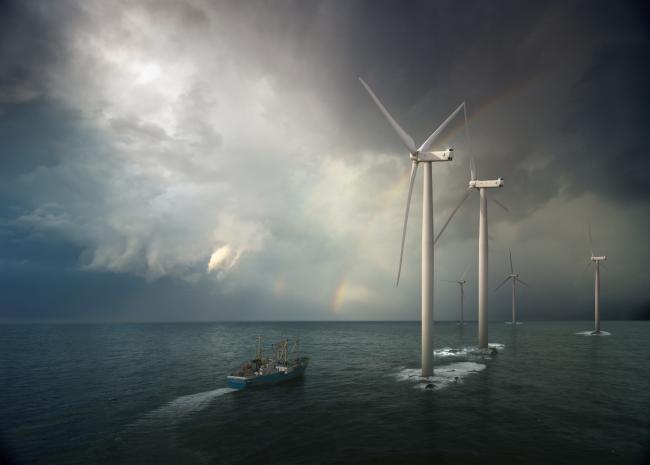
How Can the Green Deal Adapt to a Brutal World?
The European Green Deal has not been planned for the current extraordinarily deteriorated internal and external environment. Russia’s war in Ukraine, higher interest rates, inflation, strained public finances, weakened value chains, and lack of crucial skills pose unprecedented challenges.
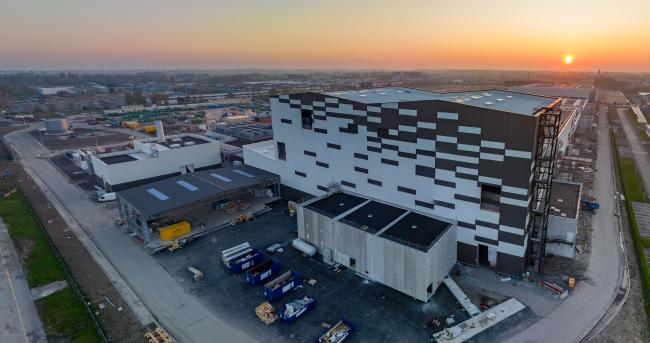
How to Meet the Industrial Challenge of Electric Mobility in France and in Europe
The deployment at scale of electric mobility in France and in Europe withholds significant industrial, societal, geopolitical, and financial challenges, against the backdrop of strategic dependencies along the value chain of the electric vehicle (EV).
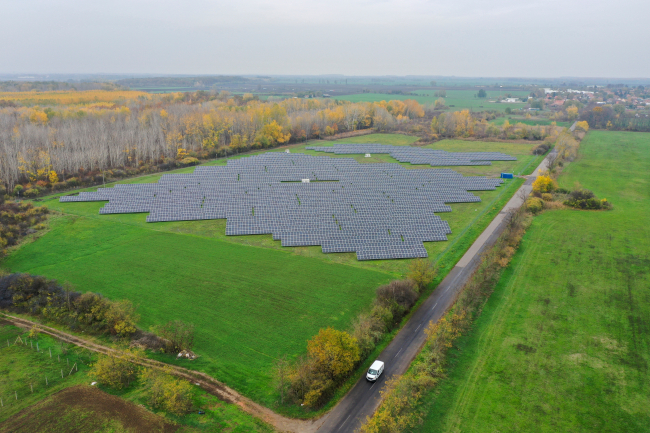
The Europeanisation of the Energy Transition in Central and Eastern EU Countries: An Uphill Battle that Can Be Won
Russia’s war in Ukraine, and the brutal decoupling from Russian fossil fuels, is a game changer for the Central and Eastern Europe region which was still heavily dependent on Russia for its energy supply.
Related Subjects
Other events
COP31 in Antalaya: State of the Global Climate Governance, Issues, Perspectives
COPs have become a year-end marathon to revigorate a world now entering the era of climate overshoot. While Türkiye exhibits the largest coal-fired power generation in OECD Europe, it has embraced the electrification agenda and aims at joining forces with Australia on fostering action and implementation. This is an unusual de facto co-presidency arrangement, but one that could yield promising results. This webinar will take stock of what climate governance has achieved and of the issues still to be negotiated, and explore what impetus this Turkish–Australian partnership could provide.
A New Moment for Central Europe? Regional Cooperation in a Time of European Strategic Choices
Recent political developments in Central Europe have revived the debate about the future of regional cooperation and the Visegrád Group. Changes in Hungary, Poland, the Czech Republic and Slovakia, together with Austria’s growing interest in closer cooperation with its neighbours, could create new opportunities for dialogue and coordination around shared priorities.