




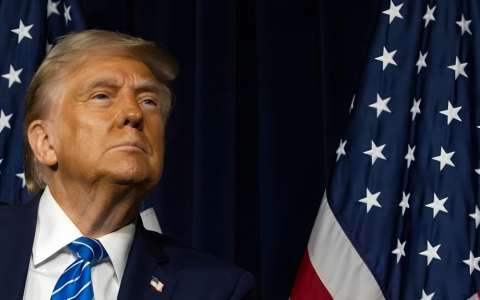
2019-2029: The World in 10 Years
The last four decades have witnessed the profound transformation of the very foundations of the international system: the globalization of trade, technical revolutions, the upheaval of the hierarchy of powers, the emergence of China, the explosion of the Middle-East, the mutation of conflicts and threats, climate concerns, etc.

This special issue of Politique étrangère celebrates the 40th anniversary of IFRI. It includes contributions by the best international specialists to clarify and shed light on the major trends affecting today’s effervescent world: Where is it taking us? What may happen on this global stage, in all its parts, over the next ten years?
How far is the world going to be “de-westernized”? Does modernity concentrate power, or dilute it? How should the advances of the international financial system be evaluated, and what are their limits? Can poverty be reduced further? Will the energy transition be successful? What forms will international violence take? What will the world’s population look like in 2029? Are new technologies redesigning new geopolitics? Is global trade hesitating between trade war or multilateralism? Is Europe undoing itself, or reconstructing itself? What is the economic and political future of Africa in all its pluralities? Is the Middle-East doomed to breakdown? Will Asia be the center of tomorrow’s world?
How is the world of 2029 being sketched out today?
TABLE OF CONTENTS
Between Concentration and Dispersion: A Promising Future for Power Relations, by Thomas Gomart
The Waning of Universalism, by Chantal Delsol
2029: TOWARD A NEW WORLD?
The Future of the International Monetary and Financial System, by Jean-Claude Trichet
International Trade Disagreements: Beyond Trump, by Sébastien Jean
Poverty and Inequality through 2030, by Ravi Kanbur
Possible Energy Transitions through 2029, by Adnan Z. Amin
Wars in the Next Decade, by Lawrence Freedman
After the Demographic Explosion, by Hervé Le Bras
When Technology Shapes the World..., by Jared Cohen
2029: WORLDS ADRIFT
Europe in 10 Years, by Nicole Gnesotto
The Africas of 2029, by Alioune Sall
The Middle East in 2029, by Fawaz A. Gerges
2029, the Great Asian Renaissance, by Kishore Mahbubani
A VIEW FROM HISTORY
Between the Lines of Questionable Battles, by Raymond Aron
This content is available in French : "L'éditorial de Politique étrangère, vol. 84, n° 1, printemps 2019"
This content is available in French : "Le dossier de presse de Politique étrangère, vol. 84, n° 1, printemps 2019"
Iran: Anatomy of a Power at War
The elimination of Supreme Leader Ali Khamenei and several high-ranking officials at the outset of the 2026 American-Israeli operation did not succeed in bringing down the Iranian regime. The regime had prepared for such a scenario, notably by decentralizing its structures. Moreover, it continues to adapt to war. The power of the Islamic Revolutionary Guard Corps is growing at the expense of the Shiite clergy. The security apparatus defends the country’s sovereignty and justifies its actions in the name of raison d’état.
“Remodeling” the Middle East?
Chaos continues to spread, seemingly without end, across the Middle East. The Israeli-American attack on Iran has resulted in a clear military and diplomatic failure, but it is paving the way for a regional realignment, the consequences of which remain uncertain. New regional groupings are taking shape, either centered around Israel or built on the prospect of coexistence with Tehran, alongside a decline in American influence and the marginalization of Europe, while China maintains a low-key presence.
Silicon Valley and War: Lessons from Ukraine
Over the course of international conflicts, and particularly in Ukraine, major tech companies have emerged as central actors. Initially subject to wartime maneuvering, they have since become decisive actors in their own right, privatizing a significant share of wartime exchanges, shaping the information flows of societies, and presenting themselves as providers of security. This situation raises important questions about states’ autonomy in making decisions and taking action.
Does Artificial Intelligence Change the Nature of War?
From Gaza to Ukraine and Iran, current conflicts are being shaped by the arrival of artificial intelligence and robots on the battlefield. The changes under way are so profound that humans risk rapidly losing control over entire aspects of the conduct of military operations. While these technological developments are altering the character of war, their impact on the very nature of war itself remains a matter of debate.