





Rare Earths and the WTO: Tougher case than it looks
Deepening their partnership, Ifri and the Canon Institute for Global Studies (CIGS) are launching a series of op-eds, written both by Ifri and CIGS experts. This new series aims at providing the European and Asian public with original and different visions on the rapidly evolving international affairs.
The European Union, the United States and Japan have finally decided to take their case on China’s rare earth export policies to the WTO. China stands accused of violating the terms of its WTO accession agreement by limiting exports of rare earths and driving an artificial wedge between prices in China and prices abroad – in essence using its resource advantage to shelter nascent high-tech industries and even to coerce the transfer of foreign expertise. Beijing, meanwhile, argues that this is a purely internal matter motivated by the need to impose environmental restrictions on a highly polluting industry. Uncontrolled production practices have indeed wrought havoc on local environments and human health in rare earth producing regions. The Chinese authorities argue that export permits and higher prices for rare earths are needed to allow industries to adapt to higher production standards – export tariffs and quotas being a useful tool in China’s eye.

Available in:
Regions and themes
Share
This page contains only a summary of our work. If you would like to have access to all the information from our research on the subject, you can download the full version in PDF format.
Rare Earths and the WTO: Tougher case than it looks


Center for Asian Studies
Asia is a nerve center for multiple global economic, political and security challenges. The Center for Asian Studies provides documented expertise and a platform for discussion on Asian issues to accompany decision makers and explain and contextualize developments in the region for the sake of a larger public dialogue.
The Center's research is organized along two major axes: relations between Asia's major powers and the rest of the world; and internal economic and social dynamics of Asian countries. The Center's research focuses primarily on China, Japan, India, Taiwan and the Indo-Pacific, but also covers Southeast Asia, the Korean peninsula and the Pacific Islands.
The Centre for Asian Studies maintains close institutional links with counterpart research institutes in Europe and Asia, and its researchers regularly carry out fieldwork in the region.
The Center organizes closed-door roundtables, expert-level seminars and a number of public events, including an Annual Conference, that welcome experts from Asia, Europe and the United States. The work of Center’s researchers, as well as that of their partners, is regularly published in the Center’s electronic journal Asie.Visions.
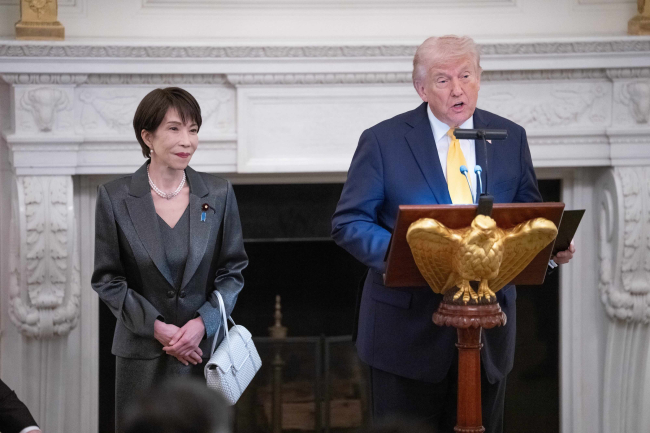
Trump II, the Crisis of the Rules-Based Order and Europe’s Indo-Pacific Strategy
This article examines the implications of Trump II for Europe’s engagement in the Indo-Pacific. The piece contends that Trump II is accelerating the erosion of the rules-based order and undermining the relevance of the Free and Open Indo-Pacific (FOIP) concept, while forcing Europe to refocus on its own continental security amid US retrenchment. Paradoxically, these very constraints create conditions for a more autonomous, pragmatic, and explicitly interest-driven European engagement in the Indo-Pacific, rather than outright withdrawal.
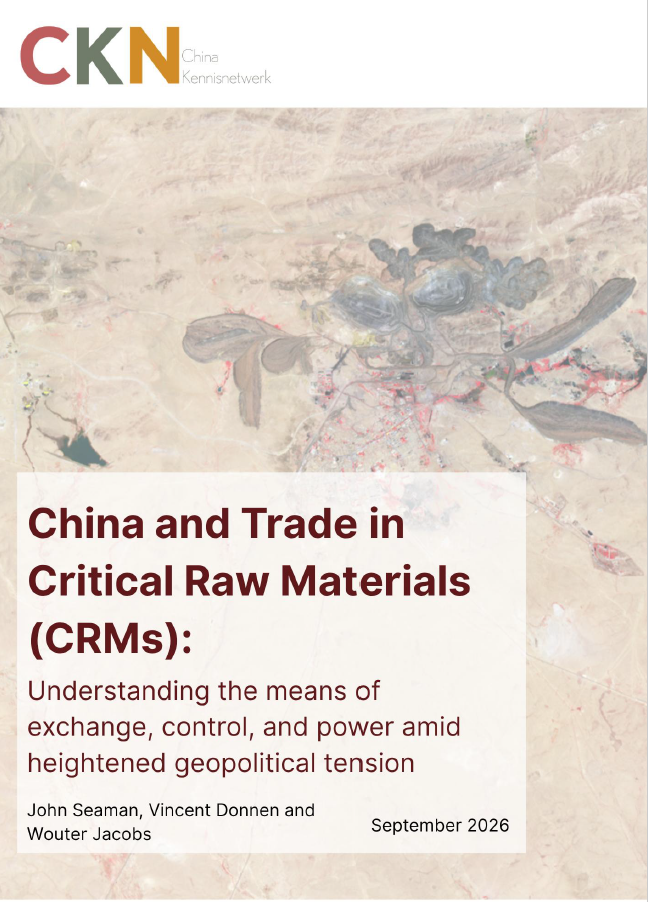
China and Trade in Critical Raw Materials (CRMs)
Critical raw materials (CRMs) have become central features of a new dynamic in global power politics, with China now wielding considerable leverage. Amid rising regional and global uncertainty, resource security is back in the spotlight as a key determinant of sovereignty and national security for Europe, its allies and its partners. The very survival of key, even vital industries, from automotive to aerospace to health to energy to defense, is at stake.
Japan’s Energy Policy after Hormuz. Security, Competitiveness, and Decarbonization
The 2026 Hormuz crisis has strengthened rather than weakened the rationale for Japan’s decarbonization strategy, contrary to what might have been expected. Rather than energy policy supplanting climate policy, the two should actually be viewed as inseparable.
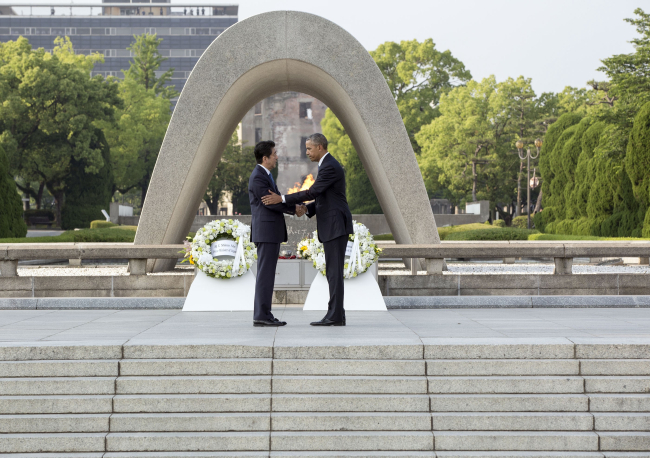
Japan and Nuclear Weapons: Between Extended Deterrence and Normative Dilemmas
Since the late 1950s, Japan’s nuclear weapons policy has been based on the coexistence of two competing normative rationales: the rejection of nuclear weapons, rooted in the legacy of Hiroshima and Nagasaki, and the recognition of the central role of US extended nuclear deterrence for Japan’s security.