



Navigating the Taiwan Strait Tensions: Perspectives from Japan, the Philippines, and France
Practical information
Accessibility
Themes and regions
Related centers and programs

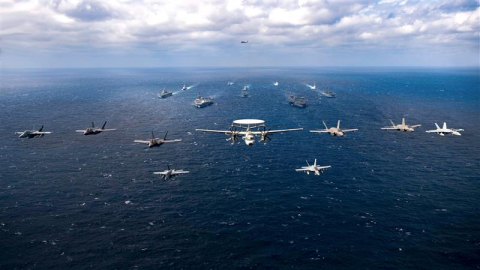
As tensions continue to rise in the Taiwan Strait and discussions grow about hybrid frictions potentially escalating into a kinetic conflict in the coming years, neighboring countries are bracing for impact. Japan and the Philippines would be on the front lines if a crisis were to erupt in the Taiwan Strait.
Both nations are closely monitoring the situation and preparing for a range of contingency scenarios. Their bilateral relations and security cooperation have deepened rapidly, alongside expanding trilateral defense coordination with their shared ally, the United States. This seminar will bring together two prominent Asian speakers and a French expert to examine the escalating tensions in the Taiwan Strait. They will provide a nuanced analysis of the situation's realities, the geopolitical and economic stakes, and potential strategies for regional and global responses.
Programme:
Speakers:
Shin Kawashima, Professor, Tokyo University
Renato Cruz de Castro, Distinguished Professor, De La Salle University, Manila
Marc Julienne, Director, Ifri Center for Asian Studies
Discussant: Séverine Arsène, Analyst for Asia, Policy Planning Department, Ministry of Europe and Foreign Affairs
Moderator: Céline Pajon, Head of Japan Research, Ifri Center for Asian Studies
The discussion will be held in English.
The seminar will be held in hybrid format: all speakers will be in Paris, but audience can also connect remotely via Zoom.
Replay
Contact
Please contact Alice JUIGNIER, for any inquiry, at [email protected]
Related Subjects
Other events
COP31 in Antalaya: State of the Global Climate Governance, Issues, Perspectives
COPs have become a year-end marathon to revigorate a world now entering the era of climate overshoot. While Türkiye exhibits the largest coal-fired power generation in OECD Europe, it has embraced the electrification agenda and aims at joining forces with Australia on fostering action and implementation. This is an unusual de facto co-presidency arrangement, but one that could yield promising results. This webinar will take stock of what climate governance has achieved and of the issues still to be negotiated, and explore what impetus this Turkish–Australian partnership could provide.
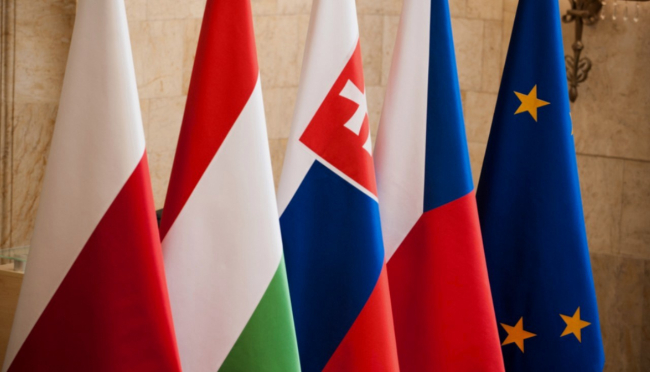
A New Moment for Central Europe? Regional Cooperation in a Time of European Strategic Choices
Recent political developments in Central Europe have revived the debate about the future of regional cooperation and the Visegrád Group. Changes in Hungary, Poland, the Czech Republic and Slovakia, together with Austria’s growing interest in closer cooperation with its neighbours, could create new opportunities for dialogue and coordination around shared priorities.
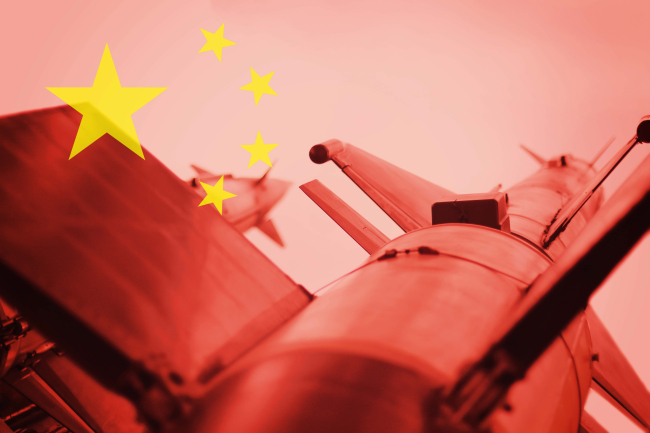
China’s Nuclear Buildup: Developments, Drivers, and Implications for Major-Power Relations and Arms Control
China has been steadily expanding its nuclear arsenal for several years amid levels of geopolitical tension unseen since the end of the Cold War, marked by a resurgence in nuclear proliferation and a broader, global arms race.