


Penser son ennemi. Modélisations de l'adversaire dans les forces armées
The designation of an enemy is always the result of a political decision, which generally leads to the opening of hostilities.
If the enemy is the result of a political choice, it is though a military necessity for armed forces which have to carry out an analysis of the enemy at each level of analysis, be it strategic, operational or tactical. The military leader thus has a special bond with “his” enemy, taking him into account through his intelligence system in the unique context of his mission. If the fundamental principles of enemy study recur in most armies, differences in methods of analysis and modeling persist, even within NATO countries, showing the diversity of how to address an adversary. These traditional approaches could however soon be challenged by innovations in military intelligence and applications of artificial intelligence.
This content is available in French: Penser son ennemi. Modélisations de l'adversaire dans les forces armées.
Related centers and programs
Discover our other research centers and programs
Security Studies Center
Heir to a tradition dating back to the founding of Ifri, the Security Studies Center provides public and private decision-makers as well as the general public with the keys to understanding power relations and contemporary modes of conflict as well as those to come. Through its positioning at the juncture of politics and operations, the credibility of its civil-military team and the wide distribution of its publications in French and English, the Center for Security Studies constitutes in the French landscape of think tanks a unique center of research and influence on the national and international defense debate.
Find out more
Discover all our analyses
Taking the Pulse: Is France’s New Nuclear Doctrine Ambitious Enough?
French President Emmanuel Macron has unveiled his country’s new nuclear doctrine. Are the changes he has made enough to reassure France’s European partners in the current geopolitical context?
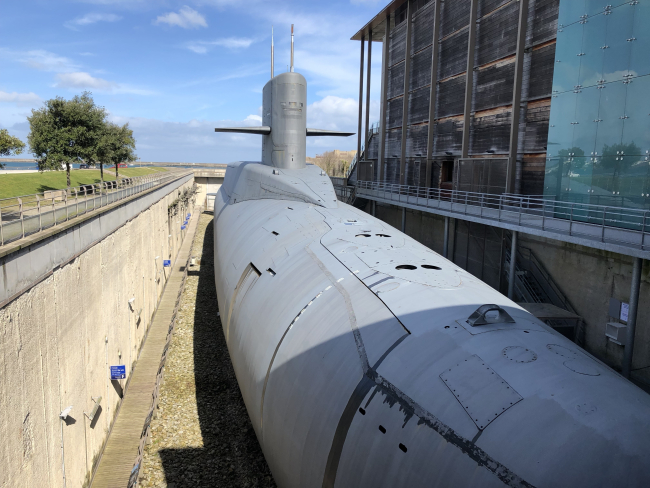
Macron Offers a Promising Vision for Nuclear Deterrence in Europe
Macron’s concept of ‘forward deterrence’ offers a distinctly European approach to nuclear deterrence.
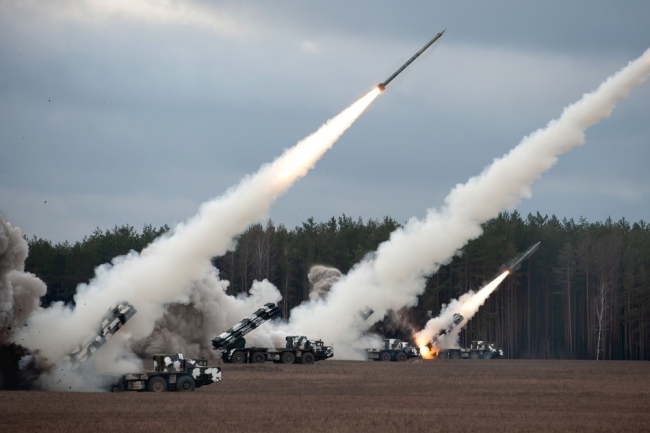
Multiple Launch Rocket Systems Europe’s Long-standing and Enduring Dependence?
The war in Ukraine has underlined the importance of multiple launch rocket systems (MLRS) in modern conflict, especially a war without clear air superiority and hence a reduced potential for air-launched deep strike. In 2022, the European MLRS fleet was split between a variety of Western platforms developed at the end of the Cold War and specialized in precision strikes.
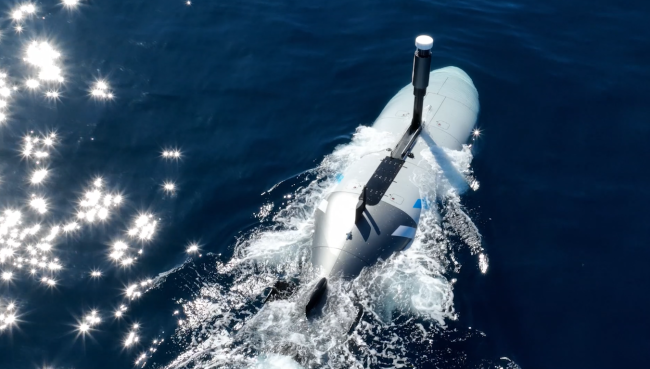
Autonomous Systems in the Underwater Domain: A Limitless Revolution?
One of the decisive strategic factors in the ongoing Russo-Ukrainian war is the mass use of aerial, maritime, and terrestrial autonomous capabilities, which are transforming the face of the battlefield. Nevertheless, many of these drones are still remotely piloted, operated, or supervised, testifying to the fact that the autonomization of military capabilities is still at an embryonic stage.