






Practical information
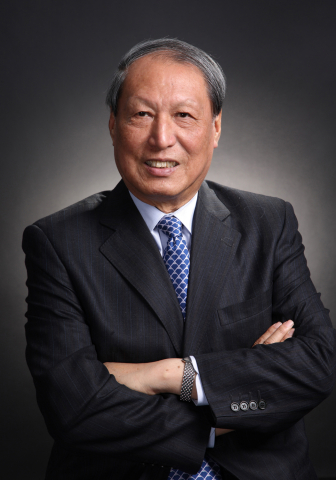
Prof. Cheng Siwei is the Dean of School of Management, University of Chinese Academy of Sciences. He is a famous Chinese scholar in economic, financial and managerial fields as well as in chemical industry. He devotes himself in the reform and opening up of China for 30 years. He has proposed the approach of complexity science to study the economic reforms in China and put forward many valuable and influencing proposals to the top leaders of China, and implemented his thoughts in his work as the Vice Chairman, Standing Committee of National People"s Congress of China and the Chairman, Central Committee of China National Democratic Construction Association. He has initiated the school of fictitious economy and has a deep influence in China"s economic and financial circle. He has also promoted the venture capital business in China and built up high reputation in this field. He is also very active in international academic community and was invited to give keynote speeches in many countries and international forums.
Chair: Françoise Nicolas, Director, Center for Asian Studies, Ifri.
Speakers

Our team
External contributor(s)

Siwei CHENG
Other events

France-Ukraine Forum 2026
More than four and a half years after the start of the full-scale war launched by Russia against Ukraine, the 2026 France-Ukraine Forum will bring together policymakers, experts, academics, and civil society representatives from both countries to discuss three main topics: the formats and conditions for a lasting diplomatic settlement; Ukraine’s Euro-Atlantic integration, encompassing both the EU accession process and closer ties with NATO; and the societal transformations of postwar Ukraine, as well as its prospects for reconstruction.

The EU in a World of Economic Warfare: Trade, Geopolitics, and the Battle for Economic Sovereignty
The international trading system has become a primary theatre of geopolitical competition. Tariffs, sanctions, and technology controls have replaced dialogue as the default instruments of economic relations.
The Road to 27 Electrification Action Plans: Planning and Investing in Europe’s Electric Future
The European Commission’s Electrification Action Plan places the continent on an electric path to structurally reduce dependence on fossil fuel imports and boost the energy transition in industry, transport and buildings.