



Japan in the aftermath of the catastrophy: What consequences for the energy and economic policies

Practical information
Japan has just experienced its most serious crisis since 1945. Beyond the drama of human suffering, this dual natural and nuclear catastrophe will have profound consequences for the country's economic, industrial and energy strategies.
To discuss the effects of this crisis, this seminar welcomes William Ramsay, Director of the Energy Program at Ifri, and Claude Meyer, researcher at the Groupe d'économie mondiale and professor at Sciences Po, Paris.
Chair: Céline Pajon, Research Fellow, Ifri Center for Asian Studies
The conference will be held in French and English.
Other events
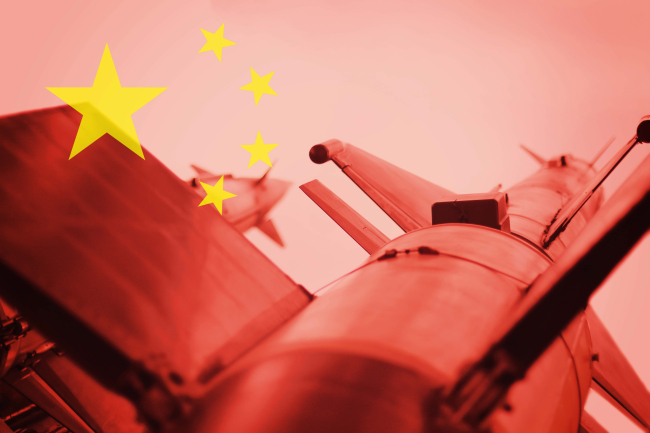
China’s Nuclear Buildup: Developments, Drivers, and Implications for Major-Power Relations and Arms Control
China has been steadily expanding its nuclear arsenal for several years amid levels of geopolitical tension unseen since the end of the Cold War, marked by a resurgence in nuclear proliferation and a broader, global arms race.

Reinventing Coordination in an Age of Fragmentation 3rd Paris Geoeconomic Dialogue
The world economy is being reordered. The certainties of the post-Cold War era, open trade, dollar centrality, predictable multilateral coordination, are giving way to a landscape shaped by rivalry between the United States and China, the weaponization of interdependence, and a scramble to secure supply chains, technologies and critical resources. What once looked like a stable architecture now appears fragile, contested, and in places actively being dismantled.