




Practical information
Conférence avec Gilles Boquerat, chercheur, responsable du programme Inde et Asie du Sud, Ifri, Jacques Lesourne, président du Comité scientifique du Programme Energie, Ifri, Prem Shankar Jha, analyste politique et économique indien, Pierre Zaleski, directeur délégué, Centre de Géopolitique de l'Energie et des Matières Premières (CGEMP), Université Paris-Dauphine. Présidence : William C. Ramsay, Senior Fellow, Director, Programme Energie, Ifri.
Alors que la consommation énergétique ne cesse d'augmenter, l'Inde doit faire face à des choix difficiles pour que sa population accède à une énergie propre, fiable et à des prix abordables. Ces défis sont largement partagés dans le monde mais à des échelles bien différentes. Quelles seront les trajectoires énergétiques possibles pour l'Inde ?
La conférence est organisée à l'occasion de la parution du Tome 7 des Etudes du programme Energie de l'Ifri "Energy in India's future : insights" et du numéro 3/2009 de Politique Etrangère dont le dossier est consacré à "L'Inde après les législatives de 2009".
Pour toute information, merci de contacter : [email protected]
Speakers

Our team
External contributor(s)

Vincent THOUVENIN
Other events
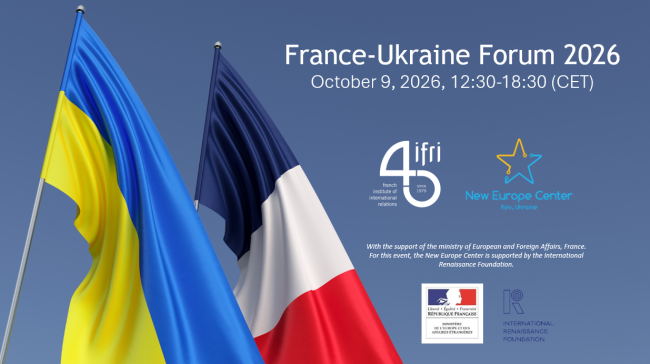
France-Ukraine Forum 2026
More than four and a half years after the start of the full-scale war launched by Russia against Ukraine, the 2026 France-Ukraine Forum will bring together policymakers, experts, academics, and civil society representatives from both countries to discuss three main topics: the formats and conditions for a lasting diplomatic settlement; Ukraine’s Euro-Atlantic integration, encompassing both the EU accession process and closer ties with NATO; and the societal transformations of postwar Ukraine, as well as its prospects for reconstruction.
The EU in a World of Economic Warfare: Trade, Geopolitics, and the Battle for Economic Sovereignty
The international trading system has become a primary theatre of geopolitical competition. Tariffs, sanctions, and technology controls have replaced dialogue as the default instruments of economic relations.
The Road to 27 Electrification Action Plans: Planning and Investing in Europe’s Electric Future
The European Commission’s Electrification Action Plan places the continent on an electric path to structurally reduce dependence on fossil fuel imports and boost the energy transition in industry, transport and buildings.