


France-Germany: Overcoming Differences to Strengthen European Sovereignty

The Franco-German “reset” launched with Friedrich Merz’s appointment as Chancellor in May 2025 and given concrete form at the Franco-German Council of Ministers (FGCM) in Toulon in August 2025 was intended to address the structural challenges affecting the bilateral relationship. Yet it is clear that these ambitions have only been partially translated into concrete action. Since the beginning of 2026, Franco-German relations have entered a phase in which short-term challenges have combined with deeper divergences over priorities, policy approaches, and strategic culture.
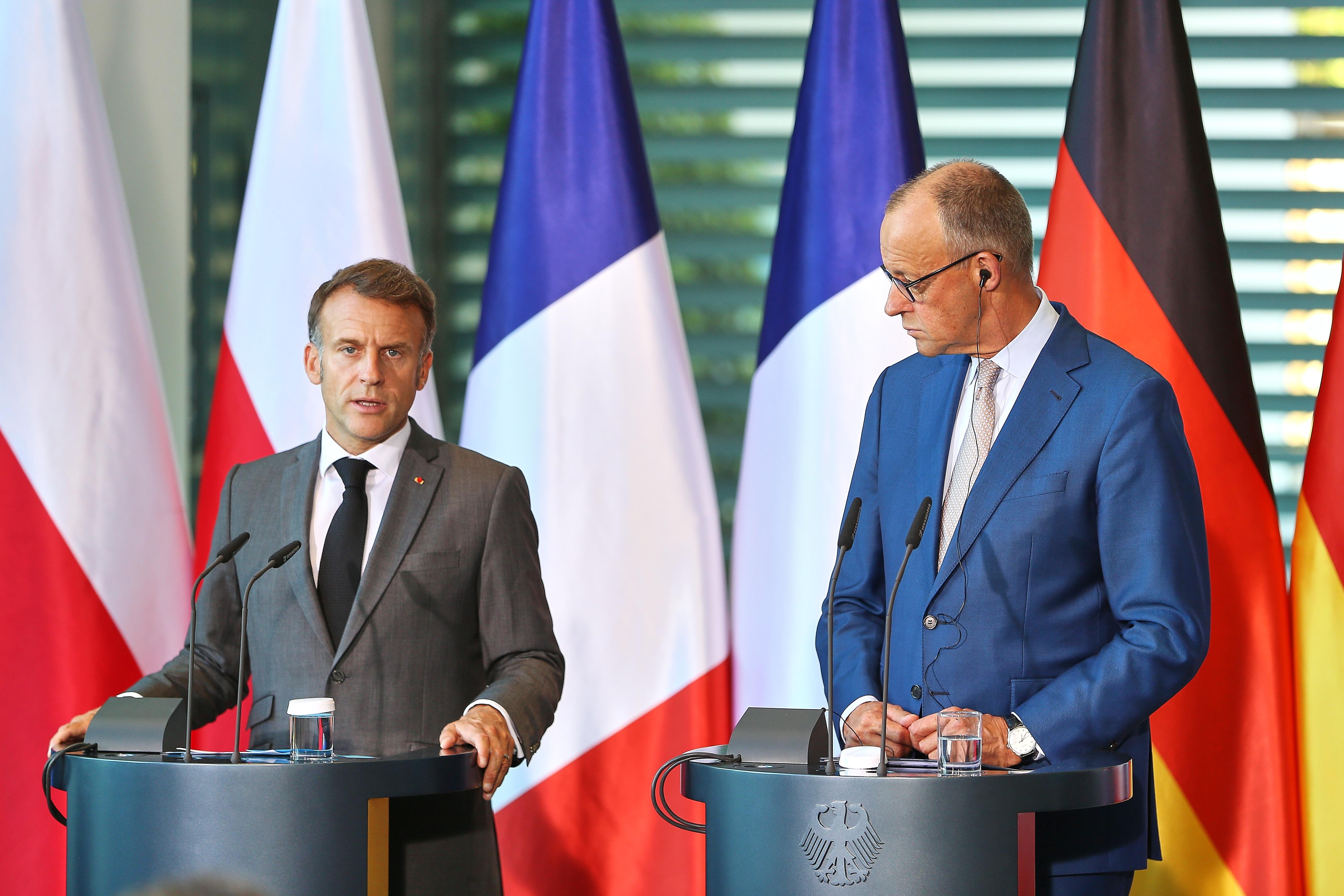
Against the backdrop of profound geopolitical upheavals, the next meeting of the Franco-German Council of Ministers (FGCM) should not be regarded as merely another exercise in bilateral ritual. Instead, it should serve as a streamlined decision-making forum focused on a limited number of strategic priorities, supported by operational objectives, effective monitoring mechanisms, and an explicit political commitment to addressing disagreements rather than postponing them.
Titre
Key Takeaways
In response to current challenges, the Franco-German engine should evolve into a pragmatic steering instrument, adapted to the changing dynamics of the bilateral relationship.
Franco-German cooperation should focus on the core dimensions of European sovereignty - particularly defense and digital policy - by building on shared operational priorities and a clearer governance framework.
The Franco-German tandem should remain the driving force behind European Union reform by supporting enlargement and strengthening European sovereignty through institutional and financial reforms.
The Franco-German working method should transform the Franco-German Council of Ministers into a genuine instrument of strategic steering, based on clearly defined priorities, systematic monitoring, and measurable outcomes.
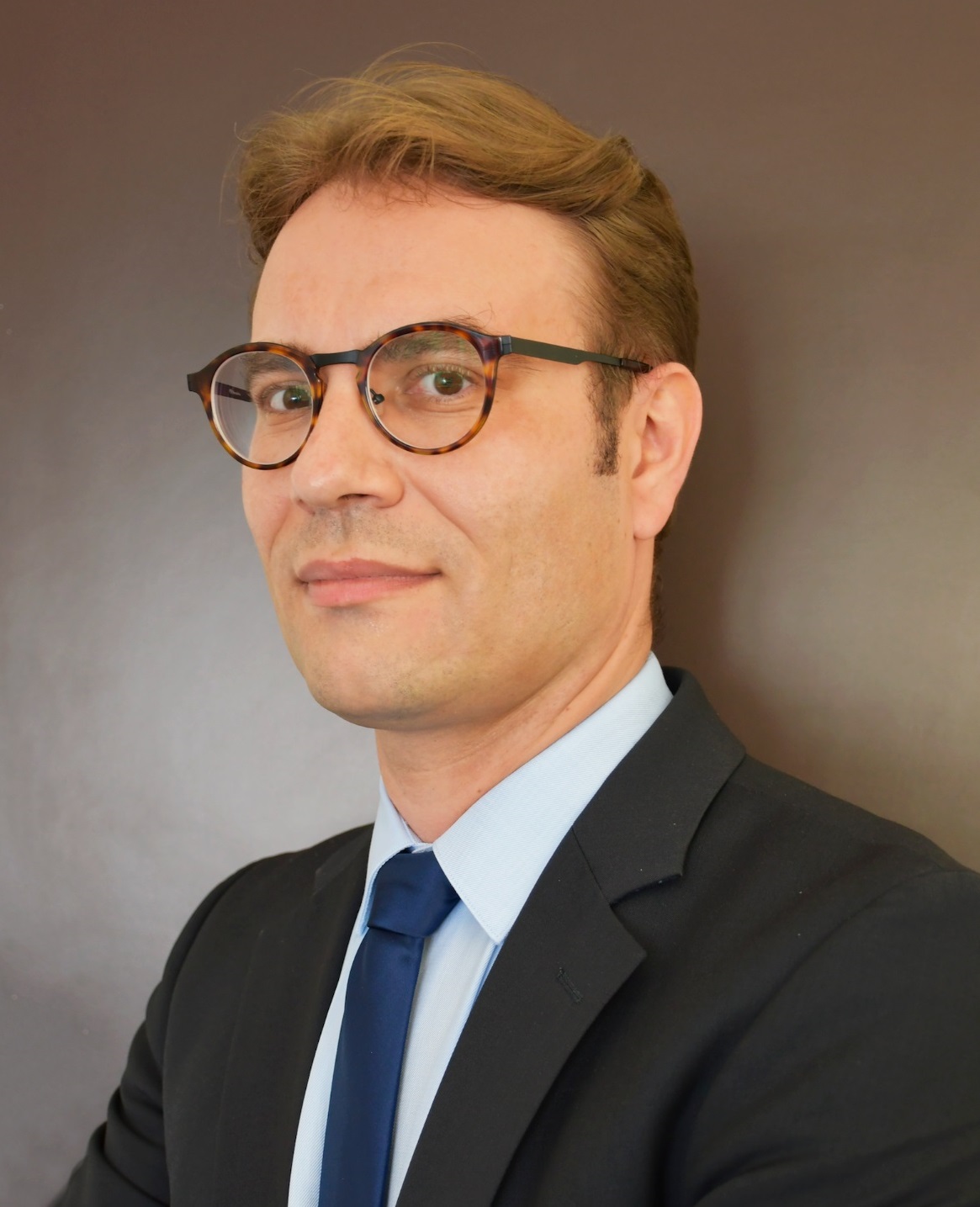
Paul Maurice is Secretary General of The Study Committee on Franco-German Relations (Cerfa) at Ifri, where he focuses on German domestic policy, Franco-German relations within the European Union, and German foreign and security policy.
- This publication is available in French: "France-Allemagne : dépasser les différends pour renforcer la souveraineté européenne".

Available in:
Themes and regions
ISBN / ISSN
Share
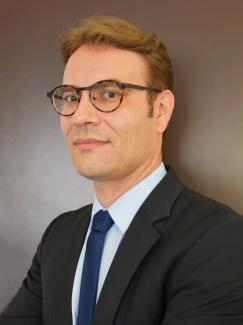
Paul MAURICE
Secretary General of the Study Committee on Franco-German Relations (Cerfa), Ifri

The Study Committee on Franco-German Relations (Cerfa)
The Study Committee on Franco-German Relations (Cerfa) was created in 1954 by an inter-governmental agreement between the Federal Republic of Germany and France, in order to raise awareness of Germany in France and analyze Franco-German relations, including in their European and international dimensions. In its conferences and seminars, which bring together experts, political leaders, senior decision-makers and representatives of civil society from both countries, Cerfa develops the Franco-German debate and stimulates political proposals. It regularly publishes studies through two collections: Cerfa notes and studies as well as Franco-German visions.
Cerfa maintains close relations with the network of German foundations and think tanks. In addition to its research and debate activities, Cerfa promotes the emergence of a new Franco-German generation through original cooperation programs. This is how in 2021-2022, Cerfa led a program on multilateralism with the Konrad Adenauer Foundation in Paris. This program is aimed at young professionals from both countries interested in the issues of multilateralism in the context of their activities. It covered a wide range of themes relating to multilateralism, such as international trade, health, human rights and migration, non-proliferation and disarmament. Previously, Cerfa had participated in the Franco-German future dialogue, co-led with the DGAP from 2007 to 2020, and supported by the Robert Bosch Foundation and the Daniel Vernet group (formerly the Franco-German Reflection Group) which was founded in 2014 upon the initiative of the Genshagen Foundation.
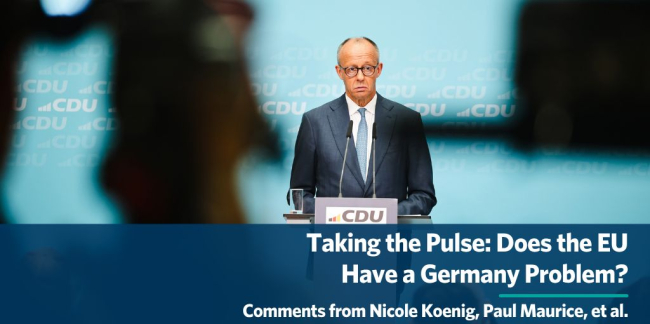
Taking the Pulse: Does the EU Have a Germany Problem?
Are Germany’s economic, industrial, and political struggles becoming a liability for the EU’s ability to rise to the geopolitical moment?
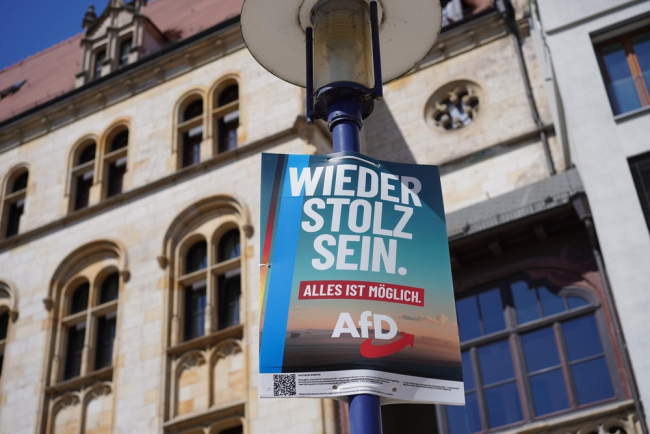
From Protest to Power? The AfD Ahead of the Eastern State Elections
The September state elections will test the AfD’s transition from protest force to potential governing power amid growing political fragmentation and dissatisfaction with Chancellor Friedrich Merz and his coalition. While firmly established in eastern Germany, the AfD is also gaining ground in the west, raising questions about coalition-building and the future direction of German politics.
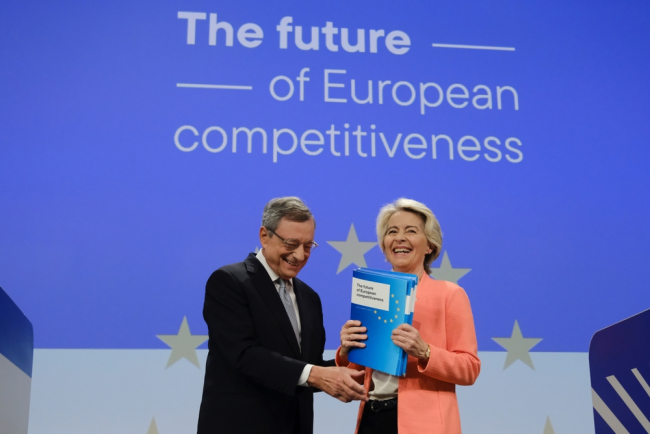
Under construction: Europe’s economic repositioning in a fragmented international order
„Under Destruction“– this was this year’s motto at the Munich Security Conference. A motto that applies both to security and economy in an increasingly fragile international system. In 2024, Mario Draghi’s report on the EU’s competitiveness rang the alarm bell: Europe is slipping behind the US and China, European companies struggle with Brussels' bureaucracy, and the internal market is too fragmented. However, two years later only about 15 % of his recommendations were implemented: the wake-up call was not heard.
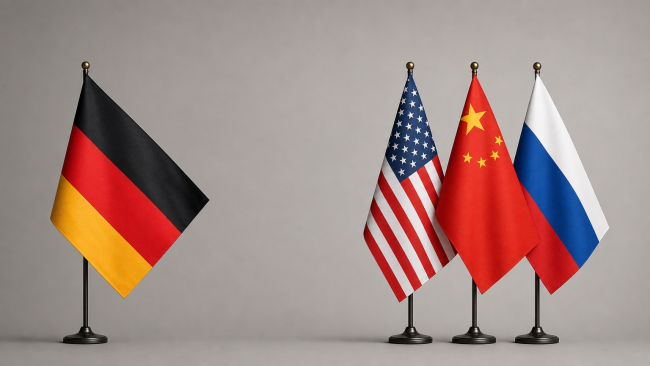
Germany in the Shadow of the United States, Russia, and China – Systemic Paradigm Shifts
Since reunification, Germany has built its prosperity on an international order based on free trade, multilateralism, and geopolitical stability. This model relied on three relationships considered complementary: U.S. military protection, Russian energy supplies, and economic integration with China. For several decades, Berlin viewed these interdependencies as factors contributing to peace, growth, and security.