


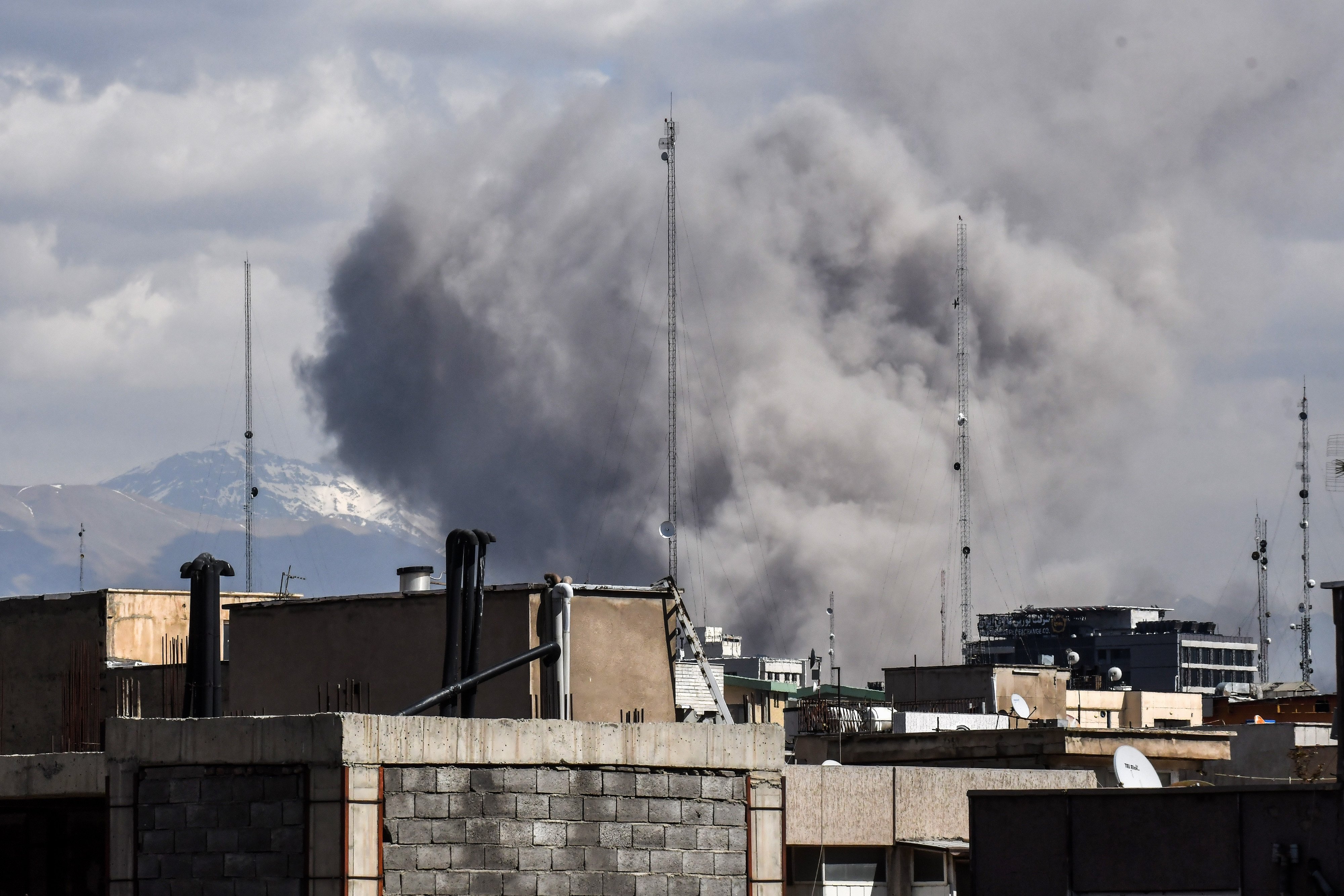
Iran
Iran occupies a central position in tensions in the Middle East, amid confrontation with the United States and Israel, nuclear issues, and regional ambitions.
Related Subjects
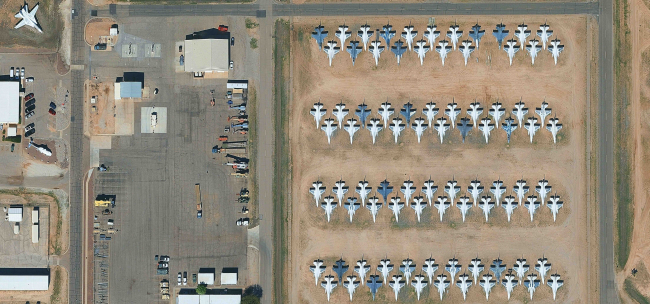
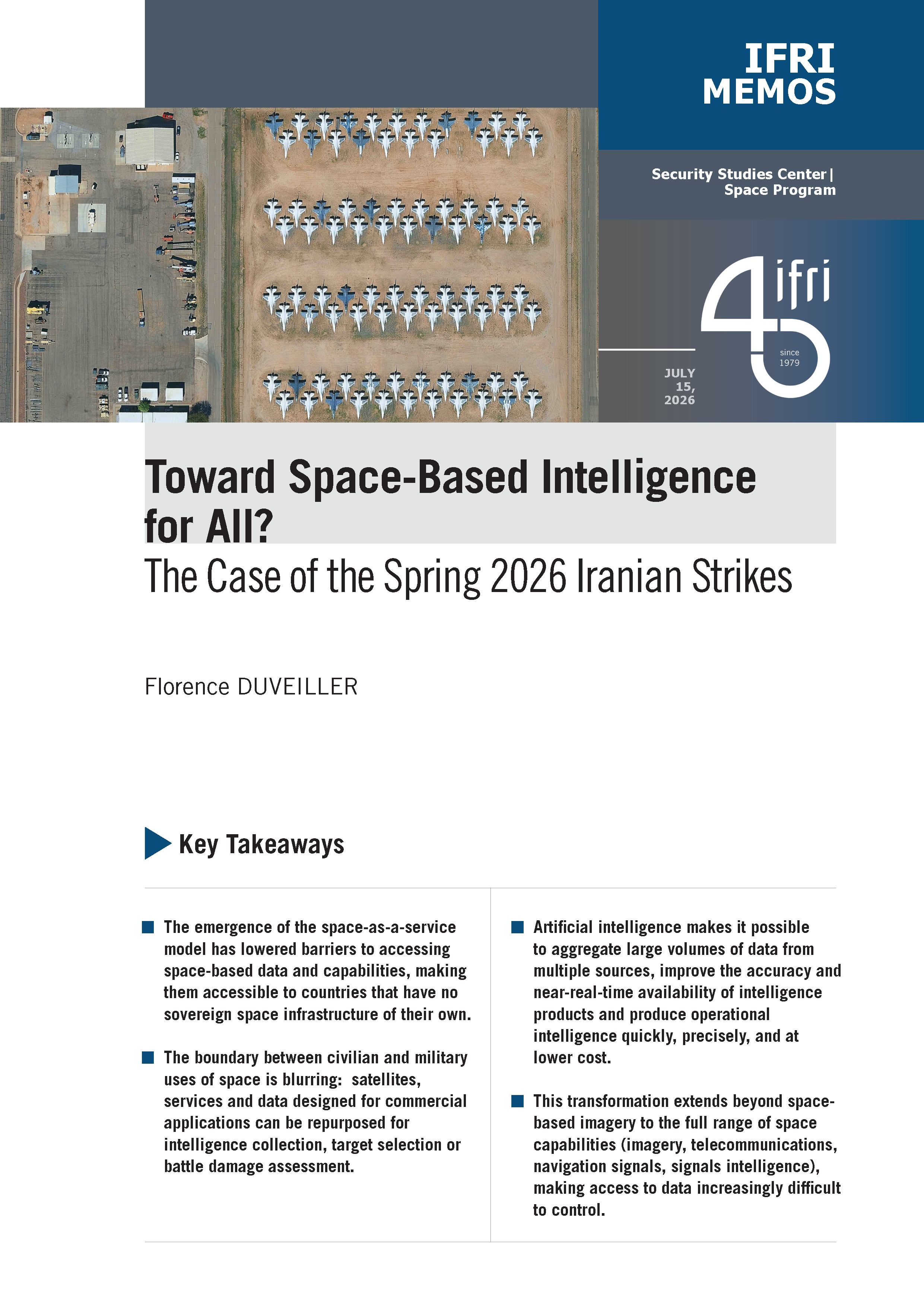
Toward Space-Based Intelligence for All? The Case of the Spring 2026 Iranian Strikes
The conflict in the Middle East has highlighted the effectiveness of Iranian strikes in identifying targets and conducting precision strikes. This raises the question: which capabilities enabled the Islamic Revolutionary Guard Corps (IRGC) to achieve these results?
Iran: Anatomy of a Power at War
The elimination of Supreme Leader Ali Khamenei and several high-ranking officials at the outset of the 2026 American-Israeli operation did not succeed in bringing down the Iranian regime. The regime had prepared for such a scenario, notably by decentralizing its structures. Moreover, it continues to adapt to war. The power of the Islamic Revolutionary Guard Corps is growing at the expense of the Shiite clergy. The security apparatus defends the country’s sovereignty and justifies its actions in the name of raison d’état.
“Remodeling” the Middle East?
Chaos continues to spread, seemingly without end, across the Middle East. The Israeli-American attack on Iran has resulted in a clear military and diplomatic failure, but it is paving the way for a regional realignment, the consequences of which remain uncertain. New regional groupings are taking shape, either centered around Israel or built on the prospect of coexistence with Tehran, alongside a decline in American influence and the marginalization of Europe, while China maintains a low-key presence.

On (New) War
Are the new dynamics of power assertion, the redistribution of influence, and the emergence of new technologies changing both the place of war in the everyday life of our societies and the way war is waged when it occurs? Does the obsession with conflict, combined with technical efficiency, impose upon us a state of permanent latent war? And when weapons speak, does the involvement of modern technologies and the companies that produce them revolutionize both the political decision-making process and the way people are engaged in war? These are fundamental questions raised by the conflicts in Ukraine and the Middle East, and they are already shaping current thinking on military strategy and organization.
Japan’s Energy Policy after Hormuz. Security, Competitiveness, and Decarbonization
The 2026 Hormuz crisis has strengthened rather than weakened the rationale for Japan’s decarbonization strategy, contrary to what might have been expected. Rather than energy policy supplanting climate policy, the two should actually be viewed as inseparable.
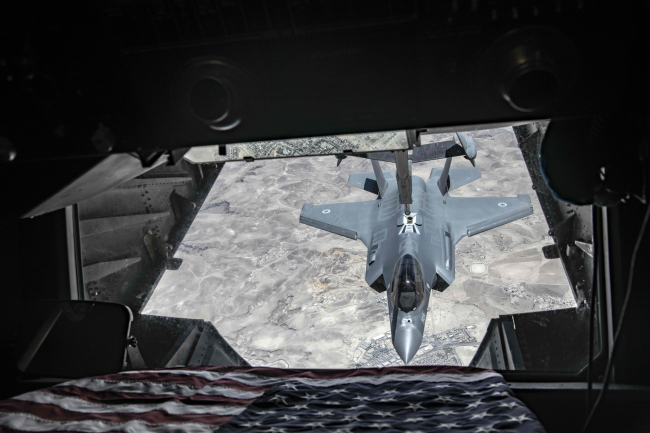
Fury from the Skies. A Strategic Analysis of Air Campaign against Iran
What is the outcome of Operations Roaring Lion (RL) and Epic Fury (EF), launched by Israel and the United States against the Islamic Republic of Iran on February 28, 2026?
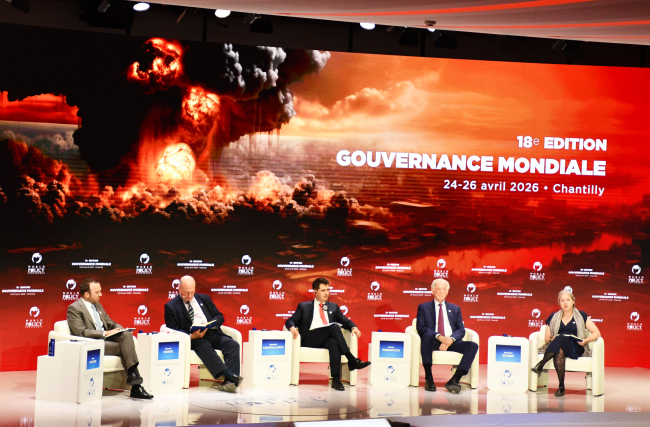
War in the Middle East: Regional Fractures, Global Shockwaves, and the End of the Old Order
Panel from the World Policy Conference 2026, organized by Thierry de Montbrial and Ifri, from April 24 to 26, 2026.
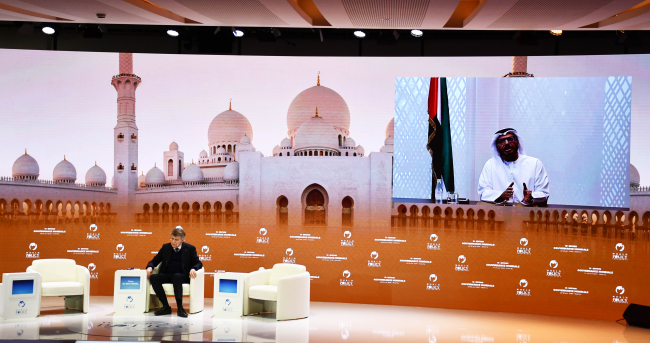
A conversation with Anwar Gargash, Diplomatic Advisor to the President of the United Arab Emirates
In an exceptional debate with Thierry de Montbrial, Anwar Gargash, Diplomatic Advisor to the President of the United Arab Emirates shares his perspective on the ongoing war with Iran in the Middle East.

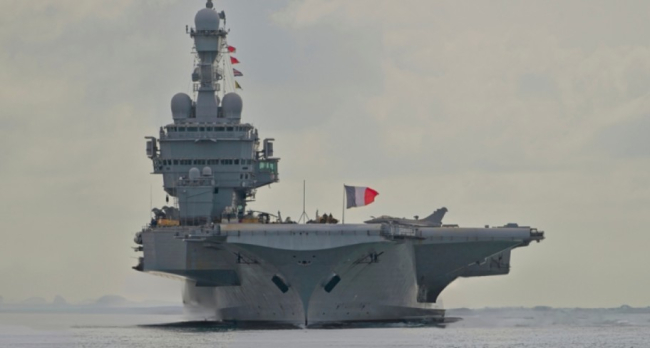
War in Mideast Tests Europe’s Military Might. The Verdict? Mixed.
To defend allies from Iran, the continent’s powers have mounted a rare show of force. But those efforts have diverted limited resources from other hot spots. Despite refusing to join the attacks on Iran, Europe’s leaders have responded to the widening war in the Middle East by sending warships, fighter jets and air-defense systems to protect bases and allies in the region.
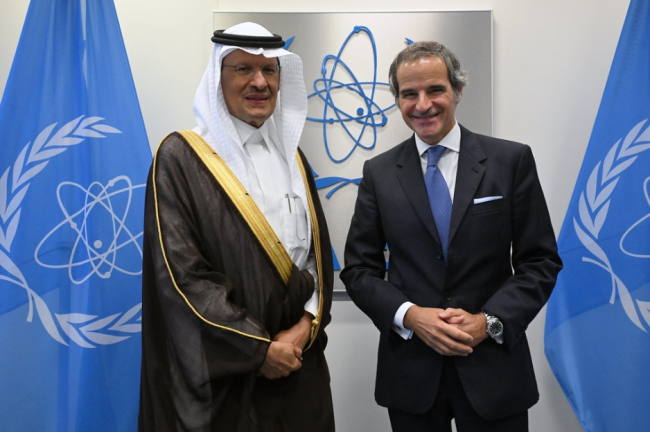
Saudi Arabia’s Nuclear Temptations. Lessons Learned from Regional Instability
Saudi Arabia’s integration in the international arena and regional stability, notably through reducing its dependence on fossil energies, are crucial elements for the success of the Kingdom’s Vision 2030, the Crown Prince’s top priority. However, Mohammed bin Salman’s declarations in 2018 and 2021, indicating that “if Iran develops a nuclear bomb, we will follow suit as soon as possible”, combined with the recent strikes on key Iranian nuclear facilities, do not bode well for the future of the Kingdom, the region and the non-proliferation regime at large.

The Evolving Role of Nuclear Rhetoric in Iran’s Strategic Calculus
How has the Iranian strategic discourse about nuclear weapons and deterrence evolved?


Thomas Gomart, director of the French Institute of International Relations: 'Trump reasserts the US' strategic centrality'
By bombing Iran alongside Israel, Donald Trump has performed a show of force aimed at China and Russia, explains the director of the French Institute of International Relations in an interview.

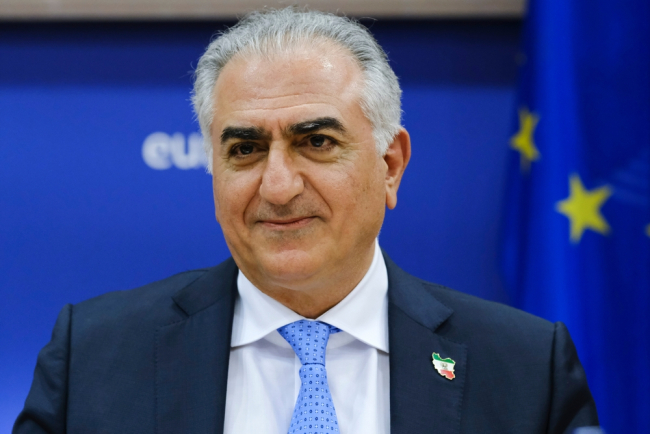
Reza Pahlavi, son of king overthrown by Iran's clerical rulers, sees a chance at regime change
Reza Pahlavi, whose father was deposed in the 1979 Islamic Revolution, is Iran's most recognizable opposition figure.

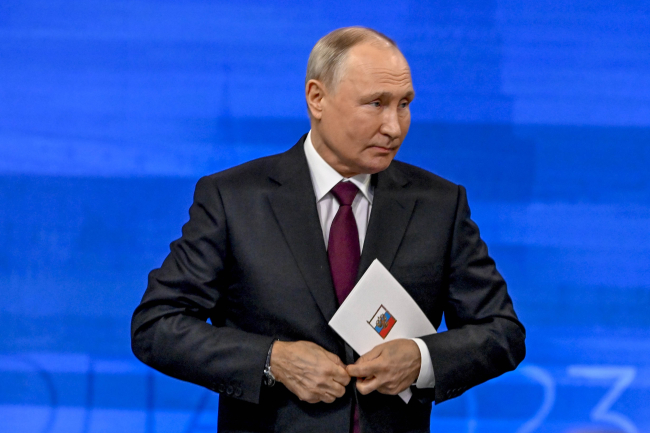
Putin Eyes Peacemaking Role In Israel-Iran Air War
Vladimir Putin is eyeing the conflict between Israel and Iran as an opportunity to thrust himself to the forefront of the international stage, more than three years into his invasion of Ukraine.
It’s difficult to assess the consequences of the strikes on the nuclear program itself and the facilities, as we are still waiting for independent analyses of the satellite imagery.

quoted in the Bulletin of the Atomic Scientists
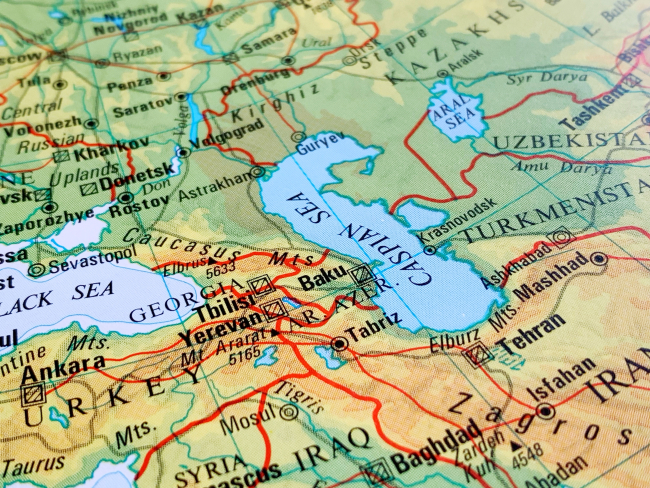
The Caspian Sea as an Emerging Energy Hub : Potentials and Limitations
This report analyzes the prospects of the Caspian Sea region — and its key actors except for Russia and Iran — becoming an important energy hub serving the needs of the European Union (EU).

Hostage diplomacy of the Islamic Republic of Iran. The case of Europeans detained in Iran
The so-called hostage diplomacy of the Islamic Republic of Iran refers to a political and diplomatic strategy in which Tehran uses the detention of Western nationals, dual citizens, or Iranian citizens residing in Europe, Australia, or the United States as leverage in diplomatic negotiations. This practice aims to exert pressure to secure political, economic, or diplomatic concessions as part of Tehran’s asymmetric response strategy. Hostage diplomacy remains a controversial yet effective tool from the perspective of the Islamic Republic of Iran, given its context of economic sanctions and diplomatic isolation.
The New Geopolitics of Energy
Following the dramatic floods in Valencia, and as COP29 opens in Baku, climate change is forcing us to closely reexamine the pace—and the stumbling blocks—of the energy transition.
Ditching U.S. Nuclear Protection in Europe: Will It Trigger a Nuclear Arms Race?
What if France takes over the U.S. role in providing nuclear deterrence for Europe? What happens to U.S. nuclear weapons stationed on the European continent? Could France’s increased nuclear security role lead to proliferation and a new arms race? Join us as we delve into European nuclear security, the Iranian nuclear program, and the roles of Russia and China in supporting Iran.

The South versus the West?
In 2023, forums that amplify the voice of the “Global South” have proliferated and grown louder. As contradictory and divided as they may be, these forums (BRICS+, Shanghai Cooperation Organization (SCO), G20, the Group of 77, the European Silk Road Summit…) attest to the emergence of new power relations, and especially new directions in foreign policy, with states rejecting alignment with the dominant powers of the past in favor of putting their own interests first. A new world is taking shape, with changeable, still uncertain, contours.
Toward Space-Based Intelligence for All? The Case of the Spring 2026 Iranian Strikes
The conflict in the Middle East has highlighted the effectiveness of Iranian strikes in identifying targets and conducting precision strikes. This raises the question: which capabilities enabled the Islamic Revolutionary Guard Corps (IRGC) to achieve these results?
Iran: Anatomy of a Power at War
The elimination of Supreme Leader Ali Khamenei and several high-ranking officials at the outset of the 2026 American-Israeli operation did not succeed in bringing down the Iranian regime. The regime had prepared for such a scenario, notably by decentralizing its structures. Moreover, it continues to adapt to war. The power of the Islamic Revolutionary Guard Corps is growing at the expense of the Shiite clergy. The security apparatus defends the country’s sovereignty and justifies its actions in the name of raison d’état.
Japan’s Energy Policy after Hormuz. Security, Competitiveness, and Decarbonization
The 2026 Hormuz crisis has strengthened rather than weakened the rationale for Japan’s decarbonization strategy, contrary to what might have been expected. Rather than energy policy supplanting climate policy, the two should actually be viewed as inseparable.
“Remodeling” the Middle East?
Chaos continues to spread, seemingly without end, across the Middle East. The Israeli-American attack on Iran has resulted in a clear military and diplomatic failure, but it is paving the way for a regional realignment, the consequences of which remain uncertain. New regional groupings are taking shape, either centered around Israel or built on the prospect of coexistence with Tehran, alongside a decline in American influence and the marginalization of Europe, while China maintains a low-key presence.
On (New) War
Are the new dynamics of power assertion, the redistribution of influence, and the emergence of new technologies changing both the place of war in the everyday life of our societies and the way war is waged when it occurs? Does the obsession with conflict, combined with technical efficiency, impose upon us a state of permanent latent war? And when weapons speak, does the involvement of modern technologies and the companies that produce them revolutionize both the political decision-making process and the way people are engaged in war? These are fundamental questions raised by the conflicts in Ukraine and the Middle East, and they are already shaping current thinking on military strategy and organization.
Fury from the Skies. A Strategic Analysis of Air Campaign against Iran
What is the outcome of Operations Roaring Lion (RL) and Epic Fury (EF), launched by Israel and the United States against the Islamic Republic of Iran on February 28, 2026?
Saudi Arabia’s Nuclear Temptations. Lessons Learned from Regional Instability
Saudi Arabia’s integration in the international arena and regional stability, notably through reducing its dependence on fossil energies, are crucial elements for the success of the Kingdom’s Vision 2030, the Crown Prince’s top priority. However, Mohammed bin Salman’s declarations in 2018 and 2021, indicating that “if Iran develops a nuclear bomb, we will follow suit as soon as possible”, combined with the recent strikes on key Iranian nuclear facilities, do not bode well for the future of the Kingdom, the region and the non-proliferation regime at large.
The Evolving Role of Nuclear Rhetoric in Iran’s Strategic Calculus
How has the Iranian strategic discourse about nuclear weapons and deterrence evolved?
The Caspian Sea as an Emerging Energy Hub : Potentials and Limitations
This report analyzes the prospects of the Caspian Sea region — and its key actors except for Russia and Iran — becoming an important energy hub serving the needs of the European Union (EU).
Hostage diplomacy of the Islamic Republic of Iran. The case of Europeans detained in Iran
The so-called hostage diplomacy of the Islamic Republic of Iran refers to a political and diplomatic strategy in which Tehran uses the detention of Western nationals, dual citizens, or Iranian citizens residing in Europe, Australia, or the United States as leverage in diplomatic negotiations. This practice aims to exert pressure to secure political, economic, or diplomatic concessions as part of Tehran’s asymmetric response strategy. Hostage diplomacy remains a controversial yet effective tool from the perspective of the Islamic Republic of Iran, given its context of economic sanctions and diplomatic isolation.
The South versus the West?
In 2023, forums that amplify the voice of the “Global South” have proliferated and grown louder. As contradictory and divided as they may be, these forums (BRICS+, Shanghai Cooperation Organization (SCO), G20, the Group of 77, the European Silk Road Summit…) attest to the emergence of new power relations, and especially new directions in foreign policy, with states rejecting alignment with the dominant powers of the past in favor of putting their own interests first. A new world is taking shape, with changeable, still uncertain, contours.
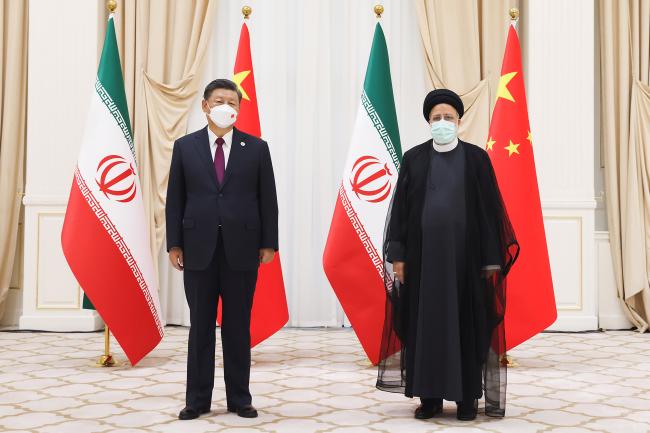
Is Iran the Big Beneficiary of Chinese Foreign Policy in the Middle East?
On March 10, the revelation of an agreement between Saudi Arabia and Iran brokered by China took Western observers and diplomats by surprise. Beijing's unprecedented intervention in the dispute between Riyadh and Teheran confirms its growing ambitions in the region.
The Ambitions of the Islamic Republic of Iran in the Pacific
In January 2023, the Iranian Navy staged a show of force near the Australian Exclusive Economic Zone (EEZ) amid growing tensions between Tehran and Canberra.
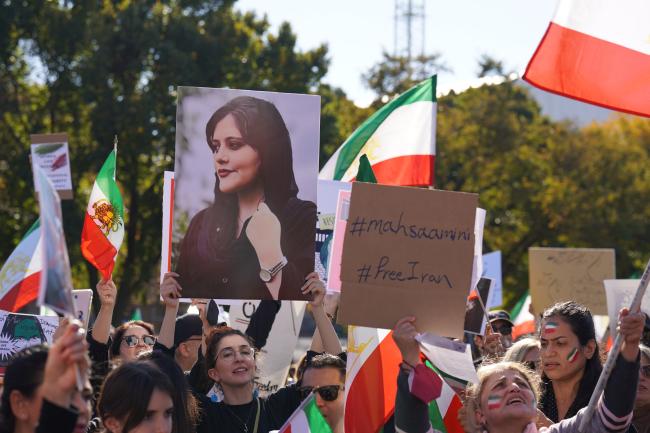
Why a reconciliation between Washington and Teheran seems impossible.
Relations between the United States and the Islamic Republic are marked by history. On the Iranian side, the overthrow of Prime Minister Mohammad Mossadegh in 1953 weighs heavily on the perception of the United States. On the American side, the events linked to the 1979 Islamic Revolution remain a trauma after more than forty years. The agreement on the Iranian nuclear program, known as the Joint Comprehensive Plan of Action (JCPOA) and signed in July 2015, was therefore a momentous first step towards a possible reconciliation. Unfortunately, the process was interrupted by the United States’ withdrawal from the agreement and the implementation of a "maximum pressure" policy by the Trump administration in 2018.
War in Ukraine: A New World?
Beyond the tactical sphere, the conflict in Ukraine has already had numerous repercussions, and its conclusion will provoke many more in the global system. In this special issue, Politique étrangère explores some potential outcomes.
The Russian-Iran Partnership in a Multipolar World
The strengthening of the partnership between Russia and Iran depends on overlapping security interests; bilaterally, regionally and on the world stage.
Climate: Which Way Forward?
Thirty years after Rio, the case file “Climate: Which way forward?” assesses current climate commitments, which are undoubtedly less impressive and less certain than the political pronouncements and media fanfare make them seem. A number of fundamental problems remain.
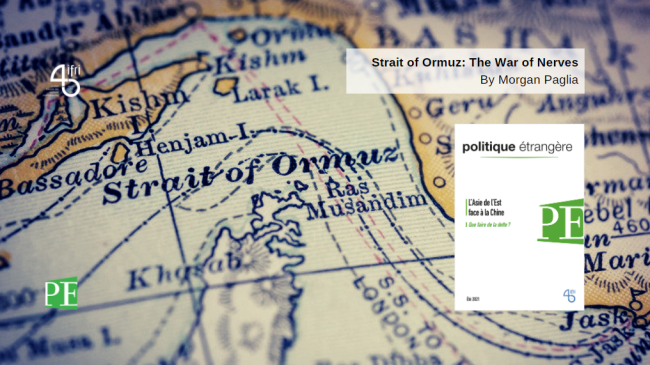
Strait of Hormuz: The War of Nerves
In the event of a major conflict, Iran could decide to close the Strait of Hormuz, which would cause a global energy crisis.
Washington-Téhéran : l'élection de Joe Biden change-t-elle la donne ?
The recent assassination of Mohsen Fakhrizadeh, the father of Iran's nuclear program, echoes that of Qassem Soleimani in January 2020 and illustrates the policy of "maximum pressure" which has prevailed these past four years. In this context, Joe Biden's election gives rise to high expectations for the appeasement of U.S.-Iran relations.
RAMSES 2021. At the Edge?
RAMSES 2021. At the Edge?, written by Ifri's research team and external experts, offers an in-depth and up-to-date analysis of geopolitics in today’s world.
War in the Middle East: Regional Fractures, Global Shockwaves, and the End of the Old Order
Panel from the World Policy Conference 2026, organized by Thierry de Montbrial and Ifri, from April 24 to 26, 2026.
A conversation with Anwar Gargash, Diplomatic Advisor to the President of the United Arab Emirates
In an exceptional debate with Thierry de Montbrial, Anwar Gargash, Diplomatic Advisor to the President of the United Arab Emirates shares his perspective on the ongoing war with Iran in the Middle East.
War in Mideast Tests Europe’s Military Might. The Verdict? Mixed.
To defend allies from Iran, the continent’s powers have mounted a rare show of force. But those efforts have diverted limited resources from other hot spots. Despite refusing to join the attacks on Iran, Europe’s leaders have responded to the widening war in the Middle East by sending warships, fighter jets and air-defense systems to protect bases and allies in the region.
Thomas Gomart, director of the French Institute of International Relations: 'Trump reasserts the US' strategic centrality'
By bombing Iran alongside Israel, Donald Trump has performed a show of force aimed at China and Russia, explains the director of the French Institute of International Relations in an interview.
Reza Pahlavi, son of king overthrown by Iran's clerical rulers, sees a chance at regime change
Reza Pahlavi, whose father was deposed in the 1979 Islamic Revolution, is Iran's most recognizable opposition figure.
Putin Eyes Peacemaking Role In Israel-Iran Air War
Vladimir Putin is eyeing the conflict between Israel and Iran as an opportunity to thrust himself to the forefront of the international stage, more than three years into his invasion of Ukraine.

Iranian lithium deposits: EU can ‘easily’ do without, experts say
The Iranian government claimed last week it had found a new deposit of lithium in the Hamedan province, worth 10% of all global lithium resources, but experts say this marks no shift in EU-Iran diplomatic ties.
War in the Middle East: Regional Fractures, Global Shockwaves, and the End of the Old Order
Panel from the World Policy Conference 2026, organized by Thierry de Montbrial and Ifri, from April 24 to 26, 2026.
A conversation with Anwar Gargash, Diplomatic Advisor to the President of the United Arab Emirates
In an exceptional debate with Thierry de Montbrial, Anwar Gargash, Diplomatic Advisor to the President of the United Arab Emirates shares his perspective on the ongoing war with Iran in the Middle East.
Ditching U.S. Nuclear Protection in Europe: Will It Trigger a Nuclear Arms Race?
What if France takes over the U.S. role in providing nuclear deterrence for Europe? What happens to U.S. nuclear weapons stationed on the European continent? Could France’s increased nuclear security role lead to proliferation and a new arms race? Join us as we delve into European nuclear security, the Iranian nuclear program, and the roles of Russia and China in supporting Iran.
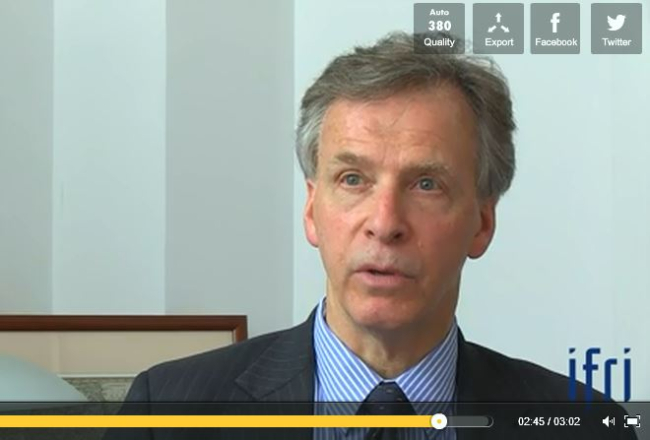
USA and the negociations with Iran 1/2 : How does each side understand nuclear diplomacy?
Robert Litwak is the Vice President for Scholars and Director of International Security Studies at the Woodrow Wilson International Center for Scholars.
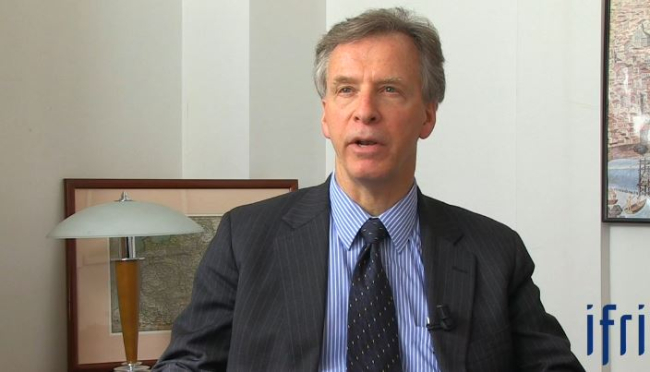
USA and the negociations with Iran 2/2 : U.S. views on the true nature of the Iranian regime
Robert Litwak from the Wilson Center joined Ifri on April 22, 2015 for a seminar on the U.S.-Iranian nuclear negotiations. In this video, he analyzes the different views on Iran and its regime.
Robert Litwak is the Vice President for Scholars and Director of International Security Studies at the Woodrow Wilson International Center for Scholars.
Ifri, a foundation recognized as being of public utility, relies largely on private donors – companies and individuals – to guarantee its sustainability and intellectual independence. Through their funding, donors help maintain the Institute's position among the world's leading think tanks. By benefiting from an internationally recognized network and expertise, donors refine their understanding of geopolitical risk and its consequences on global politics and the economy. In 2026, Ifri partners with over 90 French and international companies and organizations.
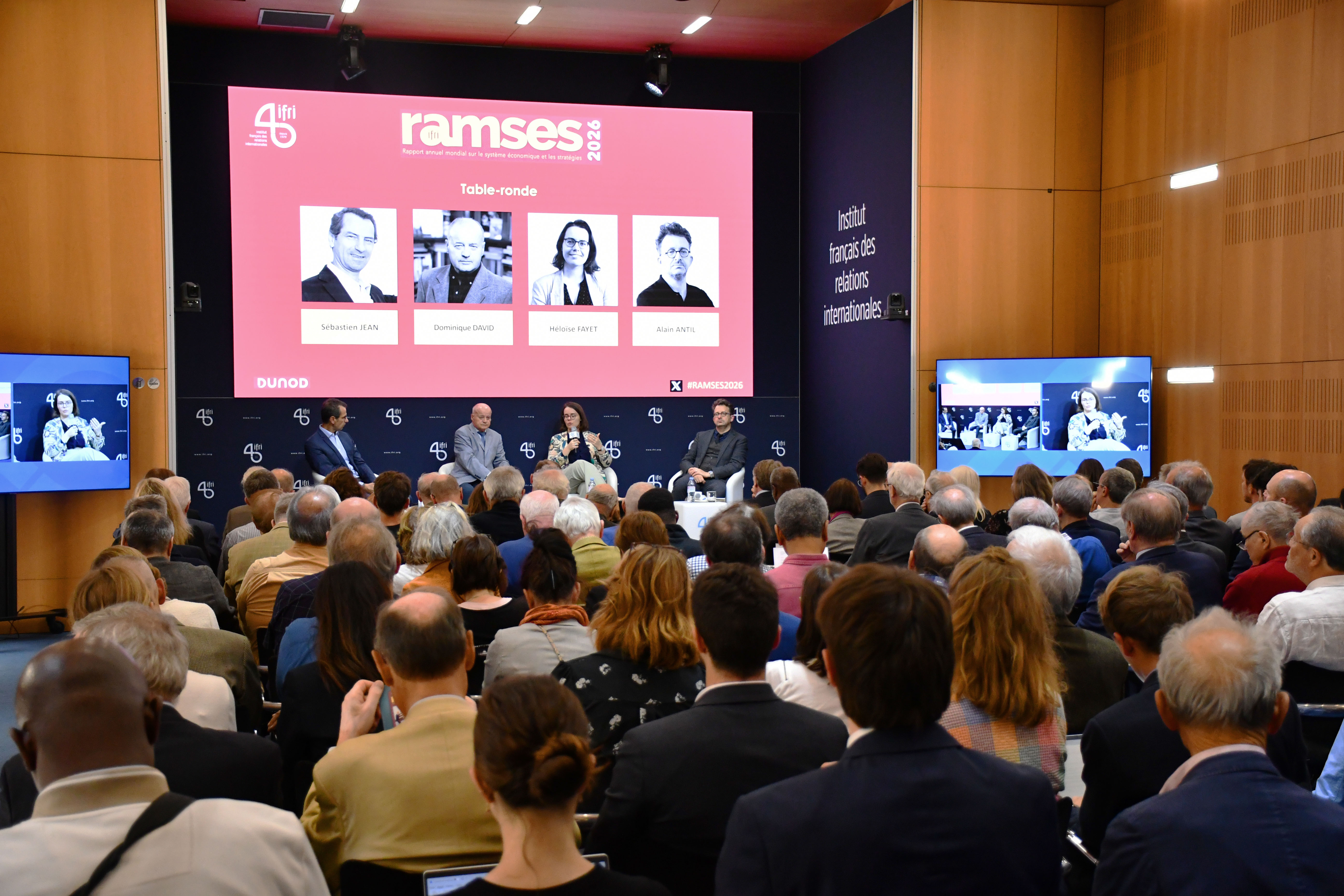

Our experts in the media
Discover all our services
It’s difficult to assess the consequences of the strikes on the nuclear program itself and the facilities, as we are still waiting for independent analyses of the satellite imagery.
quoted in the Bulletin of the Atomic Scientists