




Practical information
Disputed interpretations of the Law of the Sea
Challenges to the non-proliferation regime
Competing mega-FTAs
Energy Security
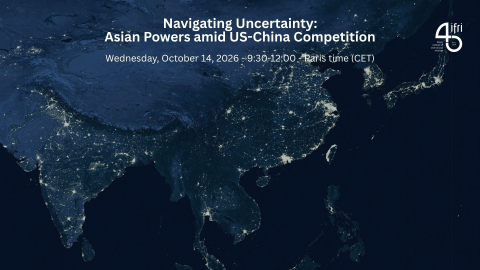
How will the rise of Asia shape future international norms and practices?
Join us to discuss this crucial issue with leading experts:
Morning session:
Disputed international norms in East Asia and geopolitical stability
• Interpretations of the Law of the Sea in the Indo-Pacific region and its implications for security
• Competing identities, arms races and proliferation
Afternoon session:
How are Asian powers going to reshape the international norms and practices?
• Asian powers and norms for trade
• Trade and conflict - The risks of interdependency and the coercive use of economic power
Among our speakers are:
Amitav Acharya, Professor, School of International Service, Washington D.C.
Masashi Nishihara, President of the Research Institute for Peace and Security
Commander Jonathan G. Odom, Oceans Policy Advisor in the Office of the U.S. Secretary of Defense ; Judge Advocate General’s Corps, U.S. Navy
Keisuke Sadamori, Director, Energy Markets and Security, International Energy Agency
John Ravenhill, Director of the Balsillie School of International Affairs and Professor of Political Science, University of Waterloo
Yorizumi Watanabe, Professor, Faculty of Policy Management, Keio University
Jean-Pierre Lehmann, Emeritus Professor, IMD, Lausanne; Founder, The Evian Group
Detailed program of the conference
Other events
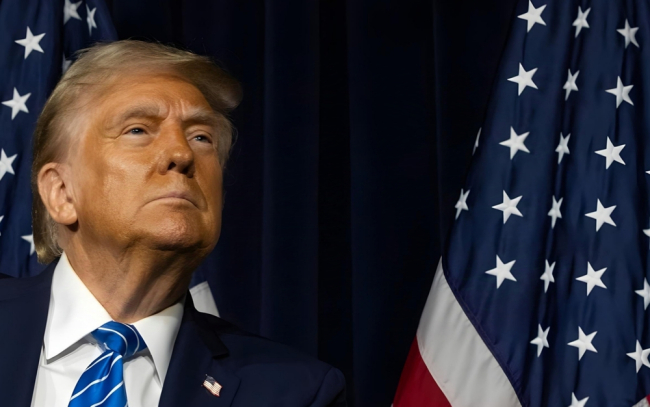
One Month Ahead of the Midterms: Where Is Trump’s America Headed?
The 24th edition of the Ifri Americas Programme Annual Conference will examine the dynamics at play in the United States and their implications for Europe and the transatlantic relationship. will examine the dynamics at play in the United States and their implications for Europe and the transatlantic relationship.
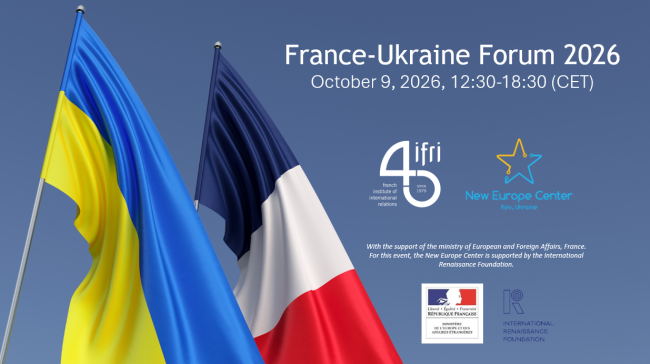
France-Ukraine Forum 2026
More than four and a half years after the start of the full-scale war launched by Russia against Ukraine, the 2026 France-Ukraine Forum will bring together policymakers, experts, academics, and civil society representatives from both countries to discuss three main topics: the formats and conditions for a lasting diplomatic settlement; Ukraine’s Euro-Atlantic integration, encompassing both the EU accession process and closer ties with NATO; and the societal transformations of postwar Ukraine, as well as its prospects for reconstruction.
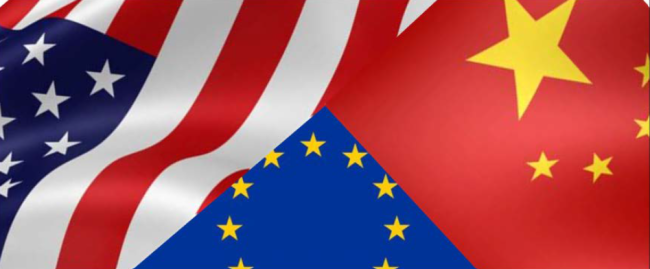
The EU in a World of Economic Warfare: Trade, Geopolitics, and the Battle for Economic Sovereignty
The international trading system has become a primary theatre of geopolitical competition. Tariffs, sanctions, and technology controls have replaced dialogue as the default instruments of economic relations.