



Practical information
Accessibility
Themes and regions
Related centers and programs
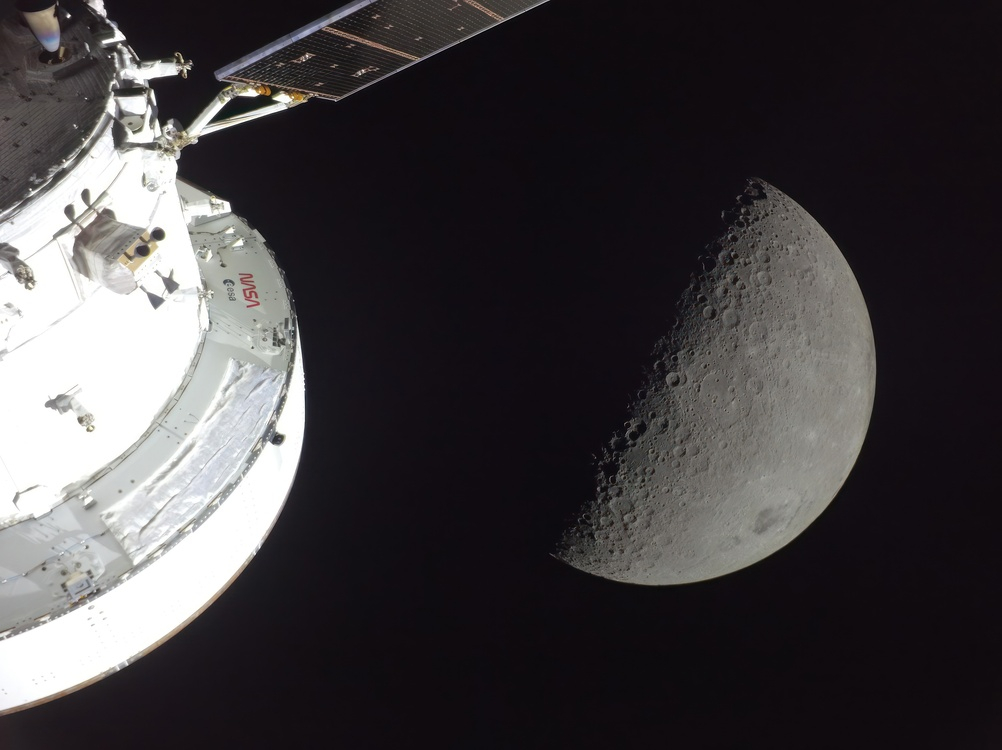
As the United States, China, and India solidify their lunar ambitions, Europe is still seeking to define its stance: should it be a reliable partner or an autonomous strategic player? This conference will examine the stakes of this new race to the Moon and Europe’s interest in asserting itself as a lunar power through partnerships, industrial ambitions, and whether its participation in the new lunar race serves as a lever for strategic autonomy and internal cohesion, or an illustration of its dependence.
16:30 - 17:00 | Keynote:
- Gen. Philippe Adam, Secretary-General of the International Space Summit
Moderator: Paul Wohrer, Head of the Space Program, Ifri
17:00 - 18:30 | Roundtable:
- Alesandro Marrone, Head of "Defense, security and space", Istituto Affari Internazionali (IAI)
- Andrea Rotter, Head of Division Foreign and Security Policy, Hans Seidel Foundation
- Christopher Johnson, lecturer in Air and Space Law at the International Institute of Air and Space Law, Leiden University
Modération: Claude-France Arnould, Senior Fellow at the Brussels Institute for Geopolitics
18:30 - 19:00 | Conclusion:
- Scott Pace, Space Policy Institute Director, George Washington University
Moderator: Paul Wohrer, Head of the Space Program, Ifri
Replay
Contact
Paul WOHRER
Research Fellow, Space Program, Center for Geopolitics of Technology, Ifri

Speakers

Our team

Paul WOHRER
Research Fellow, Space Program, Center for Geopolitics of Technology, Ifri
Find out more

Les narratifs spatiaux. Enjeux stratégiques et perspective européenne
Les récits que les puissances construisent autour de l’espace jouent aujourd’hui un rôle déterminant dans leur stratégie. Aux États-Unis, la référence à la frontière et à la destinée manifeste continue de structurer un narratif d’expansion, où l’exploration spatiale incarne la vocation nationale à repousser les limites et à maintenir une excellence technologique. En Russie, le spatial demeure un instrument central de puissance et de prestige, hérité de l’époque soviétique mais désormais réorienté par un récit privilégiant la militarisation. La Chine inscrit son « rêve spatial » dans un projet de renaissance nationale : ses réussites technologiques et scientifiques deviennent les vecteurs de son nouveau statut international. D’autres acteurs, comme l’Inde, le Japon ou les Émirats arabes unis, mobilisent l’espace pour affirmer leur modernité, renforcer leur autonomie ou projeter un leadership régional.

The Artemis Accords: An American Strategy for Lunar Governance
The Artemis Accords provide a framework for international cooperation in space exploration as part of the U.S. lunar program. They are part of a coherent strategy.