




China-India Relations: Strategic Engagement and Challenges
Sino-Indian relations have become increasingly significant and produced widespread implications. The evolving bilateral relationship is reasonably seen as a result of their shifting strategies and the ever-changing global politico-economic situation. On the political front, high-level interaction plays an important role in improving Sino-Indian ties. The political willingness to improve relations helps kick-start the significant process of building confidence and trust in different areas and at various levels.
As two fast-growing economies and developing giants, both China and India have pledged to contribute to bilateral and multilateral cooperation. Vibrant economic and trade links have been an essential part of the bilateral partnership over the last decade. Economic momentum will continue, although the supporting effects of economic interaction on a credible partnership have to be confirmed. Enhanced political engagement and pragmatic strategic calculus have also pressed both sides to explore defense, security and non-traditional security cooperation. The burgeoning military interaction is of pragmatic significance to nurturing mutual trust on the strategic level and achieving reciprocal accommodation.
While promising a stable bilateral relationship and peaceful rise together on the global stage, expanding engagements between China and India still face some formidable strategic challenges. Among the strategic discords are a protracted boundary dispute, diverging projections of geopolitical interest, security ties with other powers and regional actors - especially with Pakistan and the United States, and China's response to India's aspiration to be a UNSC member and enter the global nuclear club.
To move the Sino-Indian partnership forward and make it more credible, some major endeavors have to be made by both sides:
- To seek an early settlement of the border problem and prevent the enduring stalemate from completely undermining the confidence to seek a mutually acceptable recipe;
- To reconcile regional strategies in South Asia, Central Asia, ASEAN, and the Indian Ocean;
- To promote confidence-building measures and remove misperceptions and misreading of each other's strategic intentions, and to envisage each other's core interests and strategic sensitivities;
- To reinforce the bolstering effect of vibrant trade and economic links in sustaining a stable bilateral relationship; and
- To breathe more substance into the existing framework of the declared Sino-Indian strategic partnership.

Available in:
Regions and themes
ISBN / ISSN
Share
This page contains only a summary of our work. If you would like to have access to all the information from our research on the subject, you can download the full version in PDF format.
China-India Relations: Strategic Engagement and Challenges

Center for Asian Studies
Asia is a nerve center for multiple global economic, political and security challenges. The Center for Asian Studies provides documented expertise and a platform for discussion on Asian issues to accompany decision makers and explain and contextualize developments in the region for the sake of a larger public dialogue.
The Center's research is organized along two major axes: relations between Asia's major powers and the rest of the world; and internal economic and social dynamics of Asian countries. The Center's research focuses primarily on China, Japan, India, Taiwan and the Indo-Pacific, but also covers Southeast Asia, the Korean peninsula and the Pacific Islands.
The Centre for Asian Studies maintains close institutional links with counterpart research institutes in Europe and Asia, and its researchers regularly carry out fieldwork in the region.
The Center organizes closed-door roundtables, expert-level seminars and a number of public events, including an Annual Conference, that welcome experts from Asia, Europe and the United States. The work of Center’s researchers, as well as that of their partners, is regularly published in the Center’s electronic journal Asie.Visions.
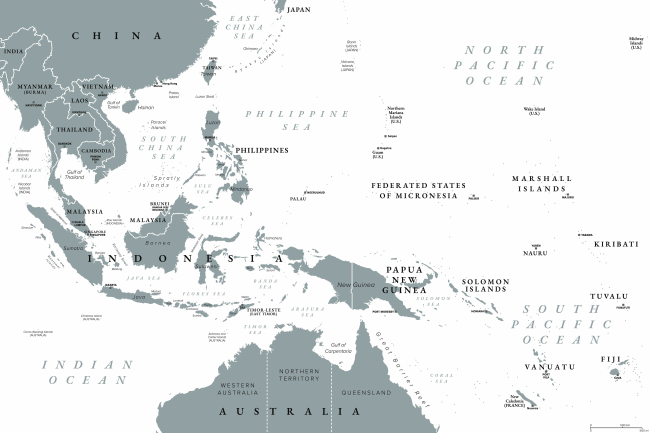
The Oceania Factor in France’s Evolving Indo-Pacific Strategy
This paper examines the two-way relationship between France’s Indo-Pacific strategy and developments in Oceania. Oceania was not a priority in the initial years of France’s Indo-Pacific strategy, as the region was largely treated as secondary to major strategic hotspots and key partnerships, while overseas territories were primarily handled as domestic issues and recipients of a top-down strategy.

France’s View: From Diplomacy to Public-Private Action
France has emerged as the EU’s IMEC forerunner, combining port infrastructure, diplomatic alliances and public-private cooperation. With Marseille Fos at its core, the country brings a strategic hub for logistics, energy and digital connectivity to the corridor.
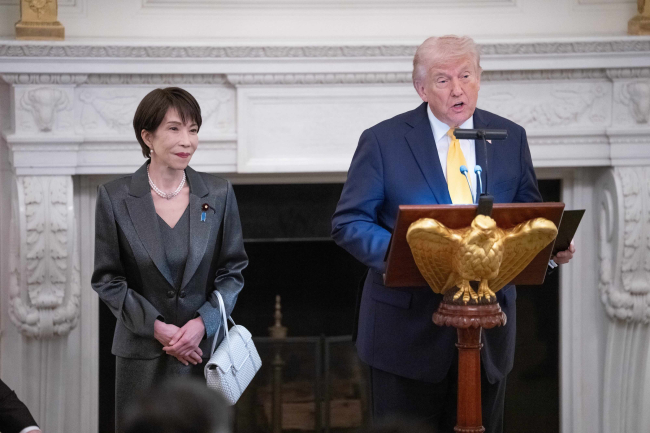
Trump II, the Crisis of the Rules-Based Order and Europe’s Indo-Pacific Strategy
This article examines the implications of Trump II for Europe’s engagement in the Indo-Pacific. The piece contends that Trump II is accelerating the erosion of the rules-based order and undermining the relevance of the Free and Open Indo-Pacific (FOIP) concept, while forcing Europe to refocus on its own continental security amid US retrenchment. Paradoxically, these very constraints create conditions for a more autonomous, pragmatic, and explicitly interest-driven European engagement in the Indo-Pacific, rather than outright withdrawal.
China and Trade in Critical Raw Materials (CRMs)
Critical raw materials (CRMs) have become central features of a new dynamic in global power politics, with China now wielding considerable leverage. Amid rising regional and global uncertainty, resource security is back in the spotlight as a key determinant of sovereignty and national security for Europe, its allies and its partners. The very survival of key, even vital industries, from automotive to aerospace to health to energy to defense, is at stake.