




South Asia
South Asia, a field of rivalry for influence between China and India, continues to experience high levels of intra-state violence in certain areas (Afghanistan, Baluchistan, Jammu and Kashmir).
Pakistan and the Israel-Palestine Conflict: Transformation in Pakistan’s Approach After the War in Gaza
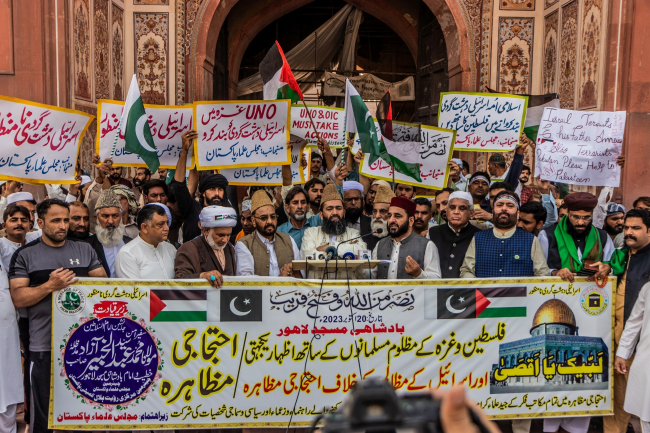
Pakistan has long combined vocal support for the Palestinian cause with covert engagement with Israel. Since the war in Gaza, this balance has become untenable: public opinion is united against Israel, joining Trump’s Board of Peace has drawn rare cross-party criticism, and new regional alignments put normalization out of reach.
Replay - Navigating Uncertainty: Asian Powers amid US-China Competition
On 14 October 2026, Ifri’s Center for Asian Studies brought together experts from Taiwan, South Korea, Japan, the Philippines and India to discuss how Asian countries are adapting to the competition between Washington and Beijing. They share a common concern: being caught out either by a sudden military escalation or by a deal struck between the two superpowers at their expense.
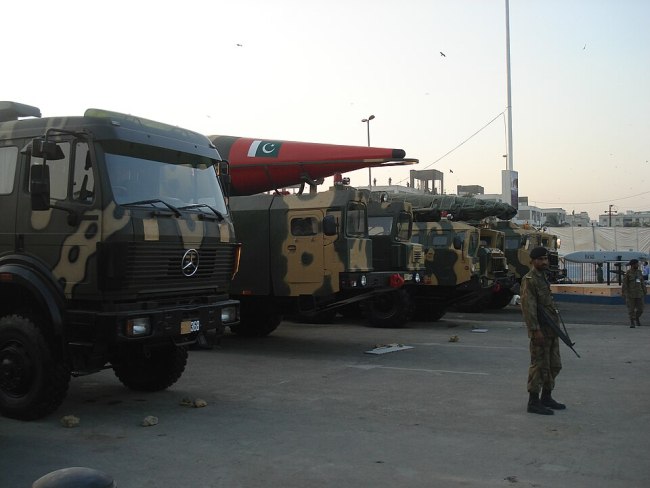
Stability under Pressure. A Pakistani View on Nuclear Deterrence after Pahalgam
The May 2025 India-Pakistan crisis after the Pahalgam attack has generated a familiar but incomplete debate: did nuclear deterrence work, or did it merely allow both sides to fight a limited war under the nuclear shadow? The better answer is that deterrence worked at the level at which it was designed to work. It prevented a general war and an uncontrolled vertical escalation, and kept nuclear weapons in the background. But it did not prevent India from attempting to carve out space for conventional action, nor did it prevent Pakistan from responding conventionally to restore deterrence credibility.
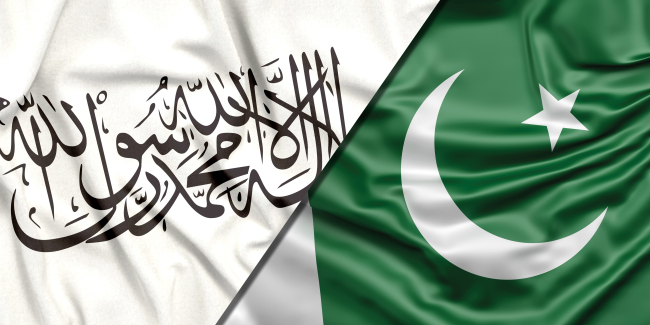
Afghanistan-Pakistan: The Overlooked War at the Margins of the Middle East Conflict
Pakistan has historically maintained the closest ties to the Taliban movement and initially viewed its return to power in Afghanistan in the summer of 2021 with considerable optimism. The bilateral relationship has since deteriorated, and the two neighbors have been caught in a cycle of escalation since last fall. In October 2025, Pakistan launched its first airstrikes on Kabul. For three weeks in February–March 2026, Afghanistan intensified ground assaults on the Pakistani side of the border as well as drone attacks on Islamabad and Rawalpindi. Pakistan, for its part, has intensified airstrikes on Afghan border areas, as well as on Kabul and Kandahar. Given the dynamics at play at the bilateral and regional levels, the prospects for a sustained return to stability appear limited.
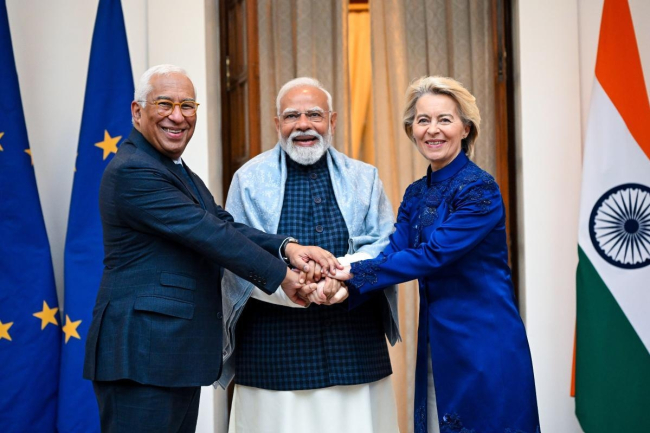
European Union-India: Lasting Rapprochement or Partnership of Convenience?
The partnership between the European Union (EU) and India has long been limited to economic exchanges. Its political dimension has gradually developed, culminating in its elevation to the status of a “strategic partnership” in 2004. However, the failure of negotiations for a free-trade agreement in 2013 slowed this momentum. Since the early 2020s, in an uncertain geopolitical context, bilateral rapprochement has gained new momentum.
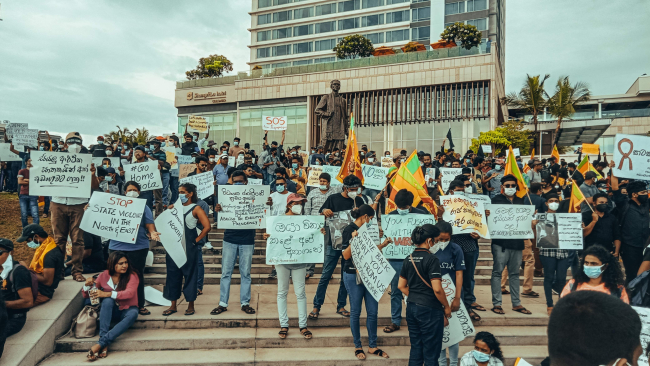
Sri Lanka’s NPP Government. From System Change to Structural Compliance
In September 2024, a relative outsider to Sri Lanka’s two-party-dominated political system, Anura Kumara Dissanayake, won the presidential elections. The anti-establishment, populist movement he represented, the National People’s Power (NPP), went on to receive an overwhelming mandate in the November 2024 general elections, winning 159 seats in a 225-member parliament.
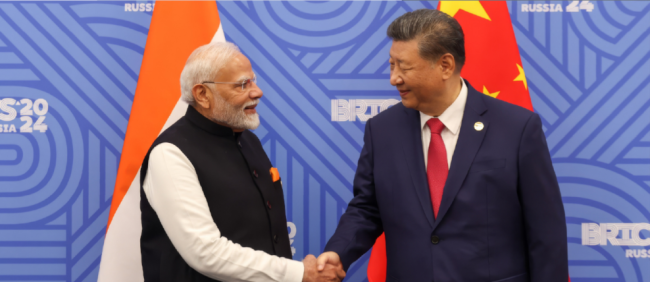
India’s Quest for Economic Emancipation from China
In October 2024, the meeting between Chinese President Xi Jinping and Indian Prime Minister Narendra Modi initiated a thaw in relations between the two Asian powers. Has India's high level of economic dependence on China played an important role in bringing about this diplomatic shift?
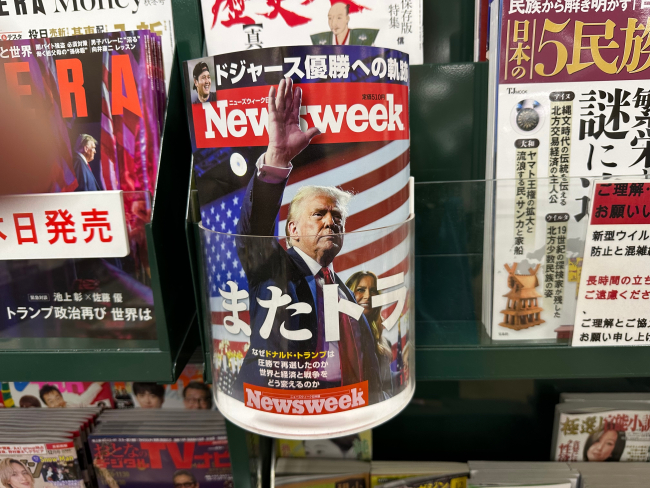
The Indo-Pacific and Trump II. In Uncle Sam’s brutal embrace
In this collective analysis, the research team of the Center for Asian Studies presents a synthetic and non-exhaustive assessment of the relations taking shape between the United States under the Trump II administration and some of the main players in the Indo-Pacific.

France in the Indo-Pacific: The Need for a Pragmatic Strategic Posture
As US-China rivalry reaches its peak and the likelihood of a high-intensity conflict in the region seems greater than ever, this report advocates for a pragmatic recalibration of France’s strategic posture in the Indo-Pacific. This adjustment should be grounded in a realistic reframing of ambitions and an analysis of France’s core interests and the threats it faces.

India’s Power Games, between Ukraine and the G20
India’s drive for power merits examination in the light of New Delhi’s abstention on Ukraine, and its stated objectives for its presidency of the G20.
India’s Development Strategy with the Pacific Island Countries. Killing Two (or More) Birds with One Stone
Prime Minister Narendra Modi’s maiden visit to Papua New Guinea (PNG) on May 20-21, 2023, is a testament to India’s international positioning and search for a global role. In Port Moresby, Modi co-chaired the third Forum for India-Pacific Islands Cooperation (FIPIC) and announced a series of steps to enhance development cooperation with its partners of the South Pacific. India’s outreach to the Pacific Island countries (PICs) was clearly in line with its G20 presidency and its campaign to be the leading voice of the Global South.


Delhi to Paris: A strategic partnership
Prime Minister Narendra Modi’s visit to France on May 4 is his fifth since 2015, and the 10th such high-level bilateral visit.
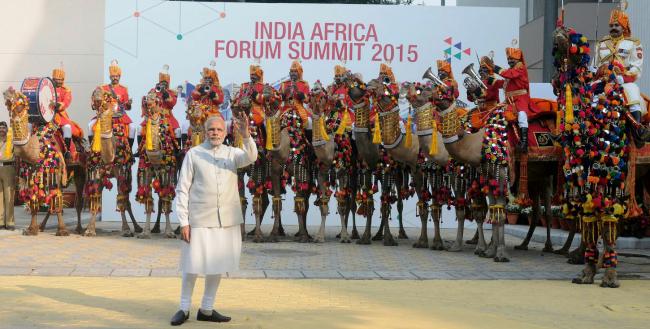
India–East Africa: A Not So Healthy Relationship?
Due to historical as well as geographical reasons, India and East Africa have long been close partners. In the recent period however, and even more so since the early 2000s, these ties have tightened as a result of combined efforts by the government of India and its business community.
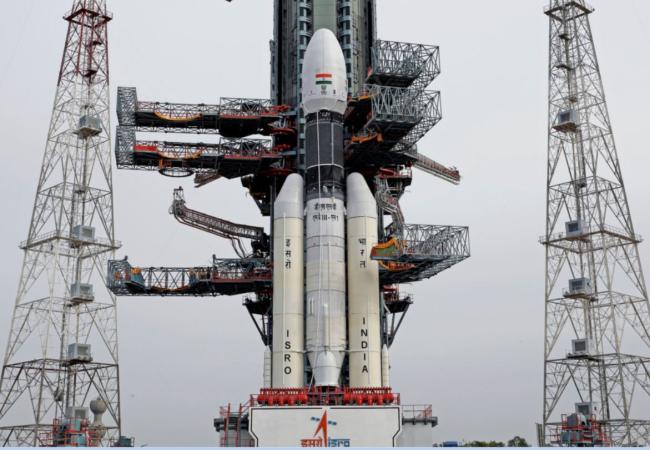
Indian Space Program and its Drivers: Possible Implications for the Global Space Market
India has one of the oldest space programs in the world with space playing a critical role in India’s national development and external power projection capability.
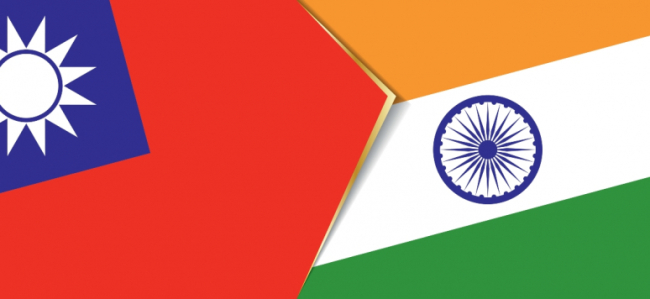
India-Taiwan Ties: A Case for Stronger Partnership
The links between India and Taiwan have gathered unprecedented momentum in recent years. This has largely come about due to growing support for Taiwan at civil society level in India.
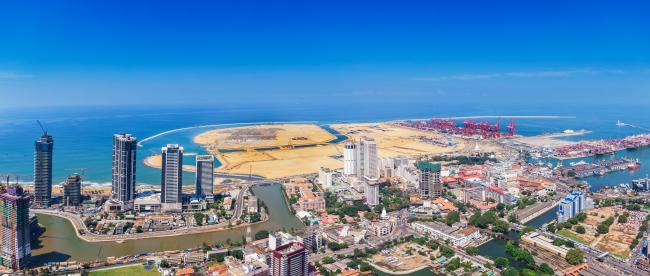
Japan’s Infrastructure Investment in the Indian Ocean: Checking China, Securing the Sea Lanes
In the 2010s, Japan gradually increased economic connections with the Indian Ocean region (IOR) through trade, foreign direct investment, and official development assistance (ODA).
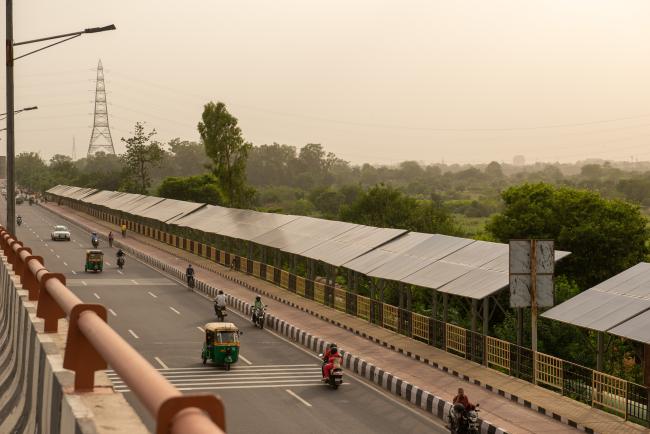
India’s Energy and Climate Policies Post COVID-19: Short Term Slowdown, Longer Term Boom in Renewables
India has long been a positive and committed partner in global and domestic climate change mitigation efforts.

75 millions de nouveaux pauvres en Inde: le modèle de développement indien à l’épreuve du COVID-19
The pandemic has revealed the fragility of the Indian economy.
East Asia Confronted with China
China is now an undeniable heavyweight on the international scene, wielding a remarkable range of political strategies. Studying its position in the surrounding area of Southeast Asia in relation to Japan, Korea, Taiwan, and the Association of Southeast Asian Nations (ASEAN) countries, as well as Australia, gives us an understanding of both the strength and the limits of such a diverse range of actions.
“New Southern Policy”, Korea’s Newfound Ambition in Search of Strategic Autonomy
The New Southern Policy (NSP), the signature foreign policy initiative by President Moon Jae-in of the Republic of Korea (ROK) that was officially launched in November 2017, has opened a new chapter in Seoul’s relations with the Association of Southeast Asian Nations (ASEAN) as well as India.
Pakistan and the Israel-Palestine Conflict: Transformation in Pakistan’s Approach After the War in Gaza
Pakistan has long combined vocal support for the Palestinian cause with covert engagement with Israel. Since the war in Gaza, this balance has become untenable: public opinion is united against Israel, joining Trump’s Board of Peace has drawn rare cross-party criticism, and new regional alignments put normalization out of reach.
Stability under Pressure. A Pakistani View on Nuclear Deterrence after Pahalgam
The May 2025 India-Pakistan crisis after the Pahalgam attack has generated a familiar but incomplete debate: did nuclear deterrence work, or did it merely allow both sides to fight a limited war under the nuclear shadow? The better answer is that deterrence worked at the level at which it was designed to work. It prevented a general war and an uncontrolled vertical escalation, and kept nuclear weapons in the background. But it did not prevent India from attempting to carve out space for conventional action, nor did it prevent Pakistan from responding conventionally to restore deterrence credibility.
Afghanistan-Pakistan: The Overlooked War at the Margins of the Middle East Conflict
Pakistan has historically maintained the closest ties to the Taliban movement and initially viewed its return to power in Afghanistan in the summer of 2021 with considerable optimism. The bilateral relationship has since deteriorated, and the two neighbors have been caught in a cycle of escalation since last fall. In October 2025, Pakistan launched its first airstrikes on Kabul. For three weeks in February–March 2026, Afghanistan intensified ground assaults on the Pakistani side of the border as well as drone attacks on Islamabad and Rawalpindi. Pakistan, for its part, has intensified airstrikes on Afghan border areas, as well as on Kabul and Kandahar. Given the dynamics at play at the bilateral and regional levels, the prospects for a sustained return to stability appear limited.
European Union-India: Lasting Rapprochement or Partnership of Convenience?
The partnership between the European Union (EU) and India has long been limited to economic exchanges. Its political dimension has gradually developed, culminating in its elevation to the status of a “strategic partnership” in 2004. However, the failure of negotiations for a free-trade agreement in 2013 slowed this momentum. Since the early 2020s, in an uncertain geopolitical context, bilateral rapprochement has gained new momentum.
Sri Lanka’s NPP Government. From System Change to Structural Compliance
In September 2024, a relative outsider to Sri Lanka’s two-party-dominated political system, Anura Kumara Dissanayake, won the presidential elections. The anti-establishment, populist movement he represented, the National People’s Power (NPP), went on to receive an overwhelming mandate in the November 2024 general elections, winning 159 seats in a 225-member parliament.
India’s Quest for Economic Emancipation from China
In October 2024, the meeting between Chinese President Xi Jinping and Indian Prime Minister Narendra Modi initiated a thaw in relations between the two Asian powers. Has India's high level of economic dependence on China played an important role in bringing about this diplomatic shift?
The Indo-Pacific and Trump II. In Uncle Sam’s brutal embrace
In this collective analysis, the research team of the Center for Asian Studies presents a synthetic and non-exhaustive assessment of the relations taking shape between the United States under the Trump II administration and some of the main players in the Indo-Pacific.
India’s Development Strategy with the Pacific Island Countries. Killing Two (or More) Birds with One Stone
Prime Minister Narendra Modi’s maiden visit to Papua New Guinea (PNG) on May 20-21, 2023, is a testament to India’s international positioning and search for a global role. In Port Moresby, Modi co-chaired the third Forum for India-Pacific Islands Cooperation (FIPIC) and announced a series of steps to enhance development cooperation with its partners of the South Pacific. India’s outreach to the Pacific Island countries (PICs) was clearly in line with its G20 presidency and its campaign to be the leading voice of the Global South.
Indian Space Program and its Drivers: Possible Implications for the Global Space Market
India has one of the oldest space programs in the world with space playing a critical role in India’s national development and external power projection capability.
India-Taiwan Ties: A Case for Stronger Partnership
The links between India and Taiwan have gathered unprecedented momentum in recent years. This has largely come about due to growing support for Taiwan at civil society level in India.
Between Giants: The Sino-Indian Cold War in the Indian Ocean
Strategic competition between India and China in the Indian Ocean is growing and has the potential to profoundly impact the stability and security of the region. The Indian Ocean is becoming the scene of a sustained contest that in some ways resembles strategic competition during the Cold War.
Asia–Africa Growth Corridor at the crossroads of business and geopolitics
The Asia–Africa Growth Corridor (AAGC) — a Japan–India initiative to promote connectivity between Asia and East Africa and encourage joint projects in Africa — is often misrepresented. All too often, the AAGC is depicted as a political move aimed exclusively at countering China’s Belt and Road Initiative (BRI).
Working with “Last Mile” Data Protection in India
India’s digital economy is characterized by “last mile” data protection, with privacy norms, data collection and sharing standards being set at the level of the application (“app”), operating system (OS) and the device. This practice lends itself to multiple, often crisscrossing rules maintained by smartphone manufacturers, mobile operating system vendors and application developers. The user is caught in a maze of privacy policies that bear on important questions: what data is collected, where it is stored, who it is shared with, and legal recourse in the face of policy violations or unauthorized use of data by third parties.
Challenge of Making Smart Cities in India
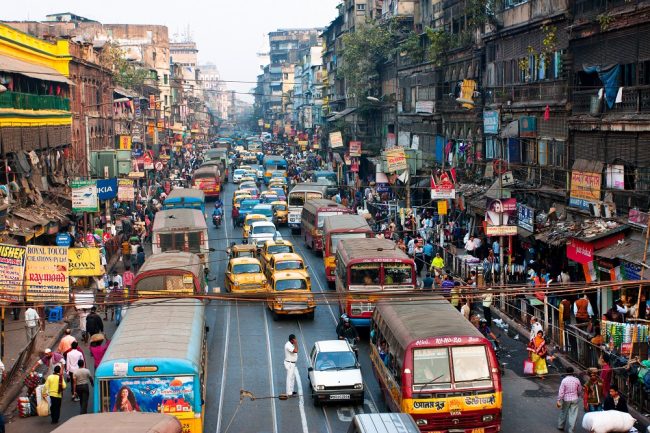
The Indian government has launched the Smart Cities Mission in June 2015 with the aim of providing a better quality of life to the citizens in 100 cities of the country. This paper describes the main features of the Mission and attempts to explain the challenges in the way forward.

The BJP and State Politics in India: A Crashing Wave? Analyzing the BJP Performance in Five State Elections
In May 2014, the Bharatiya Janata Party (BJP), led by Narendra Modi, decisively won India’s sixteenth General Elections. For the first time in thirty years, a party secured a single majority of seats in the lower house of parliament – the Lok Sabha (282 out of 543) – and for the first time since independence, that party wasn’t the Congress.
ASEAN-India Political Cooperation: How to reinforce a much-needed pillar?
India is one of Southeast Asia’s principal neighbors and there is certainly great potential for cooperation with the region and its institutional representation, ASEAN. But does India properly exploit this opportunity? Is Southeast Asia satisfied with the level of engagement?
Post-War Sri Lanka: Roads to Reconciliation
The Center for Asian Studies of the French Institute of International Relations (Ifri) organized on 9 December 2011 a round table discussion regarding the future of the ongoing reconciliation process in Sri Lanka, entitled ‘Post-War Sri Lanka: Roads to Reconciliation'.
Reassessing the Role of the Media in Pakistan
Despite spells of authoritarianism, Pakistan's rulers have never fully been able to subdue the media. In a world where the constant flow of information defies borders, such an endeavor becomes even more difficult.
China-India Relations: Strategic Engagement and Challenges
Sino-Indian relations have become increasingly significant and produced widespread implications. The evolving bilateral relationship is reasonably seen as a result of their shifting strategies and the ever-changing global politico-economic situation. On the political front, high-level interaction plays an important role in improving Sino-Indian ties. The political willingness to improve relations helps kick-start the significant process of building confidence and trust in different areas and at various levels.
Fiscal Deficit, Crowding Out, and the Sustainability of Economic Growth: The Case of the Indian Economy
This study examines the long-run relationship between the fiscal deficit, the crowding out of private capital formation and net exports for the Indian economy during the period from 1980-81 to 2008-09.
Delhi to Paris: A strategic partnership
Prime Minister Narendra Modi’s visit to France on May 4 is his fifth since 2015, and the 10th such high-level bilateral visit.
Replay - Navigating Uncertainty: Asian Powers amid US-China Competition
On 14 October 2026, Ifri’s Center for Asian Studies brought together experts from Taiwan, South Korea, Japan, the Philippines and India to discuss how Asian countries are adapting to the competition between Washington and Beijing. They share a common concern: being caught out either by a sudden military escalation or by a deal struck between the two superpowers at their expense.
Asia: What impact of international politics and grand strategies on regional stability?
As the regional balance of power in East Asia continues to evolve and tensions in a number of hot spots - from the East and South China Seas to the Korean Peninsula and the Taiwan Strait - either simmer or intensify, the future of regional stability is increasingly uncertain.
Ifri, a foundation recognized as being of public utility, relies largely on private donors – companies and individuals – to guarantee its sustainability and intellectual independence. Through their funding, donors help maintain the Institute's position among the world's leading think tanks. By benefiting from an internationally recognized network and expertise, donors refine their understanding of geopolitical risk and its consequences on global politics and the economy. In 2026, Ifri partners with over 90 French and international companies and organizations.

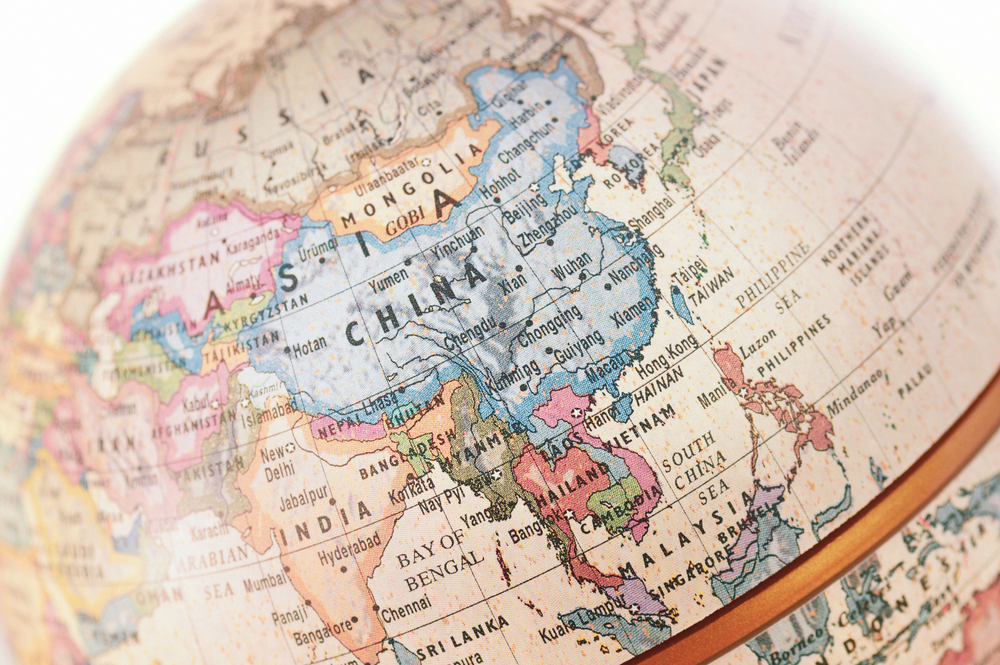
Asia is a nerve center for multiple global economic, political and security challenges. The Center for Asian Studies provides documented expertise and a platform for discussion on Asian issues to accompany decision makers and explain and contextualize developments in the region for the sake of a larger public dialogue.
The Center's research is organized along two major axes: relations between Asia's major powers and the rest of the world; and internal economic and social dynamics of Asian countries. The Center's research focuses primarily on China, Japan, India, Taiwan and the Indo-Pacific, but also covers Southeast Asia, the Korean peninsula and the Pacific Islands.
The Centre for Asian Studies maintains close institutional links with counterpart research institutes in Europe and Asia, and its researchers regularly carry out fieldwork in the region.
The Center organizes closed-door roundtables, expert-level seminars and a number of public events, including an Annual Conference, that welcome experts from Asia, Europe and the United States. The work of Center’s researchers, as well as that of their partners, is regularly published in the Center’s electronic journal Asie.Visions.