



Practical information
This event is dedicated to the Russia/NIS Centre Corporate supports. By personal invitation only.
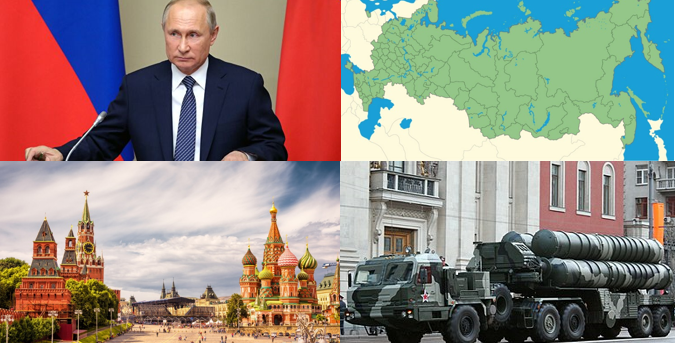
Russia’s foreign policy is driven by a twofold ambition: to mitigate the effects of Western sanctions while consolidating relations with its historical “clients”, and, where possible, to counter the West without neglecting any lever of influence. Even though this policy produces visible effects (Middle East, Africa, South Asia), it struggles to bring about genuine adherence beyond the traditional circles of influence of the Kremlin. The post-Soviet space, however, is marked by an increasingly divergent trajectory, and the Russian domestic political scene poses new uncertainties as to the strength of Moscow’s global stances.
Program
09:00-09:30. Introduction by Thomas Gomart, Head of the French Institute of International Relations (Ifri), and Alice Guitton, General Director for International Relations and Strategy, French Ministry of the Armed Forces
09:30-11:00. Panel 1. Domestic policy: three critical issues for the stability of the Putin system
Moderator: Tatiana Kastueva-Jean, Director of Ifri’s Russia/NIS Center, Paris
- The Russian economy: a new crisis on the horizon? Olivier de Boysson, Chief Economist Emerging Markets at Société Générale Group, Paris
- Russian regions: a counterbalance to the federal center? Natalia Zubarevich, Chief Research Fellow, Institute for Social Policy, Higher School of Economics (HSE), Professor of Economic Geography at Moscow State University (MGU)
- North Caucasus: behind the apparent stability, Jean-François Ratelle, Professor of Conflict Studies and Human Rights, Graduate School of Public and International Affairs (GSPIA), University of Ottawa
11:00-11:30. Coffee break
11:30-13:00. Panel 2. The extension of Russia’s spheres of influence
Moderator: Bobo Lo, Associate Research Fellow, Ifri’s Russia/NIS Center, Paris
- Balkans: Is Russia’s influence overestimated? Maxim Samorukov, Deputy Editor-in-Chief of Carnegie Moscow Center
- Russia in Venezuela: A proxy confrontation? Victor Jeifets, Professor and Director of the Center for Iberoamerican Studies, School of International Relations, St. Petersburg State University
- India and Pakistan: Is diplomatic equilibrium viable? Aleksei Zakharov, Research Fellow, Institute of Oriental Studies, Russian Academy of Sciences, Moscow
13:00-14:00. Buffet lunch at Ifri
14:00-15:30. Panel 3. The mobilization of new levers of influence
Moderator: Isabelle Facon, Deputy Director, Fondation pour la Recherche Stratégique (FRS), Paris
- Rosatom, the nuclear vector of Russia’s power, Anastasiya Shapochkina, Lecturer on Europe and Russia geopolitics, Sciences Po Paris
- S-400 diplomacy: a new era in Russian arms sales? Konstantin Makienko, Deputy Director, Center for Analysis of Strategies and Technologies (CAST), Moscow
- The internationalization of Russian private military companies, Kimberly Marten, Professor of Political Science (and department chair), Barnard College, Columbia University, New York
15:30-15:45. Coffee break
15:45-17:15. Panel 4. Russia’s neighborhood: towards the end of post-Soviet space?
Moderator: Anne de Tinguy, Researcher at CERI Sciences Po, Paris
- Ukraine after the presidential election: a change of course in perspective? Volodymyr Fesenko, СEO, Center for Political Studies “Penta”, Kiev
- Belarus: an ambivalent ally, Artyom Shraibman, Political Contributor to TUT.BY (Minsk) and Carnegie Moscow Center
- Moldova: a glimmer at the end of a crisis tunnel? Stanislav Secrieru, Senior Analyst in charge of the Russia and Eastern neighborhood portfolio, European Union Institute for Security Studies (EUISS), Paris
17h15-17h30. Concluding remarks by Manuel Lafont Rapnouil, Director, Policy Planning Staff (Centre d’Analyse, de Prévision et de Stratégie: CAPS), Ministry for Europe and Foreign Affairs, and Tatiana Kastueva-Jean, Director of Ifri’s Russia/NIS Center, Paris
This seminar will be held in English, French and Russian with simultaneous translation, under the Rule of Chatham House.
This event will be held within the framework of the “Russia, Caucasus and Eastern Europe Observatory” with the support of DGRIS (Directorate General for International Relations and Strategy), French Ministry of the Armed Forces.
Related Subjects
Other events
From Ambition to Action: Exploring Technological Partnerships with India
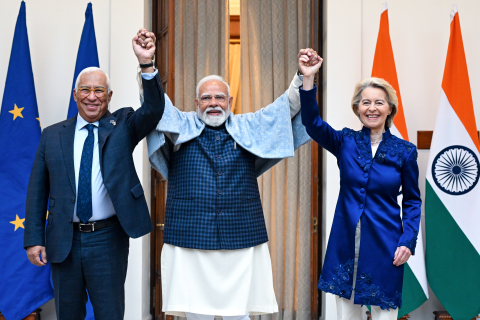
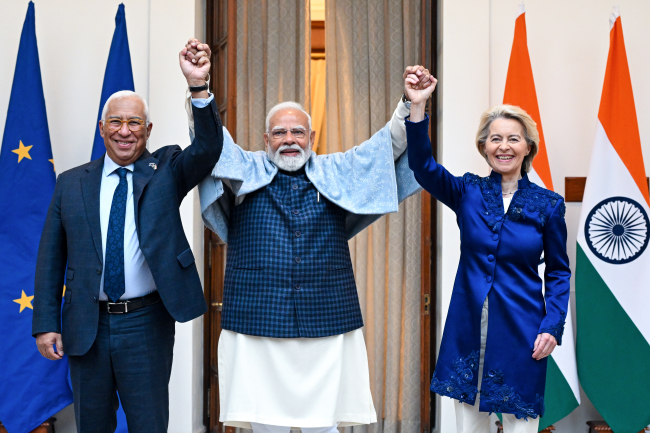
The 16th EU-India Summit, held on January 27th in New Delhi with European leaders António Costa, Ursula von der Leyen, and Prime Minister Narendra Modi, marks a significant milestone in deepening EU-India relations. At the same time, official bilateral visits from EU member states are on the rise, including that of the French President, who visited India in February to participate in the Artificial Intelligence Summit. As India asserts its technological ambitions and seeks to reduce its dependence on China, Europe is stepping up its efforts to diversify its strategic partnerships.
China’s New Five-Year Plan: Accelerated Electrification and Global Clean Tech Export Expansion?
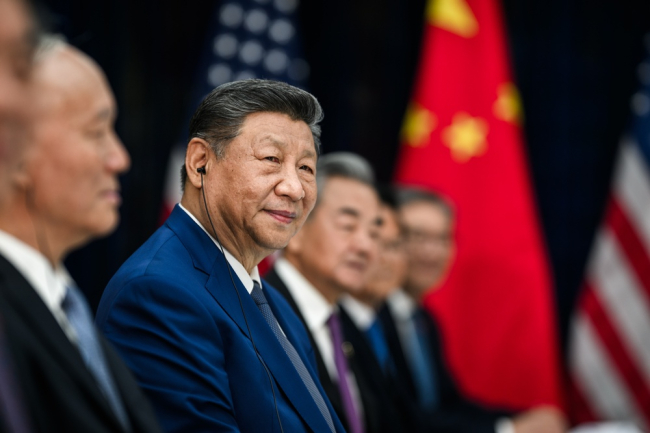
China's energy and clean tech sector developments are continuing to decisively impact the global energy system on the one hand, and to steer the country's economy towards rapid electrification on the other hand.
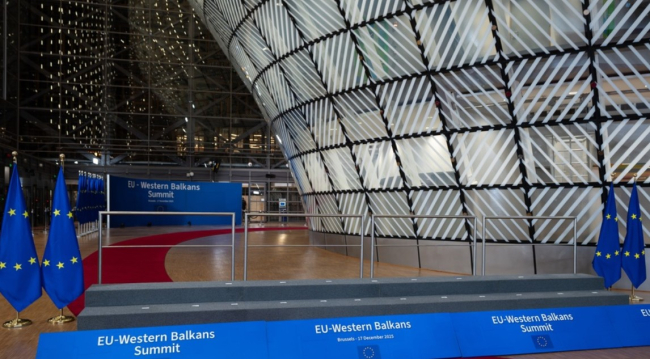
The Enlargement of the European Union: A Strategic Choice? France, the Western Balkans and the EU in an Uncertain Geopolitical Context
Russia’s war against Ukraine has brought the enlargement of the European Union back to the centre of European strategic debates. In this context, the Western Balkans have regained heightened visibility in discussions on the continent’s security, at a time when the international environment is marked by a growing number of destabilising factors.