


Rwanda’s Military Diplomacy. Kigali’s Political Use of the Military Means to Increase Prestige and Influence in Africa and Beyond

Although it is one of the smallest states on the African continent, Rwanda has adopted a proactive foreign policy. Kigali has deployed troops within the framework of multilateral peacekeeping missions to increase its prestige and influence. Since last year, changes have arisen: Rwanda has extended its activities outside of multilateral operations, intervening unilaterally in the Central African Republic (CAR) and then in Mozambique. Rwanda desires to foster its reputation as a regional and continental “security provider”.

Rwanda’s leadership, led by President Paul Kagame, has used its seasoned and professional armed forces as a tool to (re)enhance its regional and international standing. The contribution offered by Rwanda to multilateral operations sanctioned by the United Nations (UN) and the African Union (AU) on the continent and beyond has generated a favorable response – one that has helped tamp down criticism of Kagame’s authoritarian rule and Rwandan military involvement in the neighboring Democratic Republic of Congo (DRC). The dispatch of Rwandan troops on a bilateral basis, beginning in 2020, to two African states highlights significant changes to Kigali’s modus operandi as it broadens its military operations beyond the multilateral framework. Rwanda’s actions, first, in the Central African Republic (CAR) and then Mozambique’s Cabo Delgado province offer useful primers on the future design of Rwanda’s foreign policy. They also, as importantly, point to what may become significant shifts in the ways conflict management and peacebuilding are prosecuted in Sub-Saharan Africa. Further, Rwanda’s political use of military tools is a fascinating example of African military diplomacy.
Since the 1994 genocide, Kagame’s aim has been to rebuild a stable and strong state. Implementing a military diplomacy approach has been possible thanks to the skills shown in different scenarios of intervention by its army: the Rwanda Defence Forces (RDF). Since 2005, the RDF’s deployments mean that it has come to be viewed by African and international bodies as a reliable force for peacekeeping. But Kagame’s recent decisions to send contingents to both the CAR and Mozambique demonstrate that he sees the RDF as something of a new African security provider for the continent. Therefore, Rwanda has exploited the capabilities of its military apparatus as a political tool to gain greater international visibility and continental influence.
Its success against violent non-state armed actors has not only generated a great deal of positive press but has resulted in Rwanda strengthening its political and economic ties with the other African states. At the same time, Kigali has become a trustworthy interlocutor for external states such as France. The Rwandan regime aspires to promote “a Rwandan military solution to security problems” as an alternative to the architecture promoted by regional and continental organizations.
What is the rationale behind Kigali’s move? What are its purposes? And how does Rwanda intend to capitalize on the means of military diplomacy? The analysis explores Rwandan policy by seeking to understand its real potential and investigating the implications of Kigali’s military diplomacy for the African security architecture.
This analysis is organized into four sections. The first part discusses Rwanda’s politico-military trajectory following the 1994 Rwanda Genocide. The second section explores the recent shift in the Rwandan approach to armed conflicts in sub-Saharan African states. The RDF’s actions in Mozambique’s Cabo Delgado province and their success against armed insurgents are explored in greater depth in the report’s third section. The conclusion provides analysis about Rwanda’s pro-active use of its military in extra-regional states and what the implications may become at the regional, continental, and extra-continental levels.

Available in:
Regions and themes
ISBN / ISSN
Share
This page contains only a summary of our work. If you would like to have access to all the information from our research on the subject, you can download the full version in PDF format.
Rwanda’s Military Diplomacy. Kigali’s Political Use of the Military Means to Increase Prestige and Influence in Africa and Beyond

Sub-Saharan Africa Center
Founded in 2007, Ifri's Sub-Saharan Africa center produces an in-depth analysis of the African continent and its security, geopolitical, political and socio-economic dynamics (in particular the phenomenon of urbanization). The Center aims to be both, through various publications and conferences, a space for disseminating analyzes intended for the media and the public but also a decision-making tool for political and economic actors with regard to the continent.
The center produces analyses for various organizations such as the Ministry of the Armed Forces, the Ministry of Europe and Foreign Affairs, the Organization for Economic Cooperation and Development (OECD), the French Development Agency (AFD) and even for various private supports. Its researchers are regularly interviewed by parliamentary committees.
The organization of events of various formats complements the production of analyzes by bringing the different spheres of the public space (academic, political, media, economic and civil society) to meet and exchange analytical tools and visions of the continent. The Sub-Saharan Africa Center regularly welcomes political leaders from different sub-Saharan African countries.
Russia’s Policy of Recruiting Fighters and Female Workers in Sub-Saharan Africa
The Russo-Ukrainian war, which began on February 24, 2022, quickly became internationalized. Russia and Ukraine were both quick to mobilize their allies in order to secure political and diplomatic support, as well as military and economic resources. But both belligerents also sought to recruit foreigners on a private basis to support their respective war efforts. This policy is global, extending from Latin America to the Far East. Sub-Saharan Africa, in this landscape, is of particular interest because it constitutes a vast and easily accessible recruitment pool, owing to high poverty rates in most countries of the region combined with a strong desire to emigrate.
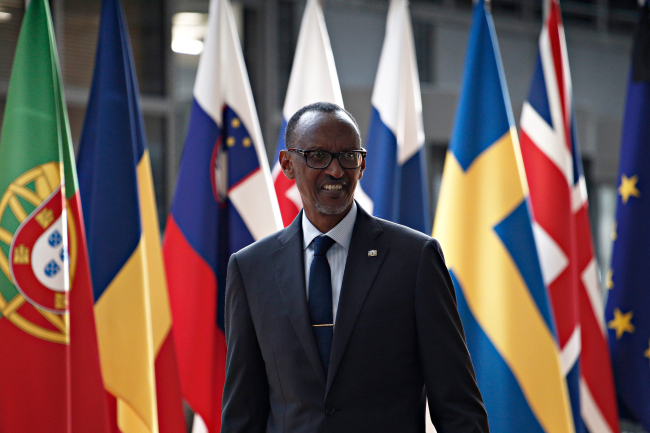
The Vectors and Means of Rwanda’s Growing External Influence under Paul Kagame
For three decades, Paul Kagame’s Rwanda has pursued a foreign policy aimed at increasing investment in the national economy, maximizing military cooperation and intelligence sharing, and promoting a model of post-genocide state reconstruction.
Sudan Wartime Online Propaganda
In the Sudan conflict, the propaganda battle between the Sudan Armed Forces (SAF) and the Rapid Support Forces (RSF) on mainstream and social media makes it hard to distinguish real, false, and manipulated information. Furthermore, the lack of field press coverage allows fake and misleading news to spread more easily. Although the SAF and RSF work hard to shape the war narrative by building large supporter networks and using various methods such as disinformation and censorship, it is clear they no longer fully control the flow of information. Social media analysis shows that Sudanese politicians, military figures, influencers, and followers weave a tangled web of exchanges filled with rivalries, lies, and propaganda.
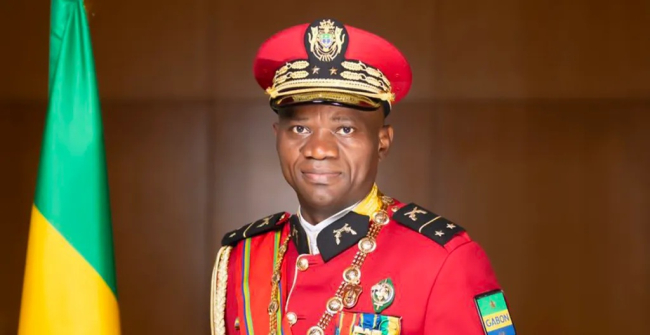
Gabon: Has an — Almost — Exemplary Transition Produced a New Political Model?
In two rounds of voting, on September 27 and October 11, 2025, the citizens of Gabon elected the members of both their local councils and the new national assembly. This marked almost the final stage of political transition, little more than two years after the coup d’état that had overthrown the more than five decades old dynastic regime of the Bongos — Omar, the father, who died in office in 2009, and then his son Ali, who is now in exile.