




When City Diplomacy Meets Geopolitics: A Framework to Help Cities Navigate Geopolitical Risk
Crises and the increasing polarization of international relations make political risk analysis an indispensable resource for internationally active public and private entities.

Long considered by scholars and practitioners as a moral niche in international relations, there is now growing awareness that city diplomacy can channel geopolitical risk.
The autonomy in their international relations, that has made cities in democratic countries major players and beneficiaries of city diplomacy, now exposes them to risks that they can hardly analyze and manage independently.
The national government and academia emerge as the main partners in capacitating cities in democratic countries to navigate today’s complex geopolitical balances profitably and safely.

Available in:
Themes and regions
ISBN / ISSN
Share
This page contains only a summary of our work. If you would like to have access to all the information from our research on the subject, you can download the full version in PDF format.
When City Diplomacy Meets Geopolitics: A Framework to Help Cities Navigate Geopolitical Risk

Sub-Saharan Africa Center
Founded in 2007, Ifri's Sub-Saharan Africa center produces an in-depth analysis of the African continent and its security, geopolitical, political and socio-economic dynamics (in particular the phenomenon of urbanization). The Center aims to be both, through various publications and conferences, a space for disseminating analyzes intended for the media and the public but also a decision-making tool for political and economic actors with regard to the continent.
The center produces analyses for various organizations such as the Ministry of the Armed Forces, the Ministry of Europe and Foreign Affairs, the Organization for Economic Cooperation and Development (OECD), the French Development Agency (AFD) and even for various private supports. Its researchers are regularly interviewed by parliamentary committees.
The organization of events of various formats complements the production of analyzes by bringing the different spheres of the public space (academic, political, media, economic and civil society) to meet and exchange analytical tools and visions of the continent. The Sub-Saharan Africa Center regularly welcomes political leaders from different sub-Saharan African countries.
Governing the Urban Transition in Africa
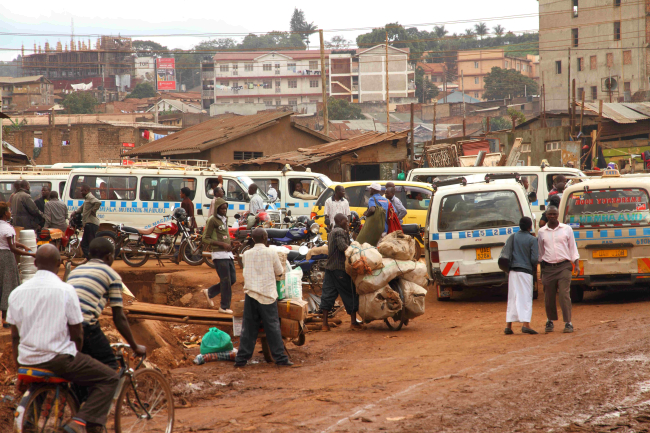
Sub-Saharan Africa's cities are experiencing the fastest growth rates in the world. By 2050, most of the countries in the region will have made an urban transition, meaning that more than 50% of their population will live in urban areas. Urban growth is often presented as a cornerstone of the continent's socio-economic development.
To assess these challenges Ifri’s Sub-Saharan Africa Center is launching, in May 2022, a research program looking into the major socio-economic and geopolitical challenges of urban dynamics on the continent.
The program deals with urban development in Africa through a sectoral and cross-cutting approach based on three key sectors:
- Land issues are the foundation of urban life. Each urban project triggers changes within the relationship between land and its inhabitants.
- Urban infrastructure is often presented as a solution to the challenges of demographic growth in cities. However, the lack of infrastructure and its financing remains a concern for specialists.
- The mobility of goods, people and financial flows is characteristic of urban life and drives the multiple links between cities and the countryside. Analyzing the urban-rural continuum is at the heart of this program's objectives.
Research will be conducted at the macro (continental), meso (country), and micro (city/neighborhood) levels and will be promoted through events and publications.
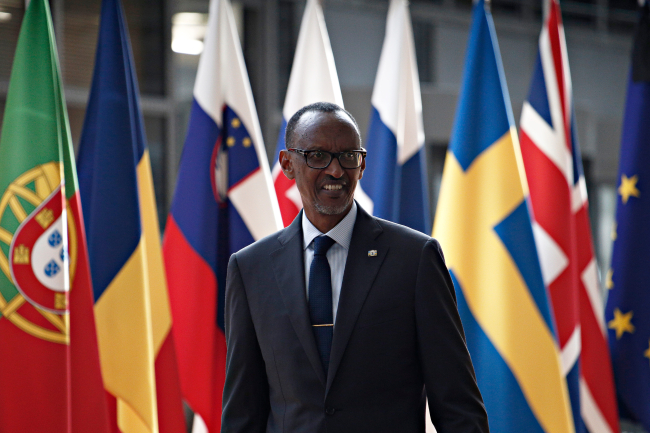
The Vectors and Means of Rwanda’s Growing External Influence under Paul Kagame
For three decades, Paul Kagame’s Rwanda has pursued a foreign policy aimed at increasing investment in the national economy, maximizing military cooperation and intelligence sharing, and promoting a model of post-genocide state reconstruction.
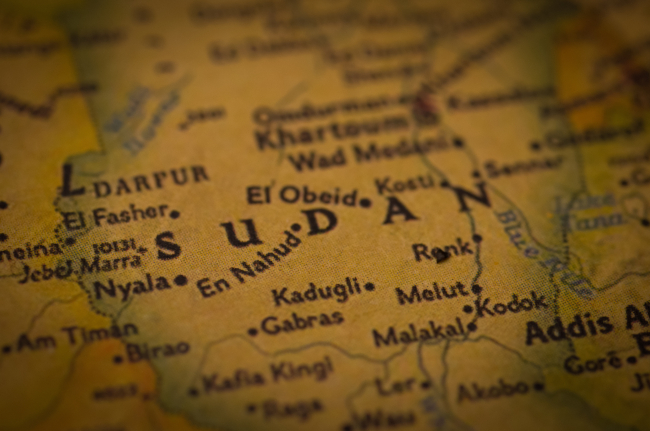
Sudan Wartime Online Propaganda
In the Sudan conflict, the propaganda battle between the Sudan Armed Forces (SAF) and the Rapid Support Forces (RSF) on mainstream and social media makes it hard to distinguish real, false, and manipulated information. Furthermore, the lack of field press coverage allows fake and misleading news to spread more easily. Although the SAF and RSF work hard to shape the war narrative by building large supporter networks and using various methods such as disinformation and censorship, it is clear they no longer fully control the flow of information. Social media analysis shows that Sudanese politicians, military figures, influencers, and followers weave a tangled web of exchanges filled with rivalries, lies, and propaganda.
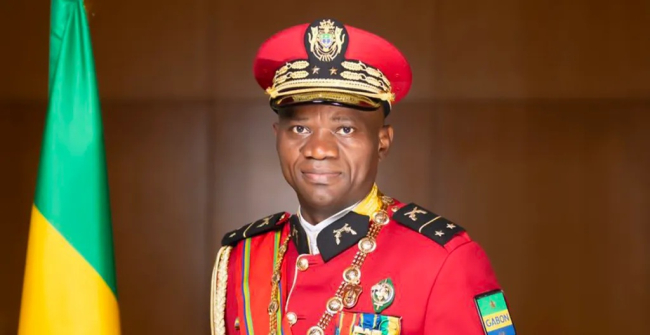
Gabon: Has an — Almost — Exemplary Transition Produced a New Political Model?
In two rounds of voting, on September 27 and October 11, 2025, the citizens of Gabon elected the members of both their local councils and the new national assembly. This marked almost the final stage of political transition, little more than two years after the coup d’état that had overthrown the more than five decades old dynastic regime of the Bongos — Omar, the father, who died in office in 2009, and then his son Ali, who is now in exile.
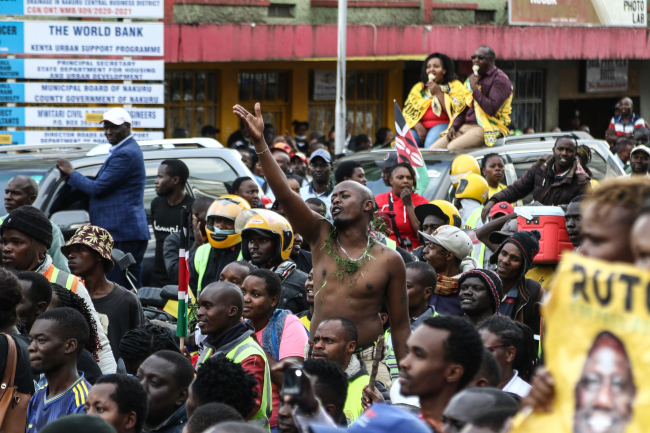
Claiming "The People": Youth Booms, Ailing Authoritarians and "Populist" Politics in Kenya, Uganda, and Tanzania
This study analyses the emergence of so-called “populist” political tendencies in three East African countries: Kenya, Uganda and Tanzania. It builds its analysis on a wider discussion of the term “populism”, its use and applicability in (eastern) African settings before going on to examine the drivers of three cases of populism: William Ruto’s 2022 election victory in Kenya and the “Hustler Nation”; Bobi Wine’s opposition to Yoweri Museveni in Uganda; and John Magufuli highly personal style of government in Tanzania.