




Low-carbon Technologies Value Chains
Low-carbon technologies and the transformation of industries pose key challenges in terms of innovation, competitiveness and value chain management. Industrial policies are now central.
Related Subjects
EU-Mercosur: An Unsolvable Trilemma Between Competition Rules, Normative Ambitions and Supply Chain Diversification
The EU-Mercosur trade deal was believed to be heading toward the finish. The election of Luiz Inácio Lula da Silva as the president of Brazil, as successor to the right-wing populist Jair Bolsonaro, and the Spanish presidency of the European Union (EU), raised hopes for its conclusion. But the reservations expressed by several EU member states and some Latin American countries have dashed hopes.

France, Germany play safe during China Premier Li's European trip
HAMBURG, Germany -- Chinese Premier Li Qiang avoided public clashes on a high-profile visit to Germany and France this week, in what analysts see as a sign of the European nations' reluctance to alienate Beijing.
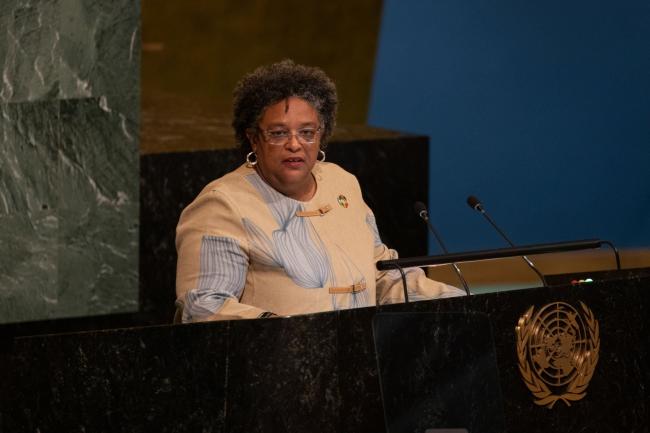
Is International Climate Finance Unfair and Inefficient?
Finance is arguably the most sensitive climate negotiation topic. Different studies have shown that rich countries emit the majority of greenhouse gas (GHG) emissions, while the climate footprint of the poorest countries is much more limited.
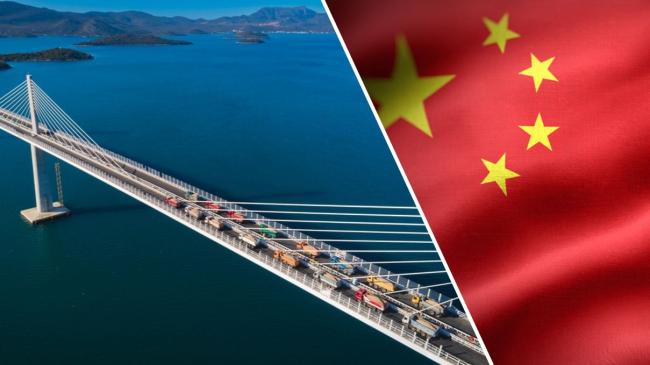
Can Europe do Without a Geologistical Strategy to Face China?
During the economic and financial crisis in 2008, during which the West was severely weakened, the ties between the Western Balkans and China were particularly close. For these countries, turning to China meant to secure new destination markets for their exports and to guarantee new investments.
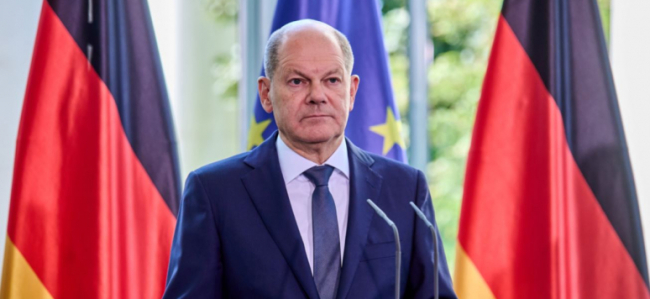
The German Government's Support Plan for Households and Businesses: How to Compensate for the Double Energy and Economic Shock?
In response to Russia's illegal attack on Ukraine, EU member states have issued a series of economic sanctions against Russia. This also includes moratoria on certain products, e.g., in the energy sector.
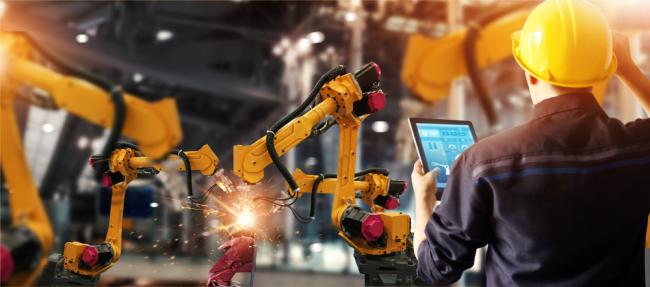
Reindustrializing France: Challenges of the Digital and Environmental Transformation
To succeed in the challenge of reindustrializing France, French and European companies must undertake a dual process of digital and environmental transformation, in a context of international competition.
Sino-American Climate Diplomacy
During COP26, Beijing and the Biden administration committed to reviving Sino-American cooperation on climate issues, in the name of their common interest in climate stability.
What Progress on the Paris Agreement on Climate Change?
At COP26, a long-term target to keep global warming below 1.5°C was set. This goal is inconsistent with the commitments that the signatory countries have made in terms of reducing their greenhouse gas emissions by 2030.
Europe/United States: 50 Shades of Dependence
Is Joe Biden’s United States (US) returning to multilateral, traditional diplomacy? This more open stance does not eliminate either its domestic problems or the divergence in interests separating the US from the Europeans: how will open diplomacy fit in with the priority of defending US interests? Will Washington organize a broad anti-Chinese coalition that the Europeans are opposed to? Will sanctions with their resulting effects remain at the heart of US strategy? Will the Europeans be able to assert their sovereignty in the key area of new technologies against the US giants?
Baden-Württemberg under Green Leadership – Balance Sheet of Two Government Periods under Winfried Kretschmann
Baden-Württemberg's economic and social structure offered good starting conditions for center-right parties from the beginning, which the Christian Democratic Union of Germany (CDU) initially knew how to use for itself. From 1953 to 2011 the Prime Minister belonged to the CDU. In 2011 the Greens and the Social Democratic Party of Germany (SPD) won an election over the CDU for the first time. Winfried Kretschmann was elected the first Green Prime Minister in a German state.
The German Green Party, a new People's Party?
In the context of increasing awareness of the climate crisis, environmental parties across the EU obtained high scores in the European elections of May 2019, reaching 20% in Germany, 17% in Ireland, 16% in Finland and 13 % in France. Meanwhile, far-right parties gained strength.
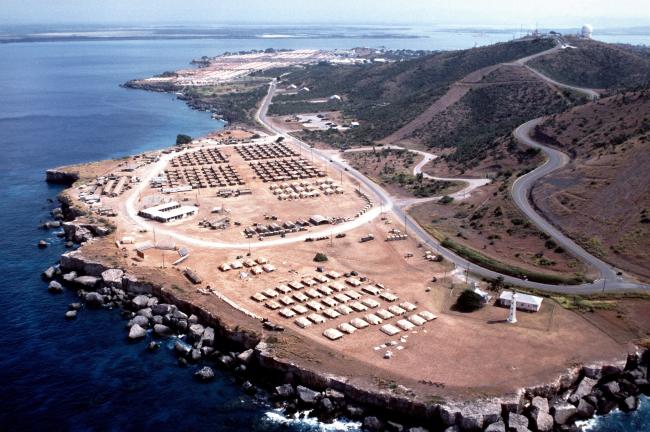
Les bases de la puissance. Enjeux géopolitiques et stratégiques des bases militaires avancées
Throughout history, great powers have relied upon forward military bases, either to support their interventions in areas of interest, to re-assure allies or to control a territory.
Ballistic Missile Defense in Japan: Deterrence and Military Transformation
In December 2003, Japan decided to be the second country in the Asia-Pacific to deploy a ballistic missile defense (BMD) system.
Unconventional Gas: A Game Changer for Transport Too?
A new technology trend, the development of natural gas vehicles, is emerging in the transport sector.
What's in a Name? Market-based Instruments for Biodiversity
The use of Market-based Instruments (MBIs) for the management of biodiversity and ecosystem services - carbon trading schemes, payment for ecosystem services, mitigation banking, etc. - is currently booming. But the definition and underpinning theory of these tools remain unsettled. It is therefore necessary to advance in the definition, theory and consistent classification of these instruments.
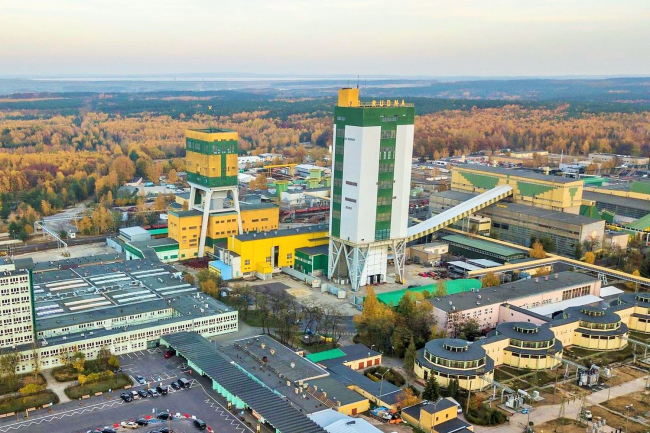
Re-evaluating Copper Supply: The Crucial Role of Technology
Some authors argue that the energy transition is doomed to fail due to metal scarcity and the rising energy costs of extraction.
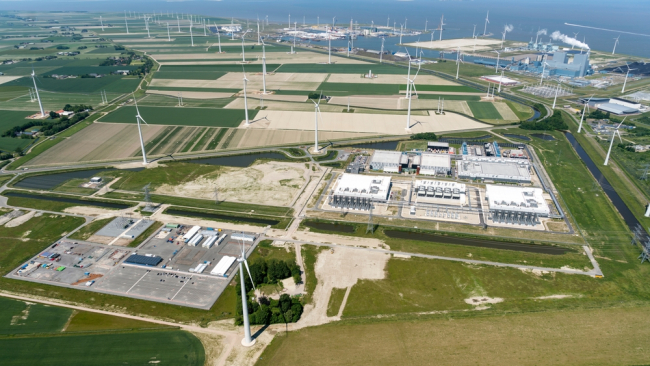
The Strategic Dimension of Power System Flexibility: Opportunities in Europe
The European Union has embarked on an energy transition aimed primarily at replacing fossil fuels by electrifying demand.
Critical Raw Materials, Economic Statecraft and Europe's Dependence on China
As China tightens export controls on critical minerals, it is important to put Beijing's policies in perspective and analyse how Europe can respond.
The Troubled Reorganization of Critical Raw Materials Value Chains: An Assessment of European De-risking Policies
With the demand for critical raw materials set to, at a minimum, double by 2030 in the context of the current energy transition policies, the concentration of critical raw materials (CRM) supplies and, even more, of refining capacities in a handful of countries has become one of the paramount issues in international, bilateral and national discussions. China’s dominant position and successive export controls on critical raw materials (lately, germanium, gallium, rare earths processing technology, graphite, antimony) point to a trend of weaponizing critical dependencies.

Critical Raw Materials: What Chinese Dependencies, What European Strengths?
In adapting to growing geopolitical competition over digital technology, the EU and the UK are striving for economic security and technological sovereignty. European policies focus on reducing critical over-dependencies on China. This de-risking is a necessary process of adaptation to the new geopolitical realities.
EU-Mercosur: An Unsolvable Trilemma Between Competition Rules, Normative Ambitions and Supply Chain Diversification
The EU-Mercosur trade deal was believed to be heading toward the finish. The election of Luiz Inácio Lula da Silva as the president of Brazil, as successor to the right-wing populist Jair Bolsonaro, and the Spanish presidency of the European Union (EU), raised hopes for its conclusion. But the reservations expressed by several EU member states and some Latin American countries have dashed hopes.
Is International Climate Finance Unfair and Inefficient?
Finance is arguably the most sensitive climate negotiation topic. Different studies have shown that rich countries emit the majority of greenhouse gas (GHG) emissions, while the climate footprint of the poorest countries is much more limited.
Ballistic Missile Defense in Japan: Deterrence and Military Transformation
In December 2003, Japan decided to be the second country in the Asia-Pacific to deploy a ballistic missile defense (BMD) system.
Unconventional Gas: A Game Changer for Transport Too?
A new technology trend, the development of natural gas vehicles, is emerging in the transport sector.
Ifri, a foundation recognized as being of public utility, relies largely on private donors – companies and individuals – to guarantee its sustainability and intellectual independence. Through their funding, donors help maintain the Institute's position among the world's leading think tanks. By benefiting from an internationally recognized network and expertise, donors refine their understanding of geopolitical risk and its consequences on global politics and the economy. In 2026, Ifri partners with over 90 French and international companies and organizations.
